

Sustainability as a compass
Covestro is fully committed to the circular economy . To this end, the company is focusing on 100 percent energy from renewable sources, 100 percent alternative raw materials, and innovative recycling technologies. At the same time, Covestro is aiming to become operationally climate-neutral by 2035 (Scope 1). By 2050 at the latest, emissions from upstream and downstream processes in the value chain (Scope 3) are also to be reduced to net zero.
Covestro is driving the shift towards climate neutrality: From 2025, rail tank car transports on the German rail network will be powered by renewable energies and sustainable biodiesel. This changeover will reduce CO₂ emissions by around 3,000 metric tons per year and support the company's climate targets.
In cooperation with the transport and logistics company DB Cargo AG, all transports on the mostly electrified lines are powered by electricity from renewable sources. For non-electrified sections, HVO 100 is used – a sustainable biodiesel produced from plant and animal oils, fats and residues. The logistics partners Chemion and the Hoyer Group, which handle transportation between the Chemparks and the Deutsche Bahn (DB) network, also rely on HVO. This makes transportation completely sustainable from production to customer. Covestro's goal is to convert all rail transportation in Europe to renewable energies as well.

Operational climate neutrality by 2035
Covestro has set itself ambitious targets: The company aims to be operationally climate neutral by 2035 – thus reducing its emissions from its own production (Scope 1) and from purchased energy sources (Scope 2) to net zero. Three strategic levers are to significantly contribute to achieving these climate targets: the sustainable optimization of its own production processes, the continuous transition of production to electricity from renewable sources, and the increased use of green steam.

Targets have been set for Scope 3
Covestro is advancing sustainability at all levels, driven by the “People, Planet, Profit” (opens in a new tab) principle – the backbone of the company. It reflects the company's dedication to creating economic, ecological, and social value through its business activities. Covestro is also guided by the Sustainable Development Goals (opens in a new tab) of the United Nations. They are an integral part of the corporate strategy.
By developing pioneering technologies and products, the company significantly contributes to improving the livelihoods and quality of life of millions of people worldwide. The German sites play an important role in these plans.
Since the beginning of 2023, a 2.3-kilometre-long steam pipeline has been transporting around 20-bar steam at the Covestro Industrial Park in Brunsbüttel. The new pipeline is part of Covestro's energy efficiency master plan and a further step on the way to climate neutrality. In future, it will save around 8,300 metric tons of CO₂ emissions and 40 gigawatt hours of electricity annually.
The steam line transports the 20-bar steam from the aniline plant to the MDI plant. This reduces the consumption of fresh 34-bar steam, which must first be reduced internally to 20 bar for MDI production. The aniline plant, which produces the 20-bar steam needed in the MDI plant, previously had to reduce the pressure to 5 bar because no corresponding line was available. This led to excess steam in the 5-bar system, which at times remained unused.
Now, with the new 20-bar line, nothing is lost. The steam is used as it is produced in the industrial park. Losses due to pressure reduction no longer exist. Since there is now less surplus steam, the combined heat and power units (CHP) become more efficient and flexible in operation. In addition, electricity consumption is significantly reduced due to the higher utilization of the CHP units, and the reliability of the entire plant increases. This is because the electric quick-start machines are now only used as a backup instead of running continuously.
The 20-bar steam line was realized thanks to a funding commitment from the federal program "Energy Efficiency in the Economy". This enables companies to implement energy efficiency projects that were previously economically unviable. Covestro's innovative project was one of the projects in the competition that achieved the highest savings with the least investment.
The following simple show explains how the 20 bar steam line works:
This content is provided by MovingImage. When you load it, MovingImage receives data such as your IP address and may set cookies.
The demand for sustainable products continues to grow. Covestro has responded to this development at an early stage. In the future, the company aims to offer every product in a climate-neutral version.
Already today, the portfolio of sustainable material solutions is growing continuously. At its site in Krefeld-Uerdingen, Covestro produces the world's first climate-neutral2 polycarbonate (opens in a new tab). The basis for the product is provided by raw materials from mass-balanced biowaste and residual materials as well as renewable energy. The advantage: customers can use it immediately in their production without any changeover and without compromising on quality.
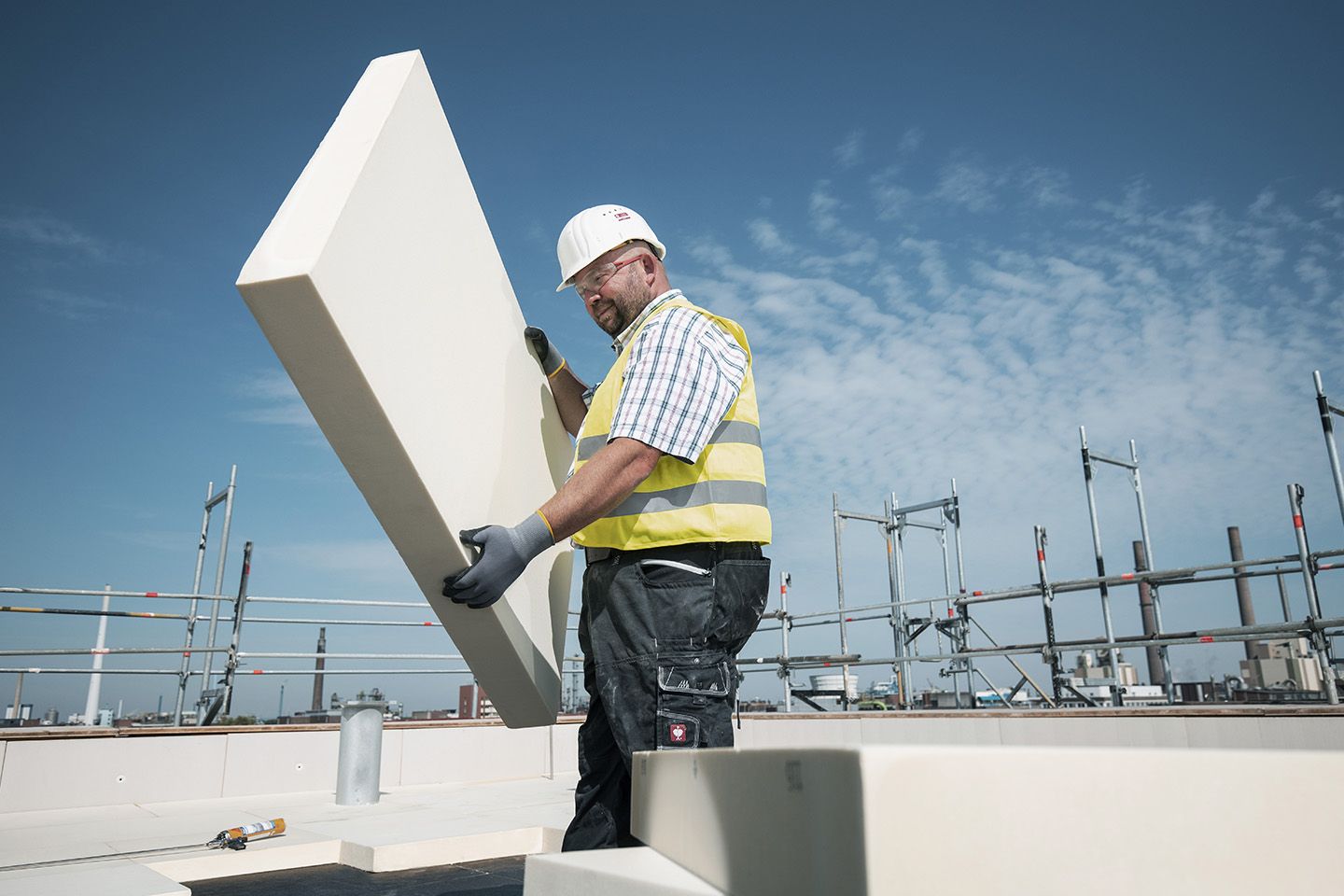
This also applies to the climate-neutral2 methylene diphenyl diisocyanate (opens in a new tab) (MDI) from Krefeld-Uerdingen. The raw material is in high demand worldwide. It is used in the production of rigid polyurethane foam – a very effective insulating material for buildings. That is not surprising: the use of polyurethane insulation can reduce heating or cooling requirements by up to 70 percent.
2Climate neutrality is the result of an internal assessment of a partial product life cycle from raw material extraction (cradle) to the factory gate (of Covestro), also known as cradle-to-gate assessment. The methodology of our LCA, for which an external audit and certification will soon be available, is based on the ISO 14040 and 14044 standards. The calculation takes into account biogenic carbon sequestration based on preliminary data from the supply chain. No compensation measures were applied.
Mattresses contain 15 to 20 kilograms of foam on average. As trailblazer for industrial recycling, Covestro is trying to figure out new ways how to reuse the valuable resources at the end of their product life. That is why the company has recently started operating a pilot plant for the chemical recycling of flexible polyurethane (PU) foam from used mattresses in Leverkusen.
For the first time, the two main PU-components polyol and an isocyanate precursor can be recycled. The process builds on the company’s involvement in the "PUReSmart" research project. The aim of the pilot plant is to verify the positive laboratory results achieved to date. By using the innovative process, Covestro can close material loops, replace fossil resources in production, and offer new solutions for dealing with plastic waste. At the same time, the company succeed in proving that polyurethanes are recyclable.
As part of the "PUReSmart" research project, Covestro also worked with the two companies Recticel and Redwave to develop an intelligent sorting solution to efficiently separate the different PU foams from post-consumer mattresses. The software uses machine-learning algorithms for a proper recognition of the different types of foam, enabling clean material inputs for the subsequent recycling process. This is an important step in advancing the circular economy (opens in a new tab).
This content is provided by MovingImage. When you load it, MovingImage receives data such as your IP address and may set cookies.
Covestro has received ISCC Plus certification for its sites in Leverkusen, Dormagen, Krefeld-Uerdingen (ISCC: International Sustainability and Carbon Certification). The mass balance approach relies on the use of certified recycled and biobased raw materials from the start of production and thus promotes the development of a circular economy. It enables fossil raw materials to be saved along the entire value chain and greenhouse gas emissions to be reduced.
Various mass-balanced products are manufactured at the three NRW sites. These include selected polycarbonates, components for polyurethane (PU) rigid and flexible foams, PU coating and adhesive raw materials, thermoplastic polyurethanes (TPUs) and specialty films. They are characterized by equally good quality and properties as products made from fossil raw materials. With ISCC Plus certification, Covestro is driving the circular economy further forward. By 2035, Covestro aims to become climate neutral and achieve net zero emissions for Scope 1 and Scope 2.

The chemical industry is the second largest consumer of electricity in Germany. As a result, the industry has great “demand response capacity” – both in a positive as well as in a negative sense. So how can fluctuations in supply and consumption in the chemical industry be more evenly balanced in the future? Researchers have now addressed precisely this question. Using the energy-intensive production of chlorine as an example, they are investigating how electricity consumption in the industry can be made to be more flexible.
Within the interdisciplinary joint project “SynErgie”, Covestro is working with partners to analyze the load management and flexibility potential of current and future electrochemical processes in the chemical industry and then evaluate them from an economic perspective. Up to now, production has been driven mainly at a constant rate. However, the research project aims to find out how a mode of operation that is adapted to a fluctuating electricity supply can be technically feasible and economically viable.

Germany is committed to further consistently increasing the share of renewable energies. But what happens when more green power is generated on windy summer days than is needed at the time? Given that there are hardly any ways to store the surplus electricity so far, new approaches have to be pursued.
One example of this is the German government’s Kopernikus projects, in which partners from business, science, and society work closely together. Covestro is also involved. As part of the project “Kopernikus P2X”, for example, the company is researching so-called power-to-X technologies (P2X), which can be used to convert electricity from renewable sources into other material resources.
These resources must then be efficiently stored, distributed, and converted into the different end products required in several complex steps. This requires innovative solutions that are to be developed within the project into ecologically, economically and socially beneficial processes. The project team is currently investigating a way to use renewable energy and CO₂ to create precursors that can be used to produce synthesis gas. This would reduce the use of fossil raw materials in production in the future.

Synthesis gas is a mixture of gases that is used, among other things, for the production of chemicals. The gas can be used directly or as a building block for higher-value raw materials such as fuels. The right composition is important here, as the respective proportion of the various components varies depending on the desired product.
In the pursuit of hydrogen technology, Covestro is working on solutions for utilizing chemical feedstocks accessible via P2X technology as building blocks for precursors of plastics (power-to-chemicals). Normally, these consist entirely of petroleum. The project team, on the other hand, uses CO₂ as a carbon source and combines it with the regeneratively produced green hydrogen.
In this way, intermediate chemical steps can be used to produce polyols, a precursor for polyurethane materials. This enables successful coupling between dynamically supplied, regenerative electrical energy and material utilization. Now the process is to be further developed into an industrially useful, continuous process, and the polyols themselves are to be comprehensively investigated in terms of their applicability.
Covestro aims for climate neutrality by 2035 (opens in a new tab). The long-term goal is to rely on 100% renewable energy sources. To this end, the company has already made some landmark decisions.
In 2019, Covestro signed the world's largest industrial corporate supply agreement (Corporate Power Purchase Agreement, PPA) for electricity from offshore wind turbines to date with Ørsted (opens in a new tab). Starting in 2025, the Danish energy supplier will provide green electricity from the newly created offshore wind farm off the island of Borkum for ten years. The agreement covers 100 megawatts of capacity and thus covers a significant amount of Covestro Germany's electricity needs.

In addition, Covestro will also be focusing on using solar power in the future. The materials manufacturer agreed on long-term PPA with the German energy company EnBW (opens in a new tab). Starting in 2022, Covestro will purchase 63 megawatts of power from EnBW's "Weesow-Willmersdorf" solar park in Brandenburg. The contract is initially set to run for 15 years. Covestro plans to use the solar power at its Dormagen and Krefeld-Uerdingen sites primarily for the production of sustainable, mass-balanced plastics manufactured using the drop-in process. The agreement with Covestro is the project's first PPA.

By switching to renewable energies, Covestro is not only a step closer to meeting its own climate targets. Wind and solar power increase the sustainability of Covestro's own production processes and at the same time help customers to reduce their own carbon footprint.
Covestro is one of the world’s leading producers of methylene diphenyl diisocyanate (MDI). The raw material is used, among other things, for the production of energy-efficient insulation solutions for buildings and refrigeration equipment. According to forecasts, the global market for MDI is expected to undergo further growth. Thanks to adiabatic isothermal phosgenation (AdiP) technology, Covestro is well prepared for the expected increase in demand.
The company has spent around 20 years refining the innovative AdiP technology. The result is impressive: Production output has increased by 50 percent compared to the technology currently in use. At the same time, the technology stands out for its high environmental friendliness. It enables a significant reduction in energy requirements and CO₂ emissions. The key is an optimized reaction design that allows Covestro to dispense with external energy input. This is also where the name of the technology comes from. This is because the reaction is adiabatic-isothermal.
The savings potential in an MDI plant with AdiP technology is enormous. It amounts to up to 40 percent less steam and up to 25 percent less electricity per ton of MDI produced. This corresponds to a reduction in energy-related CO₂ emissions of around 35 percent. The technology is thus making an important contribution to Covestro’s sustainability goals.
So far, AdiP has only been used in a pilot project at the Brunsbüttel site. However, once successfully completed, it will be available for implementation in the next world-scale plant.

It is impossible to imagine the chemical industry without chlorine. Around two-thirds of all products are based on this important raw material – for example polymers, pharmaceuticals, and chemicals for drinking water treatment. Chlorine production is one of the most energy-intensive processes of all and therefore a real cost factor.
However, Covestro has now pushed the boundaries of what is possible in this area yet again. Together with partners from industry, the company has developed a technology that can reduce the amount of energy required for chlorine production by 25 percent. The innovative oxygen depolarized cathode (ODC) is already in use in Germany at the Krefeld-Uerdingen site at partial capacity.
The new process is fundamentally based on the common membrane process of chloralkali electrolysis, in which chlorine, caustic soda, and hydrogen are extracted from table salt (NaCl) and water. However, there is one subtle but crucial difference: the hydrogen-generating electrode that is usually used is replaced by an oxygen depolarized cathode. The supply of oxygen to the cathode subsequently prevents the formation of hydrogen. This way, only chlorine and caustic soda can be obtained.
The German Federal Ministry of Education and Research (Bundesministerium für Bildung und Forschung – BMBF) funded the project as part of the “Research for Sustainability” (FONA) initiative. The technology was awarded the 2019 Covestro Science Medal (opens in a new tab) for outstanding innovative and sustainable performance.

Sustainable coatings are expected to further reduce the CO₂ footprint of cars in the future. This is the goal of a project team in which employees from Covestro, BASF, and Audi are working together. They teamed up to coat test bodies of an Audi Q2 with a clearcoat containing a partially bio-based hardener – under near-production conditions.
Around 70 percent of the plastic content of the hardener comes from biomass. This makes it possible to significantly reduce the use of raw materials in production processes. The initial test results have shown that the vehicle coating meets the specific requirements of the car manufacturer even with the innovative clearcoat. While not all tests have been completed to the point of series production release, the project partners feel the result is an important step on the road to even more sustainable automotive coatings.

Excellent market opportunities are anticipated for bio-based raw materials. They make production even more sustainable. Covestro is one of the pioneers in the chemical industry in their use. Among other things, the company has succeeded in producing aniline from biomass (opens in a new tab) at its site in Leverkusen.
Aniline has numerous functions in production. The chemical is used, for example, as a basis for the production of medicines, dyes and plastics. Covestro requires aniline primarily for the production of methylene diphenyl diisocyanate (MDI), a main component of foam insulation. Until now, aniline has been obtained from benzene, which in turn comes from crude oil.
However, Covestro has managed to achieve an important breakthrough. In the synthesis of aniline, the company has for the first time developed a process in which corn or straw, for example, can be used to produce the chemical. Thus, bio-based aniline can be made of one hundred percent renewable carbon. This represents an opportunity to significantly reduce the use of fossil raw materials in the company's own plants in the future.

The construction industry is the second largest plastics application sector in Germany. The “KUBA” pilot project, which is funded by the German Federal Ministry of Education and Research, is therefore investigating how the industrial sector can increasingly use plastics in cycles in the future – also with the aim of recovering raw materials for new products.
Admittedly, a number of collection and recycling systems already exist. However, common processes such as the mechanical recycling of plastic waste currently often encounter technical and economic limits. That’s why feedstock recycling could be a solution. In this process, plastic waste is broken down into basic chemical substances and then reused as a raw material.
“KUBA” has been coordinated by DECHEMA Gesellschaft für Chemische Technik und Biotechnologie e. V. since December 2018. Covestro is one of eleven industrial companies that are partners in the pilot project.

In Krefeld-Uerdingen wastewater from the production of polycarbonate is now being recycled directly in an industrial pilot plant for the first time in Germany. By doing so, Covestro not only conserves valuable resources, but also protects the environment at the same time. The recycled wastewater is used to produce chlorine in the electrolysis process. Chlorine, in turn, is an important raw material for the production of polycarbonate – a high-performance plastic that is widely used in the automotive and electrical industries, among others.
Thanks to the salt water treatment plant, Covestro can save up to 15,000 metric tons of salt and 200,000 metric tons of so-called fully desalinated water at the site each year. This corresponds to a net total of around 800 metric tons of CO₂ equivalents. The project underlines the company’s aspiration to be a defining force in the Circular Economy. In addition, the company continues to transfer the technology to other Covestro sites. Various research projects are currently investigating which processes are suitable for the utilization of saline industrial wastewater and how the recycling volume can be increased in the future.

Up to now, plastics have mostly been produced on the basis of fossil raw materials such as crude oil. Howver, a number of alternatives have emerged over time. Covestro and RWTH Aachen University have developed an innovative process that can replace part of the crude oil in production with CO₂ (carbon dioxide) (opens in a new tab) – for example in the manufacture of foams for mattresses and upholstered furniture. Covestro has already been using the process successfully at its site in Dormagen. This is bringing the company closer to its declared goal of establishing a chemical industry that is independent of crude oil. At the same time, the materials manufacturer is working with partners to explore what other applications can be developed with this novel technology. The focus here is on elastomers, fibers, and insulation boards, among other things.

Covestro is also looking into how CO₂ can be used as a raw material as part of its numerous research projects. As part of “Carbon2Chem”, Covestro, under the leadership of Thyssenkrupp, is part of a cross-sector consortium of companies exploring, for example, how so-called metallurgical gases produced in steel production can be used as alternative carbon-based raw materials. In this context, the use of carbon monoxide (CO), which is contained in the gases, is of major importance. The consortium has already proven the feasibility and is now aiming for large-scale deployment.
In addition, Covestro is working with 13 partners as part of the Europe-wide "Carbon4PUR" (opens in a new tab) research project to use volatile gases generated during steel production for the production of polyurethane. The project is funded under the European Union's Horizon 2020 research and innovation program. The first promising results showed how precursors for plastics could be obtained from CO.
This way, the chemical and steel industries can take joint action in the fight against climate change in the future.


Climate Neutrality 2035
Covestro aims to become operationally climate-neutral by 2035. This applies to emissions from our own production and from external energy sources. At the same time, Covestro wants to significantly reduce upstream and downstream greenhouse gas emissions in the value chain by 2035.
Covestro is using innovative processes to increase the energy efficiency of its production while simultaneously reducing CO₂ emissions. A key component of this effort is the modernization of the TDI plant in Dormagen, which already consumes up to 70 percent less energy than conventional plants.
In the future, this plant will be supplemented by a new steam compressor. This compressor raises previously unused process heat to higher temperature and pressure levels, making it available for reuse directly in production. As a result, energy consumption at the German sites will decrease by about 2 percent per year, while greenhouse gas emissions will be reduced by more than 40,000 metric tons annually.
Digital technologies help Covestro use energy even more efficiently. At its plants in North Rhine-Westphalia, for example, smart measurement and analysis systems monitor more than 7,500 electrolysis cells used in chlorine production in real time. Even the smallest deviations are detected within milliseconds and automatically evaluated. This allows for continuous optimization of energy use, increased process reliability, and reduced electricity consumption—an important step toward more sustainable production.


To achieve its sustainability goals, Covestro has been fully aligned to the circular economy. To this end, the company also heavily relies on cooperations – throughout the entire value chain and, in particular, in the interaction between different sectors. The aim of the circular economy is to use products as long as possible and several times as well as to avoid waste and to use end-of-life products such as used plastics as a valuable resource. Covestro is developing innovative recycling technologies for this purpose.
In addition, the company uses alternative raw materials such as biomass, used materials and waste in its production, thereby reducing dependence on fossil resources such as oil as much as possible. With its detailed circular economy program, which also includes the use of renewable energies, the materials manufacturer wants to help protect the climate, conserve limited natural resources, and set an example for the entire plastics industry.
Covestro has been advancing the use of alternative raw materials ever since its inception. In doing so, the company is breaking completely new ground – both in terms of product development as well as process optimization. Thanks to alternative raw materials, petroleum consumption at the sites can be significantly reduced. This not only benefits the climate, but also the environment. This is one of the reasons why Covestro intends to further accelerate the use of alternative raw materials and launch new processes on the market.
The production of process steam is energy-intensive and has so far resulted in significant CO₂ emissions. To gradually replace fossil fuels, Covestro is testing an innovative thermal battery at its Brunsbüttel site in collaboration with Rondo Energy.
With this technology, Covestro is exploring how renewable energy can be used even in energy-intensive, continuous production processes. The goal is to reduce natural gas consumption and the associated CO₂ emissions. At the same time, the company is evaluating whether the technology can also be implemented at other sites.

Plastic products are thrown away way too often at the end of their life. This needs to change. They should be viewed as a valuable resource. The guiding principle should be to use products as long as possible. Covestro promotes innovative recycling technologies to keep plastic waste inside the value cycle. The company has set up more than 20 research and development projects. At the same time, Covestro is pushing the boundaries of what is possible to conserve valuable resources.
The demand for sustainable products continues to grow. Covestro has responded to this development at an early stage. In the future, the company aims to offer every product in a climate-neutral version.
Already today, the portfolio of sustainable material solutions is growing continuously. At its site in Krefeld-Uerdingen, Covestro produces the world's first climate-neutral2 polycarbonate (opens in a new tab). The basis for the product is provided by raw materials from mass-balanced biowaste and residual materials as well as renewable energy. The advantage: customers can use it immediately in their production without any changeover and without compromising on quality.
This also applies to the climate-neutral2 methylene diphenyl diisocyanate (opens in a new tab) (MDI) from Krefeld-Uerdingen. The raw material is in high demand worldwide. It is used in the production of rigid polyurethane foam – a very effective insulating material for buildings. That is not surprising: the use of polyurethane insulation can reduce heating or cooling requirements by up to 70 percent.
The materials manufacturer also wants to offer every product in a climate-neutral version going forward: the world's first climate-neutral¹ polycarbonate comes from Krefeld-Uerdingen. And under its CQ (Circular Intelligence) label, Covestro offers a portfolio of products that consist of at least 25 percent alternative, non-fossil raw materials.
2Climate neutrality is the result of an internal assessment of a partial product life cycle from raw material extraction (cradle) to the factory gate (of Covestro), also known as cradle-to-gate assessment. The methodology of our LCA, for which an external audit and certification will soon be available, is based on the ISO 14040 and 14044 standards. The calculation takes into account biogenic carbon sequestration based on preliminary data from the supply chain. No compensation measures were applied.

Excellent market opportunities are anticipated for bio-based raw materials. They make production even more sustainable. Covestro is one of the pioneers in the chemical industry in their use. Among other things, the company has succeeded in producing aniline from biomass (opens in a new tab) at its site in Leverkusen.
Aniline has numerous functions in production. The chemical is used, for example, as a basis for the production of medicines, dyes and plastics. Covestro requires aniline primarily for the production of methylene diphenyl diisocyanate (MDI), a main component of foam insulation. Until now, aniline has been obtained from benzene, which in turn comes from crude oil.
However, Covestro has managed to achieve an important breakthrough. In the synthesis of aniline, the company has for the first time developed a process in which corn or straw, for example, can be used to produce the chemical. Thus, bio-based aniline can be made of one hundred percent renewable carbon. This represents an opportunity to significantly reduce the use of fossil raw materials in the company's own plants in the future.
For this purpose, the plastics manufacturer put a special pilot plant (opens in a new tab) into operation at the beginning of 2024. Larger quantities of bio-based aniline are produced at this plant for the first time with the aim of further developing the new technology for production and transferring it to an industrial scale.

Covestro enables vehicle manufacturers to optimize the carbon footprint of their products with the help of more sustainable coatings. To this end, Covestro has developed coating hardeners based on renewable raw materials, which are derived from up to 70 percent renewable raw materials. This reduces the carbon footprint and decreases dependence on fossil resources – without compromising protection, quality, or appearance.
A collaboration between Covestro, Audi, and BASF Coatings has confirmed the performance of this technology: a bio-based hardener was successfully used in the topcoat of the Audi Q2 under near-series conditions. This opens up new opportunities for automotive manufacturers and other industries to make coatings more climate-friendly while still meeting the high demands of modern coatings.
The chemical industry is one of the most energy-intensive industries in the world. Covestro therefore relies on a reliable supply of electricity at internationally competitive prices. At the same time, the company is constantly working to further reduce energy consumption at its sites and make production processes even more efficient.
For Covestro, energy efficiency is not just a competitive factor, but an essential lever for achieving operational climate neutrality (opens in a new tab). Between 2005 and 2020 alone, the company was able to reduce its energy consumption by about 40 percent. In March 2025, Covestro announced an ambitious energy efficiency target for global production: By 2030, the company aims to use 20 percent less energy to manufacture one metric ton of product than in 2020. This corresponds to around 550,000 metric tons less CO2 emissions annually – roughly the same as the annual CO2 emissions of a city with a population of around 70,000.
To achieve this goal, Covestro is investing specifically in modern and innovative process technologies. At its three sites in North Rhine-Westphalia alone, the company aims to reduce specific primary energy consumption by an additional 25 percent by 2035 compared to 2020. The company aims to save around 1,100 gigawatts of primary energy per year from 2035. Covestro has already implemented numerous measures in Germany that help make production more climate and environmentally friendly.
Covestro has developed an innovative process for the chemical recycling of polycarbonate (opens in a new tab) – and thus achieved another important milestone toward a circular economy. In this approach, plastics are reverted to a precursor stage, allowing them to be reintroduced as alternative raw materials into the production process. The return of plastics through recycling replaces primary fossil raw materials in production.
The technical implementation of chemical recycling is now beginning on a pilot scale at the Leverkusen site. Millions of euros will be invested in this project over the next few years. On the way to industrial scale, the process is still being optimized and is undergoing further development stages. This approach protects valuable resources and thus the environment.
The process is a specific chemolysis process adapted to polycarbonate. Pre-sorted waste streams containing a product content of more than 50 percent polycarbonate can be recycled this way. The recyclate can be mass-balanced and reused as a raw material for the production of polycarbonate without further processing.

Logistics
In collaboration with Rondo Energy, an innovative heat battery is being developed at Covestro’s Brunsbüttel site. It stores renewable energy in the form of high-temperature heat and makes it available as needed for steam generation. The technology uses excess electricity from renewable sources to heat bricks to high temperatures. The stored heat is then used to continuously generate steam for production – even when wind or solar energy is not available. This allows for a significant reduction in the use of fossil fuels.
The plant, scheduled for completion by the end of 2026, is expected to meet approximately 10 percent of the Brunsbüttel site's steam demand and reduce CO₂ emissions by up to 13,000 metric tons annually. The project, funded by the Breakthrough Energy Catalyst Foundation and the European Investment Bank (EIB), is an important step toward more sustainable production. At the same time, it provides valuable insights into how the technology can be applied at other Covestro sites in the future.

The chemical industry is one of the most energy-intensive industries in the world. Covestro therefore relies on a reliable supply of electricity at internationally competitive prices. At the same time, the company is constantly working to further reduce energy consumption at its sites and make production processes even more efficient.
For Covestro, energy efficiency is not just a competitive factor, but an essential lever for achieving operational climate neutrality. Between 2005 and 2022, the company already improved its energy efficiency by about 40 percent. By 2030, Covestro aims to reduce energy consumption per metric ton of product by an additional 20 percent compared to 2020. This corresponds to around 550,000 metric tons less CO2 emissions annually – roughly the same as the annual CO2 emissions of a city with a population of around 70,000.
To achieve this goal, Covestro is investing specifically in modern and innovative process technologies. At its three sites in North Rhine-Westphalia alone, the company aims to reduce specific primary energy consumption by an additional 25 percent by 2035 compared to 2020. The company aims to save around 1,100 gigawatt hours of primary energy per year from 2035. Covestro has already implemented numerous measures in Germany that help make production more climate and environmentally friendly.
With a new steam compressor at its Dormagen site, Covestro is implementing its largest energy efficiency project to date. The modernization project, construction of which will begin in late 2026, will reduce the company’s energy consumption in Germany by approximately two percent per year compared to 2025. At the same time, CO₂ emissions will be reduced by more than 40,000 tons annually – equivalent to the emissions of a town with 5,000 residents or roughly 20,000 cars.
The new compressor operates on the principle of a heat pump: The production of TDI, a key component for flexible foam, generates water vapor that previously could not be fully utilized. By compressing it to a higher temperature and pressure level, the resulting waste heat can now be directly utilized in production processes. This will save Covestro several hundred gigawatt-hours of energy annually while simultaneously increasing the efficiency of its facilities.

With its TDI plant in Dormagen, Covestro is setting new standards in energy efficiency. The largest plant of its kind in Europe has been in operation since 2014 and was modernized from summer 2023 to March 2025. Thanks to innovative technology, it requires up to 70 percent less energy than conventional processes. This saves around 22,000 metric tons of CO₂ annually.
The centerpiece of the modernization is a new reactor that weighs over 150 metric tons and is almost 20 meters high. This makes it possible to use the reaction energy generated by the TDI plant to generate steam. This investment supports Covestro's ambitious energy efficiency target of reducing energy consumption per metric ton of product by 20 percent by 2030 compared to 2020 and achieving operationally climate-neutral production (opens in a new tab) by 2035. At the same time, the company is strengthening its competitiveness in the face of high energy costs in Europe. The implementation was partially funded by the German Federal Ministry for Economic Affairs and Climate Protection.

Covestro aims for operational climate neutrality by 2035 (opens in a new tab). In the long term, the company plans to rely on 100 percent energy from renewable sources. To this end, Covestro is also focusing on suitable supply contracts.
Danish energy supplier Ørsted (opens in a new tab) will provide Covestro with green electricity from the offshore wind farm off the island of Borkum until 2035. The agreement covers 100 megawatts of capacity and thus represents a low double-digit percentage of Covestro's total electricity demand in Germany.
In addition, Covestro also focuses on using solar power. The German energy company EnBW (opens in a new tab) will initially supply Covestro with 63 megawatts of power per year from the EnBW solar park “Weesow-Willmersdorf” in Brandenburg until 2037. Covestro uses the solar power at its Dormagen and Krefeld-Uerdingen sites primarily for the production of sustainable, mass-balanced plastics manufactured using the drop-in process.
For Covestro, the increased use of renewable energy is an important step toward climate neutrality. Wind and solar power help reduce the CO₂ footprint of the company’s own production and decrease its reliance on fossil fuels. At the same time, this supports Covestro’s customers in achieving their own climate goals.
It is impossible to imagine the chemical industry without chlorine. Around two-thirds of all products are based on this important raw material – for example polymers, pharmaceuticals, and chemicals for drinking water treatment. Chlorine production is one of the most energy-intensive processes of all and therefore a real cost factor.
However, Covestro has now pushed the boundaries of what is possible in this area yet again. Together with partners from industry, the company has developed a technology that can reduce the amount of energy required for chlorine production by up to 25 percent.“. The innovative oxygen depolarized cathode (ODC) is already in use in Germany at the Krefeld-Uerdingen site at partial capacity.
The process is fundamentally based on the common membrane process of chloralkali electrolysis, in which chlorine, caustic soda, and hydrogen are extracted from table salt (NaCl) and water. However, there is one subtle but crucial difference: the hydrogen-generating electrode that is usually used is replaced by an oxygen depolarized cathode. The supply of oxygen to the cathode subsequently prevents the formation of hydrogen. This way, only chlorine and caustic soda can be obtained.
The German Federal Ministry of Education and Research (Bundesministerium für Bildung und Forschung – BMBF) funded the project as part of the “Research for Sustainability” (FONA) initiative. The technology was awarded the 2019 Covestro Science Medal (opens in a new tab) for outstanding innovative and sustainable performance.
Covestro is one of the world’s leading producers of methylene diphenyl diisocyanate (MDI). The raw material is used, among other things, for the production of energy-efficient insulation solutions for buildings and refrigeration equipment. According to forecasts, the global market for MDI is expected to undergo further growth. Thanks to adiabatic isothermal phosgenation (AdiP) technology, Covestro is well prepared for the expected increase in demand.
The company has spent around 20 years refining the innovative AdiP technology. The result is impressive: Production output has increased by 50 percent compared to the technology currently in use. At the same time, the technology stands out for its high environmental friendliness. It enables a significant reduction in energy requirements and CO₂ emissions. The key is an optimized reaction design that allows Covestro to dispense with external energy input. This is also where the name of the technology comes from. This is because the reaction is adiabatic-isothermal.
The savings potential in an MDI plant with AdiP technology is enormous. It amounts to up to 40 percent less steam and up to 25 percent less electricity per ton of MDI produced. This corresponds to a reduction in energy-related CO₂ emissions of around 35 percent. The technology is thus making an important contribution to Covestro’s sustainability goals.
So far, AdiP has only been used in a pilot project at the Brunsbüttel site. However, once successfully completed, it will be available for implementation in the next world-scale plant.
The transport of raw materials and products plays a central strategic role at Covestro – whether by ship, train, or truck. This makes it all the more important to design logistics in a sustainable manner and consistently leverage existing opportunities for efficiency.
Covestro is therefore committed to gradually making its logistics operations more climate-friendly. To this end, the company relies on close partnerships, innovative technologies, and more efficient transport solutions throughout the entire supply chain. Whether through alternative propulsion systems, optimized transport routes, or innovative solutions in shipping – Covestro is continuously working to reduce emissions and conserve resources. In this way, logistics also contributes to supporting the transition toward climate neutrality.
Together with its long-standing logistics partner HGK Shipping, Covestro is driving forward innovative solutions for more climate-friendly shipping. An example is the coastal motor vessel Amadeus Titanium, equipped with the VentoFoils® wind-assisted propulsion system from the Dutch company Econowind. Under the right weather conditions, these state-of-the-art propulsion elements can be mechanically raised vertically on deck. This allows them to harness the available wind to generate additional propulsion.
The use of wind assistance enables an average fuel savings of around ten percent—a significant contribution to reducing CO₂ emissions. The “Amadeus Titanium” exclusively transports Covestro products on intra-European sea routes and is part of a long-term partnership with HGK Shipping.

Covestro continues to drive the transition toward climate neutrality: The transport of rail tank cars on the German rail network is powered by renewable energy and sustainable biodiesel. This changeover will reduce CO₂ emissions by around 3,000 metric tons per year and support the company's climate targets.
In cooperation with the transport and logistics company DB Cargo AG, all transports on the mostly electrified lines are powered by electricity from renewable sources. For non-electrified sections, HVO 100 is used – a sustainable biodiesel produced from plant and animal oils, fats and residues.
The logistics partners Chemion and the Hoyer Group, which handle transportation between the Chemparks and the Deutsche Bahn (DB) network, also rely on HVO. Covestro's goal is to convert all rail transportation in Europe to renewable energies as well.
To build even more sustainable and reliable supply chains in the long term, Covestro is deploying two low-water vessels on the Rhine. The "CURIOSITY" and the "COURAGE" transport finished Covestro products from North Rhine-Westphalia to customers in an even more environmentally friendly way, while shining in bright Covestro colors.
Their diesel-electric drive allows CO₂ emissions to be reduced by up to 30 percent. Pollution from particulate matter and other pollutants can also be significantly reduced. In addition, both ships are already H₂- or future-fuel-ready and, thanks to their special design, can be converted to new types of propulsion systems such as hydrogen - as soon as they are ready for the market.
What makes this special is that these low-water vessels can operate on the Rhine even when water levels are as low as 40 centimeters at the Cologne gauge. They are primarily used for transport between locations in North Rhine-Westphalia and along the Rhine – for example, through the Middle Rhine Valley to the Mannheim area or toward major logistics hubs such as Oberhausen and Moerdijk in the Netherlands.

1Climate neutrality is the result of an internal assessment of a partial product life cycle from raw material extraction (cradle) to the factory gate (of Covestro), also known as cradle-to-gate assessment. The methodology of our LCA, for which an external audit and certification will soon be available, is based on the ISO 14040 and 14044 standards. The calculation takes into account biogenic carbon sequestration based on preliminary data from the supply chain. No compensation measures were applied.


