Joint organization creates synergies

Raw materials network strengthens sites in North Rhine-Westphalia

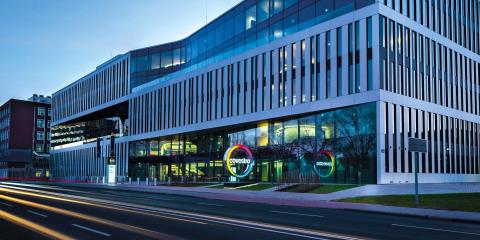
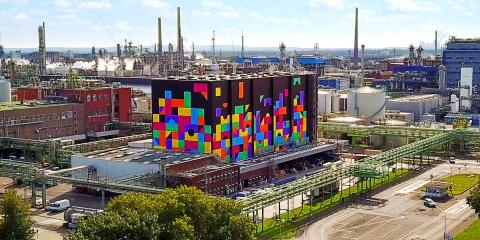
North Rhine Westphalia (NRW) is strategically important to Covestro: The company has production operations at three sites here. The sites in Leverkusen, Dormagen, and Krefeld-Uerdingen are no more than 70 kilometers apart. Since 2010, they have been combined in a separate organization, which is known as the NRW site network.

The tight network ensures that the NRW sites, which employ around 6,400 people, are even more efficient. This is crucial, since almost 30 percent of Covestro's total global production capacity comes from Germany – a significant proportion of which from NRW. The sites in Leverkusen, Dormagen and Krefeld-Uerdingen currently still account for a significant proportion of the Group's greenhouse gas emissions. This should change as quickly as possible.

Covestro wants to be operationally climate-neutral by 2035. The aim is to achieve net-zero emissions from our own production (Scope 1) and from purchased energy (Scope 2) by then. Greenhouse gas emissions upstream and downstream in the value chain (Scope 3) are also to be reduced by ten million tons of CO₂ (minus 30 percent compared to 2021) by 2035 – in the long term, Covestro is aiming for climate neutrality for Scope 3 emissions by 2050.

The company has therefore drawn up a clear roadmap for its NRW sites: The focus is on the use of 100 percent renewable electricity, the climate-neutral generation of steam and a significant increase in energy efficiency. In this way, growth and sustainability are to be linked even more closely in NRW.

The sites in North Rhine-Westphalia are managed by Dr. Philip Bahke, who is also the head of production in Dormagen. He is in constant contact with the two other production managers in North Rhine-Westphalia, Dr. Thorsten Rische (Leverkusen) and Dr. Rob Eek (Krefeld-Uerdingen). One of their main concerns is to make logistics processes leaner and to unify production processes. However, the reliable supply of the plants with raw materials, such as hydrogen, natural gas, carbon monoxide and nitrogen, and various forms of energy is also essential in order to compete internationally.

Verifiably sustainable production

Covestro has received the internationally recognized ISCC Plus mass balance certification for all three NRW sites. Customers can now be supplied with large product volumes from renewable attributed raw materials. These include, for example, selected polycarbonates, components for polyurethane (PU) rigid and flexible foams, PU coating and adhesive raw materials, thermoplastic polyurethanes (TPUs), and specialty films. Quality and properties are no different compared to their fossil-based counterparts. Covestro's certified mass-balanced products enable customers to achieve their own sustainability goals much faster. At the same time, they can also help to significantly advance the transition to a circular economy.

With its NRW site network, Covestro combines different corporate divisions such as maintenance, infrastructure, warehousing and service. As a result, the company is able to reduce costs for all of the NRW sites and improve their cost-competitiveness over the long-term. Thus, the network is key to achieving economic success in the region.

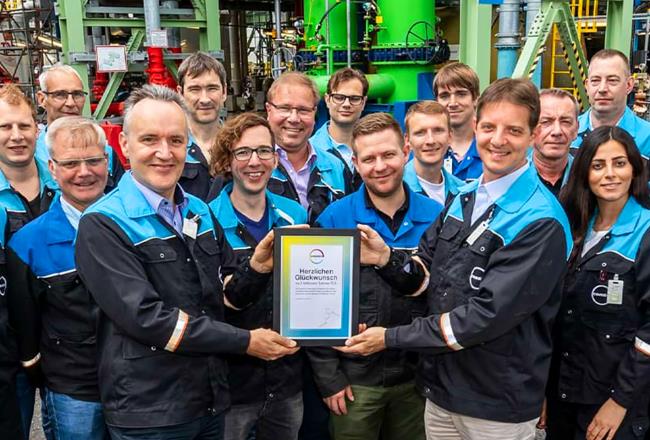
Award for sustainability strategy in NRW

Covestro was honored in the NRW – Economy in Transition competition for its sustainable products and processes. The expert jury honored the material manufacturer for its innovative entrepreneurial spirit. In particular, the panel recognized the company's exemplary alignment on the circular economy. Covestro is focusing on alternative raw materials, renewable energy, and lower emissions at its three NRW sites. The company also aims to develop innovative technologies to improve the recycling of end-of-life products and unavoidable waste. In this way, Covestro is successfully driving structural change in NRW.

Expanding infrastructure in NRW

To ensure that this remains the case in the future, Covestro needs intact infrastructure around its plants at its North Rhine-Westphalia sites. This is essential for the company's growth, work and well-being. Strengthening the overall transport system and creating a sustainable infrastructure in Germany is one of the pressing issues for Covestro. Traffic routes such as roads, railways and waterways need to be updated and better connected. Companies such as Covestro, after all, rely on the seamless and reliable supply and delivery of raw materials and products.

A well-developed infrastructure is essential to industrial companies in Germany. Covestro, for instance, procures approximately 75 percent of its goods in Leverkusen, Dormagen and Krefeld-Uerdingen via inland waterway transport. At the same time, the company ships out around 30 percent of its manufactured materials in NRW.

Consequently, Covestro has been strongly affected by the increasingly frequent low water in recent years. This is another reason why there is great interest in getting an even better handle on such extreme situations in the future.

In 2019, an alliance of political and industry leaders signed an action plan called "Low Water on the Rhine". It aims at creating reliable transport conditions on the Rhine.

Despite changing climatic conditions, it is important that the Rhine remains a reliable transport route. Hence, the significance of inland waterway vessels as an efficient and environmentally friendly means of transport must be elevated. This might also be accomplished by developing new types of ships such as the flat-bottom vessels. Beyond that, water level prediction systems need to be improved. One barge replaces about 60 trucks or 25 rail tank cars.

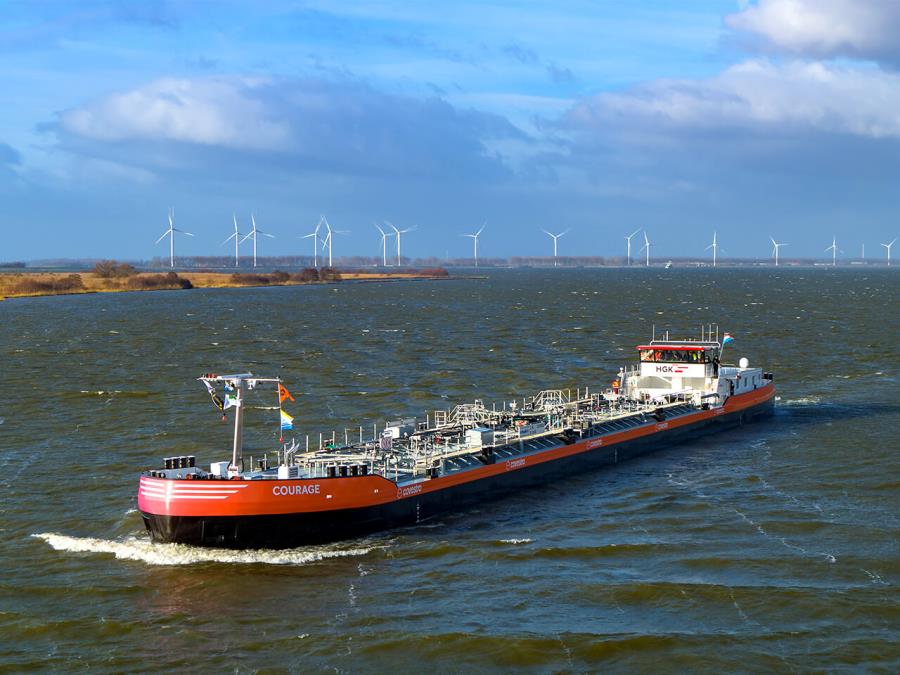
To build even more sustainable and reliable supply chains in the long term, Covestro is deploying two low-water vessels on the Rhine. The "CURIOSITY" and the "COURAGE" transport finished Covestro products from North Rhine-Westphalia to customers in an even more environmentally friendly way, while shining in bright Covestro colors.

Their diesel-electric drive allows CO₂ emissions to be reduced by up to 30 percent. Pollution from particulate matter and other pollutants can also be significantly reduced. In addition, both ships are already H₂- or future-fuel-ready and, thanks to their special design, can be converted to new types of propulsion systems such as hydrogen - as soon as they are ready for the market.

One of two low-water ships, the "Courage" transports finished Covestro products across the Rhine.

The special feature: Even at low water levels of up to 40 centimeters at the Cologne gauge, the low-water ships are ready for operation. The cargo can then be transported via the adjacent inland waterways to the Covestro site in Brunsbüttel.

Always on board: the Covestro values "COURAGE" and "CURIOSITY," which in the form of the ship's name are intended to ensure safe journeys.

On the path to operational climate neutrality by 2035, Covestro is also focusing on gradually converting its production to electricity from renewable sources. A particular focus is on the production of especially energy-intensive basic chemicals such as chlorine, caustic soda and hydrogen.

As part of a cooperation with LANXESS, the production of these chemicals can now be made even more climate-friendly. In the production of the chemicals that LANXESS purchases from Covestro, the materials manufacturer uses electricity with certificates of origin from hydropower on a pro rata basis in the electrolysis plants in NRW. This can reduce reported emissions by up to 120,000 metric tons of CO₂ per year.

Insights into Covestro's chlorine electrolysis plant in Leverkusen, where the company uses energy from hydropower based on certificates of origin.

Chlorine, caustic soda and hydrogen are important basic components for many products in the chemical industry. The chemicals produced at the ISCC-Plus-certified Covestro sites in Leverkusen and Krefeld-Uerdingen are further processed at LANXESS to manufacture products for the food industry or agriculture.

Thermal insulation panels, car headlights, or smartphone casings – Covestro’s high-quality plastics are used in many areas of everyday life. Carbon monoxide (CO) is an indispensable building block for their production. However, production at the Krefeld-Uerdingen site is insufficient in the long term. Therefore, the facilities there are to be supplied with CO via a pipeline from the Dormagen site.

Higher Administrative Court of Münster makes final decision

The 67-kilometer-long pipeline is nearly complete but has not yet been able to go into operation due to various legal proceedings. In January 2025, the Higher Administrative Court in Münster ruled that the planning approval decision for the construction and operation of the pipeline has become final and legally binding. The legality and safety of the project have thus been confirmed by various judicial instances.

The final remaining work, including additional protective measures along the route, is clearly defined and is currently being planned by Covestro. This will be followed by the final technical acceptance and the subsequent steps for commissioning.

Significance for North Rhine-Westphalia

The CO pipeline is part of a cross-site raw materials network in North Rhine-Westphalia. It helps strengthen the competitiveness of the chemical industry and numerous processing companies in the state. At the same time, it supports the production of materials needed for climate protection, energy efficiency, and modern mobility.

The North Rhine-Westphalian state parliament and various courts have repeatedly confirmed the project’s contribution to the state’s economic structure and the common good.

The high-strength steel pipes used in the CO pipeline were installed at a minimum depth of 1.40 meters.

Comprehensive safety concept

The CO connection line was developed using a multi-stage safety concept that significantly exceeds legal requirements in numerous areas. The goal is to ensure that the transport of carbon monoxide is safe and controllable at all times.

Special emphasis was placed on safety right from the design and installation phases of the line. The steel pipes are particularly durable, yet flexible, and additionally feature a plastic coating as well as comprehensive corrosion protection. The pipeline was laid at a minimum depth of 1.40 meters—significantly deeper than required by law. Large sections of the route are even deeper.

The technical design of the pipeline also far exceeds future operational requirements: The pipeline operates at a maximum working pressure of 13.5 bar but is designed for a pressure of 100 bar. During pressure tests, it withstood loads of over 200 bar.

The connecting pipeline is continuously monitored. Several independent monitoring systems constantly check the CO flow within the pipeline. In addition, a leak detection and localization system is installed along the entire route that would detect even the smallest amounts. The pipeline is monitored around the clock by trained staff. This is supplemented by regular flyovers, inspections, and tests conducted by TÜV and the relevant authorities.

Additional safety measures have been implemented along the route to protect against external influences. These include special Geo-Grid protective mats and warning systems that secure construction work in the vicinity of the pipeline. Furthermore, detailed alarm and emergency response plans have been established in coordination with the relevant authorities. There are also several shut-off stations along the route that allow the pipeline to be shut down quickly and precisely if necessary.

Dialogue and transparency

Covestro is aware that the project has been the subject of public debate for many years and has raised questions and concerns among local residents. For this reason, the company intends to continue providing transparent information about the CO interconnector, the next steps, and the planned safety measures, as well as actively maintaining dialogue with the interested public.

Questions and answers about the CO Pipeline

  1. What is the pipeline needed for, and why is it so important to Covestro?
    With the connecting pipeline between Dormagen and Krefeld-Uerdingen, we aim to supplement the existing production system between our sites in North Rhine-Westphalia. This will create a secure, efficient, cross-site raw material network for plastics production. The connecting pipeline will significantly increase the availability of CO for production in Krefeld-Uerdingen and improve the competitiveness of the Rhineland site. This also benefits the downstream industry in North Rhine-Westphalia. At the same time, greenhouse gas emissions from CO production will be reduced by at least 50 percent.
  2. Through which areas does the pipeline run?
    The connecting pipeline is laid on the right bank of the Rhine. The route was subject to the regional planning scheme of the state of North Rhine-Westphalia and thus subject to an intensive assessment of all circumstances and safety aspects. As a result, the pipeline runs as far as possible along existing infrastructure routes such as railways and highways or other pipelines. A large part of the route runs through agricultural land. In some municipalities, the pipeline partly runs near residential areas.
  3. Why were the plans changed?
    In a complex infrastructure project, adjustments to the plans are generally unavoidable. Most of the changes only arose during construction work. The majority of the requested changes relate to route shifts of a few meters. For example, construction companies had to account for the location of existing power, water, gas, or oil lines or avoid other unexpected obstacles in the ground, and consequently adjust the actual route of the CO pipeline. Ecological considerations, such as the protection of tree stands, also led to changes. Despite prior evaluation of all available plans, their exact locations were not always known. It is standard practice to summarize these minor deviations in a subsequent application.
  4. How safe is the CO pipeline?
    Long-distance pipelines are the safest and most environmentally friendly means of transport for most liquid and gaseous substances. Carbon monoxide is transported safely via long-distance pipelines worldwide. Covestro uses materials and designs in the construction of the supply pipeline that exceed existing safety standards. For example, the walls of the plastic-coated steel pipes are particularly thick yet still flexible. This protects the pipes from impacts and earthquakes, among other things. The pipes are laid at a depth of 1.40 meters, and in some places even significantly deeper. The legal requirement is only 1.00 meter. The pipeline operates at a maximum pressure of 13.5 bar, though it is designed to withstand up to 100 bar.
  5. How is the pipeline monitored?
    Continuous monitoring relies primarily on the following systems: The pressure in the CO pipeline is continuously monitored — any changes would be detected immediately. Multiple leak detection and localization systems are installed along the entire length of the route. A sensor hose system would detect even the smallest amounts of CO via diffusion at an early stage, before any hazard could arise. In addition, both the CO fed into the system and the output volume at the end of the pipeline, as well as temperature and pressure along the pipeline route, are constantly monitored using the model-based mass balance method. The pressure wave method complements the mass balance method and is used for computer analysis to locate the leak based on the pressure wave pattern. Additional measuring devices will be installed, for example, to monitor temperature and pressure along the pipeline.
  6. What does the emergency plan look like?
    Even though Covestro does not expect any irregularities in the operation of the CO pipeline, the company has taken extensive precautions to alert and protect residents in the event of malfunction. In fact, several independent safety systems are activated even in the event of the slightest irregularity. If the monitoring equipment reported a malfunction, the pipeline would be immediately shut off via several valves. It can be vented in both directions — toward Dormagen and toward Uerdingen — where the carbon monoxide is safely disposed of. This depressurizes the pipeline. At the same time, a comprehensive alarm and emergency response plan is activated.
  7. How well is the pipeline protected against sabotage?
    The safety concept for the connecting pipeline provides fundamental protection against external influences. The pipeline was laid at a depth of at least 1.40 meters and is monitored technically around the clock. Modern control and leak detection systems continuously monitor the CO flow in real time. In addition, the pipeline is regularly flown over and inspected on foot to detect any irregularities at an early stage.
  8. Carbon monoxide – how dangerous is this gas?
    Carbon monoxide (CO) is not a harmless gas — it can be fatal because it prevents the body from absorbing oxygen. Carbon monoxide is subject to the Hazardous Substances Ordinance. On the other hand, CO is a gas that people live with daily in low concentrations: it is produced when fuel is burned in cars and airplanes, as well as when smoking cigarettes. The key is the safe handling of CO. Covestro has decades of experience with this; carbon monoxide has been used at Covestro sites for just as long. Through this extensive operational experience, with employees specially trained in handling CO, and highly advanced plant technology, Covestro ensures the highest level of safety.
  9. When will the CO pipeline be put into operation?
    Covestro has always emphasized that the pipeline will only go into operation once all legal and construction requirements for its safe operation have been met. With the decision of the Higher Administrative Court of Münster in January 2025, the planning approval decision for the construction and operation of the pipeline has now become final and legally binding. The remaining work to be performed is clearly defined. However, due to the lengthy duration of the proceedings, these tasks must be tendered again. For environmental protection reasons, the construction work itself can only be carried out within narrow time frames. Finally, the pipeline must undergo final technical acceptance. Covestro is now planning all these steps in detail and will use this as a basis to develop a schedule for the final steps leading up to the pipeline’s commissioning.

Covestro – A good neighbor

Living together in harmony is very important to Covestro. This is why the company actively seeks out dialog and maintains close contacts with neighbors at its production sites. At Covestro, safety comes first. The company is dedicated to reducing risks for our employees and neighbors and to ensuring safe production processes. Additional information is available on the Chempark Krefeld-Uerdingen website.

Covestro in Germany

  • Covestro employee on the factory premises
    Germany

    Production

    Covestro is committed to energy-efficient and sustainable production at its German sites.

  • Germany

    Leverkusen

    Covestro's headquarters in Leverkusen houses the company's administration, research and production facilities.

  • Germany

    Dormagen

    Dormagen is the largest and one of the most modern Covestro sites in Germany.

  • Germany

    Krefeld-Uerdingen

    Covestro's Krefeld-Uerdingen location is a leader in manufacturing high-tech plastics like polycarbonate.

  • Germany

    Safety

    Health, safety, environmental protection and the quality of our products and processes all contribute to the corporate success of Covestro.

  • Germany

    Neighborhood

    Covestro wants to be a good neighbor for the people around its production sites and supports many exciting projects and great associations.

  • Germany

    Public Affairs

    Covestro‘s political advocacy activities abide by the Group directives “Responsible Lobbying” and “Corporate Compliance.

請與我們聯絡!

Contact

您今天聯絡我們是為了什麼主題?

您如何描述自己?

您對哪種材料類型感興趣?

您對哪種產業類型感興趣?

這是哪一種類型的查詢?

我們如何與您聯絡?

您請求的主旨是什麼

您給我們的訊息

*必填欄位

關於資料處理的資訊請參閱我們的 隱私權聲明。

Compare