



Wealth and Resilience – The Underestimated Value of the Circular Economy
The circular economy benefits not only the environment – it also strengthens economic performance and resilience. This triple win makes it the right project for Europe. It is now up to the European Commission to set the course.
Geopolitically vulnerable, socially unstable, increasingly less competitive – Europe is facing an accumulation of challenges not seen in decades. Against this backdrop, yet another piece of bad news risks going unnoticed: climate change has the continent firmly in its grip.
The region is warming twice as fast as the global average. In 2025, temperatures across at least 95 percent of Europe were far above the normal range, the World Meteorological Organization (WMO) warns. And it simultaneously emphasizes what is now most urgent: a massive expansion of the circular economy.
Deliberations in Brussels
The warning comes at the right moment. A pivotal decision is currently being made within the EU: the College of Commissioners is deliberating on the direction of the Circular Economy Act – a landmark legislative initiative planned for this year that aims to accelerate Europe's transition to circularity.
That it must be advanced swiftly for environmental reasons alone is made abundantly clear by the WMO warning. But we should not promote the circular economy solely on environmental grounds. We must also recognize it as a strategic lever capable of strengthening Europe's resilience in the geopolitical arena – and at the same time as a major opportunity to drive the EU forward economically.
The circular economy holds enormous untapped economic potential – in Europe and worldwide. As the recently published Circularity Gap Report highlights, an estimated 25 trillion euros in value is lost globally every year due to the continued dominance of the linear economy – nearly one third of global GDP.
Untapped Potential
Germany, the EU member state with the highest material consumption, could also benefit enormously from a consistent and comprehensive introduction of the circular economy: the country’s gross value added from the circular economy could more than double from around 60 billion euros today to up to 125 billion euros by 2045. This is the finding of a comprehensive study by the Federation of German Industries (BDI) and Boston Consulting Group.
Covestro, with its expertise in materials science, contributed to the study. Among other things, we are working on innovative technologies to enable the large-scale recycling of plastics – for example, polyurethane foam used in mattresses, of which an estimated 40 million are discarded and sent to landfill across Europe every year.
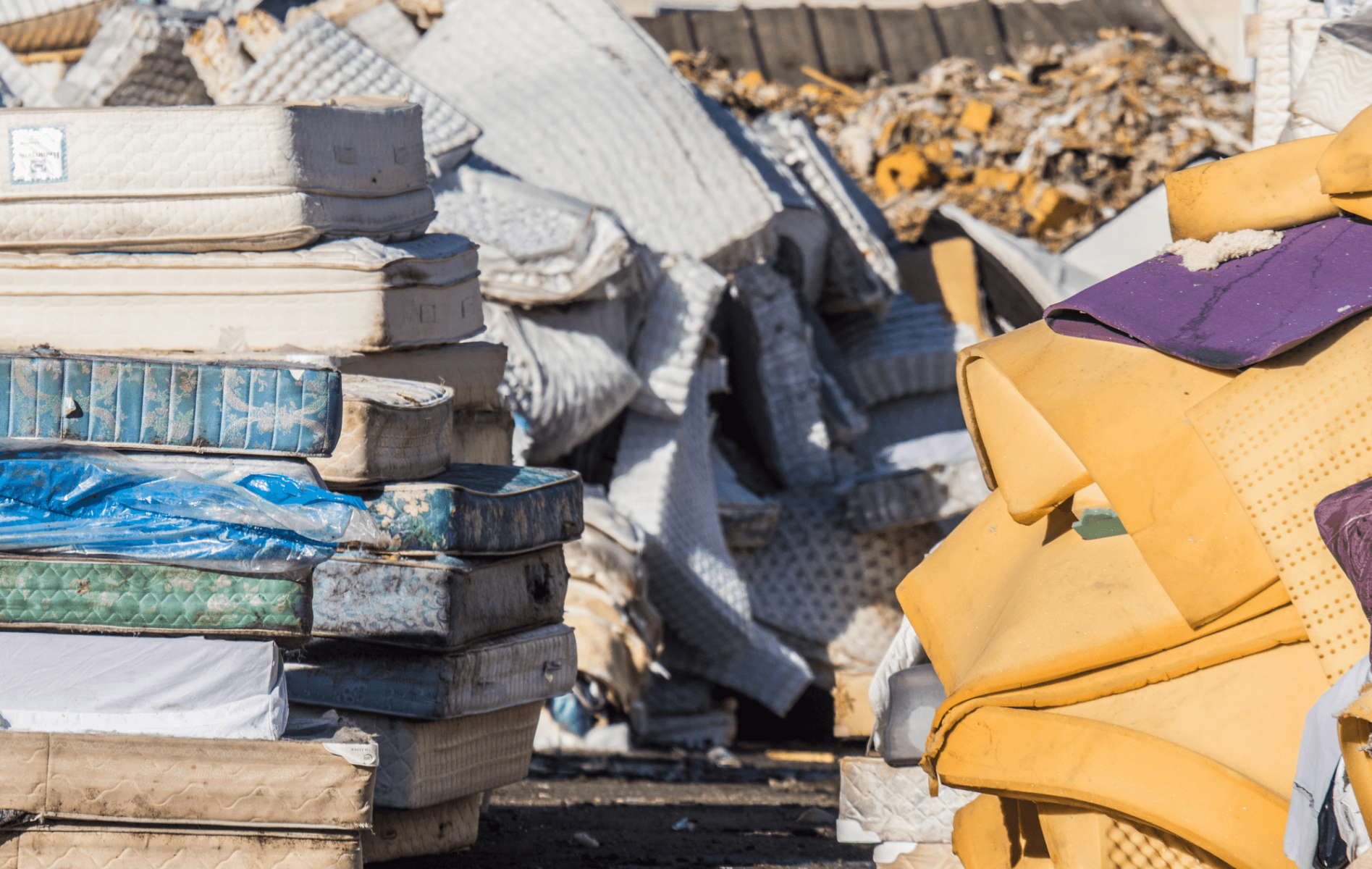
Chemical recycling can change this. Our "Evocycle® CQ mattress" process makes it possible to break down the foam into its two core components and reuse them at high quality to produce new polyurethane.
This is part of a holistic approach in which we look not only at recovering products at the end of their life, but also at the very beginning of their creation – with design that incorporates circularity from the outset, and with renewable raw materials such as plant-based biomass instead of crude oil.
Priorities for Europe
Especially when it comes to raw materials, it becomes clear that the circular economy not only boosts economic strength but also increases resilience. Those who use materials for longer, more efficiently, and in closed loops reduce dependencies on raw material markets, supply chain risks, and price fluctuations. This also reinforces key areas such as energy and defense – two of the EU's most exposed flanks.
In Germany alone, consistent recycling and remanufacturing could reduce import dependency for rare earths by 20 percent and for strategic battery materials by 10 percent by 2045.
This is another reason why we should make 2026 the year of the circular economy and unlock its full potential. As the Commission deliberates on the Circular Economy Act, it should, in my view, be guided by three priorities.
First, create an efficient European market for secondary raw materials with as little administrative burden as possible. Second, set incentives to drive greater demand for and use of alternative raw materials, including recyclates – for example through tax benefits and greater consideration in public procurement. And third, improve investment security and thereby lay the foundation for technological expansion in the circular economy by ensuring that chemical recycling, in particular, is widely recognized in regulation.
Those who implement the circular economy consistently will gain ecologically, economically, and geopolitically. The Circular Economy Act offers the opportunity to turn this triple win into reality – and in doing so, to strengthen the long-term viability of both Europe and Germany.