



Materials Science Meets Data Power
Robotics, autonomous mobility, remote medical care – these many new fields of the future also place new demands on materials. The necessary driving force is provided by advanced technologies such as artificial intelligence and quantum computing.
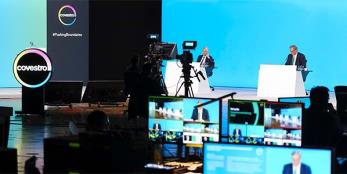
More and more new fields of the future are gaining in importance: robotics, autonomous mobility, remote medical care. The demands on advanced materials are growing at a correspondingly rapid pace. They must be more powerful, more resource-efficient, and circular – all of this in ever shorter cycles. This is increasingly being made possible by the interplay of deep materials expertise and new digital technologies – a topic that is currently high on the agenda of politics, business, and science, including at the European Manufacturing Conference 2026 in Brussels.
Materials and digitalization are a future-oriented combination that is becoming increasingly important, especially for the chemical and materials industry. Artificial intelligence opens up new possibilities in research and development, production, logistics, and customer relationships. It can analyze vast amounts of data, identify correlations, and help make development and production processes more efficient. In doing so, the industry is increasingly combining its traditional strength – knowledge of molecules, materials and industrial processes – with the possibilities of the digital world.
And the next technological leap is already on the horizon: quantum computers could one day simulate complex chemical processes at the molecular level, opening up entirely new avenues in materials development.
Thinking Across Technologies
The real strength lies in the interplay. Materials and process knowledge on one side; AI, high-performance computing and, looking ahead, quantum computing on the other. When these competencies are connected, innovations can be accelerated and brought into industrial applications more quickly.
The chemical industry in particular offers great potential in this regard. The development of new materials is complex. Digital technologies can help identify potential solutions faster, better predict material properties, and shorten the path from research to application. What matters is not the technology alone, but its benefit to concrete industrial challenges.
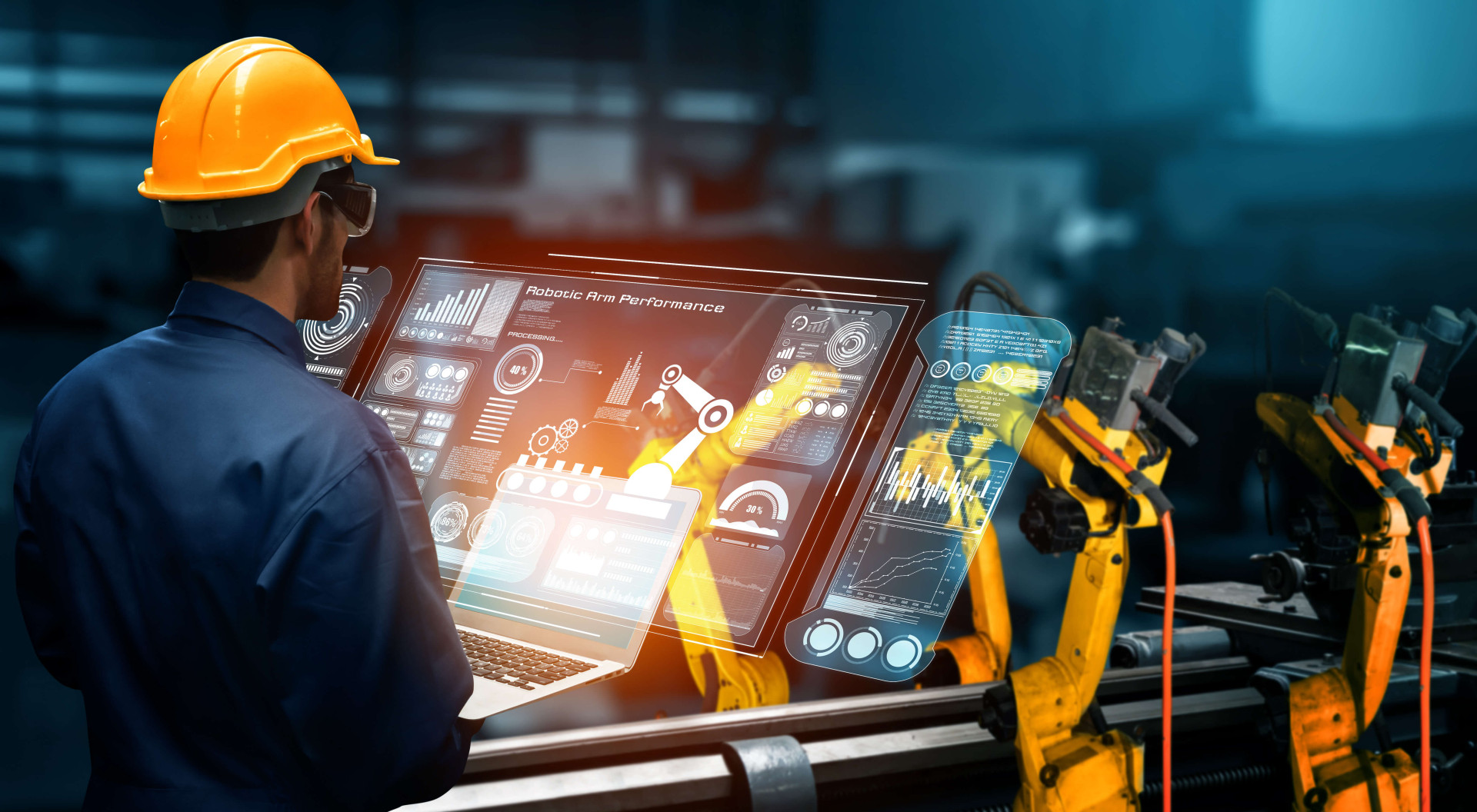
This interplay also holds crucial opportunities at the macroeconomic level, especially for Europe. The continent has excellent science, a broad industrial base, and highly skilled workers. Yet global competition shows that it is no longer enough to be merely a technological leader. Europe must above all become faster at translating scientific breakthroughs into marketable industrial applications.
Increasing Efficiency and Resilience
This is about more than just efficiency gains. An innovative industrial base that combines digital and physical strengths can strengthen Europe's competitiveness and technological sovereignty. When materials are developed more intelligently and produced more efficiently, resources can be better utilized, more value can be created, and one-sided dependencies can be reduced. The combination of chemistry and digitalization can thus make an important contribution to the resilience of Europe as a business location. That's exactly what the Brussels conference is about.
The chemical and materials industry plays a special role in this. Its materials form the physical foundation for numerous green and digital transformations – from the energy transition to modern medical technology and data centers, to the buildings of the future.
The industrial future will therefore not be digital alone. What will be decisive is connecting the physical world of molecules with the digital world of data. That is precisely the great opportunity: to translate new technologies into industrial innovations faster and thus contribute to a competitive, resilient and sustainable economy.
Because even the digital future needs a physical foundation. And that includes innovative materials.