






The next drought will certainly come – are we prepared?
Harvests are shrinking, prices are rising – and ensuring the availability of food is becoming an ever greater challenge. The message of World Food Day: we need forward-looking innovation and the right materials for the next drought.
Until now, we have tended to see food shortages as a problem for the less developed regions of the world. But since Russia's attack on Ukraine, the war in the Gulf and the extreme heat and drought of this summer, that perception has been changing: food security has become a very real challenge for wealthier countries, too.
Europe's harvest between June and September is likely to fall short by 16.7 million metric tons – roughly as much as Italy, Belgium and the Netherlands normally produce combined. According to experts, this could cost farmers more than three billion euros.
And the worst is probably yet to come. The global weather phenomenon El Niño is not only unusually strong but also lasting unusually long this time. According to the latest findings of the World Meteorological Organization, it is expected to continue until February 2027, bringing increased flooding and drought – with devastating consequences for agriculture.
All the more important, then, that World Food Day now puts the spotlight on what matters most: developing innovations for the agricultural sector that reach far into the future. Under the motto "Innovate today. Nourish tomorrow.", it comes down to two questions: What solutions do we need? And how do we organize innovation so that it is available in the right place at the right time?
Innovating Today
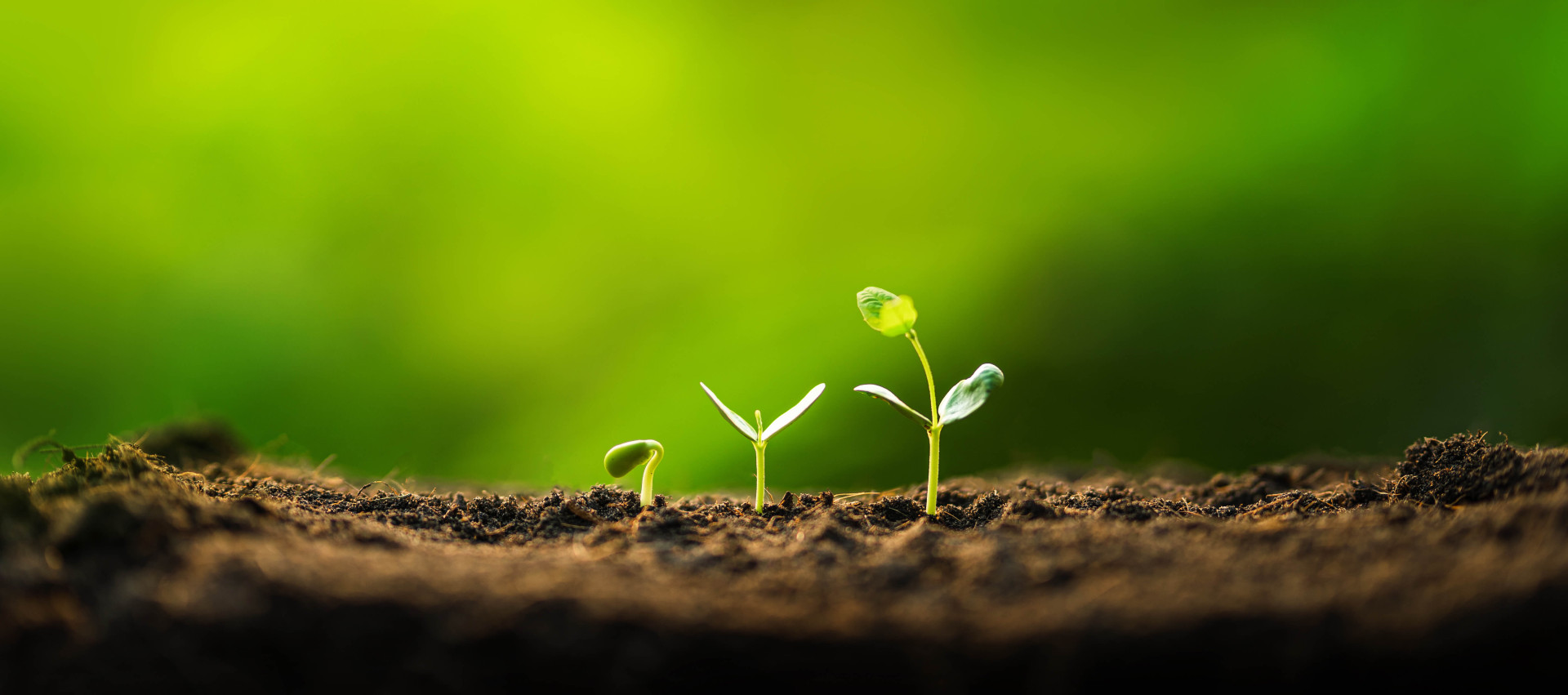
Here is some good news: many solutions already exist – from cultivation and harvesting to food preservation, distribution, consumption and the recovery of residues. And all of them require the right materials. Covestro, for example, is working on materials for seed coatings that not only improve their handling and germination but also biodegrade completely instead of leaving microplastics in the environment.
Another example: binder raw materials for paper packaging, produced partly from biomass. They can make the paper more impermeable, better protecting the contents from moisture, oxygen or grease, while also supporting the recyclability of the paper.
What matters throughout is connected thinking. To fundamentally improve the food supply, we need system innovations that link ecosystems and economic spaces with biology, materials, technology and business models.
After all, the real benefit often only emerges from the interplay – as with the greenhouses, solar dryers and insulated cold rooms based on polyurethane and polycarbonate that Covestro has helped make possible with partners in India and other countries. It is not just about installing such equipment. Once dried, fruits also need suitable packaging. And packaged, dried fruits may open up new markets for farmers. This is how new value chains can emerge.
Nourishing Tomorrow
But we must not rest on existing solutions. In a rapidly changing world, traditional innovation cycles often fail to keep pace with sudden shifts in needs. Those who invest only when demand is clearly measurable arrive too late. Those who fully develop every option before a need arises waste resources. And those who simply extrapolate from today soon find themselves facing a very different reality – and the wrong solutions.
Moreover, many research teams are so closely tied to current markets that prototypes lose support when demand is not yet sufficient. If the know-how is missing later on, the dilemma is considerable.
What is needed is to explore solutions for future scenarios through simulation. We need an actively managed solution space in which possible future options are prepared with appropriate resources. As soon as weak real-world signals add up to significant demand, development must be accelerated.
To this end, we should systematically interlock problem and solution spaces. The problem space consolidates risks, scenarios and local conditions. The solution space ranks available approaches by their readiness for deployment. This reveals what can be adapted – and where targeted research is missing. The Food and Agriculture Organization (FAO), for one, is calling for a shift from reacting to anticipatory action.
For innovation work, this means in concrete terms: clarifying early which triggers should prompt us to act, who decides and what resources are available. Because the answers to the next drought will not be invented on the day of the crisis, but long before.
Materials play an underestimated role in this – they are the point where research becomes product and benefit becomes visible, from the field to the store shelf. World Food Day is a good occasion to keep that in mind.