





Cities – the world's largest raw material warehouse
More and more people are drawn to cities, and environmental pressures grow with them. To make cities genuinely more sustainable, we must not only build in a climate-friendly way, but also rethink what happens to the existing building stock.
By 2050, two thirds of the world's population growth will take place in cities. This brings significant environmental challenges. Most urgently, rising CO₂ emissions need to be cut. Another challenge of urbanization receives less attention, yet it is just as central to sustainable urban development: how do we deal with the millions of tons of construction waste generated every year when buildings are built, renovated or demolished?
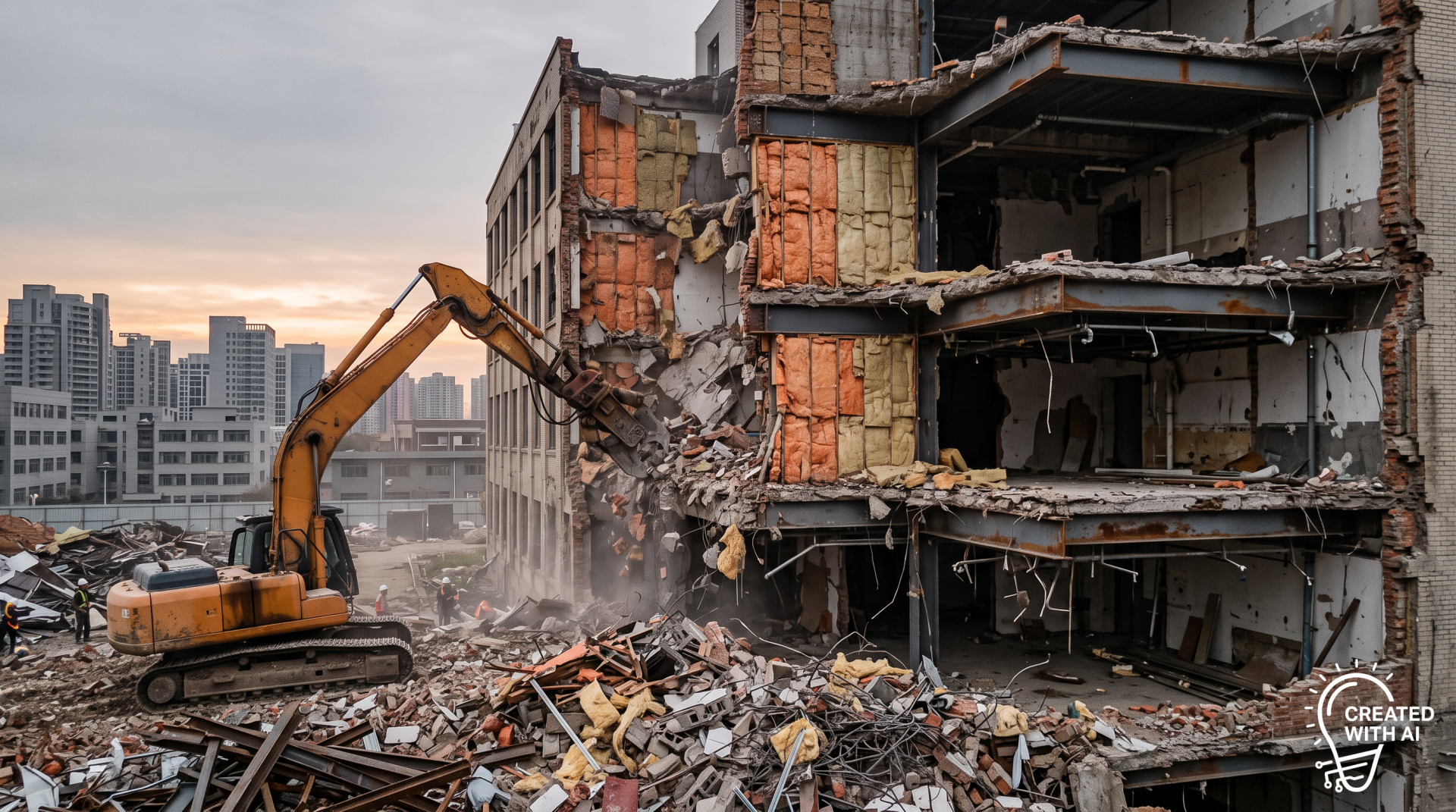
So far, most of it ends up in landfills, including large amounts of insulation materials. An environmental dead end. But there is another way. These waste streams contain valuable raw materials that can be recovered and used for new products. The concept is called “urban mining”: treating the existing building stock as a reservoir of valuable raw materials. One of the most promising ideas in the sustainability debate, yet one that still receives far too little attention.
This year's UN World Cities Day on 31 October is dedicated to the motto “Regenerating the City: Adequate Housing for All”. For me, as someone who works with materials for the construction sector every day, this is more than a political catchphrase. It is a concrete call to action: how do we transform our cities without wasting the resources already built into them?
What buildings store over the decades
Cities are carbon reservoirs, quite literally. Every building contains stored carbon in steel, concrete, insulation, and many other materials. This so-called embodied carbon accounts for a significant share of global emissions associated with construction. And it is created before the materials even come into use – namely during their production. Anyone who takes climate action in the construction sector seriously cannot get past this issue.
The good news: there are real levers here. For example, by producing building components from materials that contain as little carbon as possible. Covestro, for instance, offers MDI – a key raw material for polyurethane rigid foam insulation – in a climate-neutral version that produces no net emissions, from raw material extraction to the factory gate. For building insulation, which can already cut the energy required for heating and cooling by up to 70 percent, this adds another dimension: less carbon not only during operation, but also in the material itself.
From waste back to raw material
But what happens at the end of the life cycle? This is the blind spot. Rigid foams used in building insulation were long considered practically non-recyclable, because their chemical structure renders mechanical recycling largely ineffective. That is exactly what we want to change.
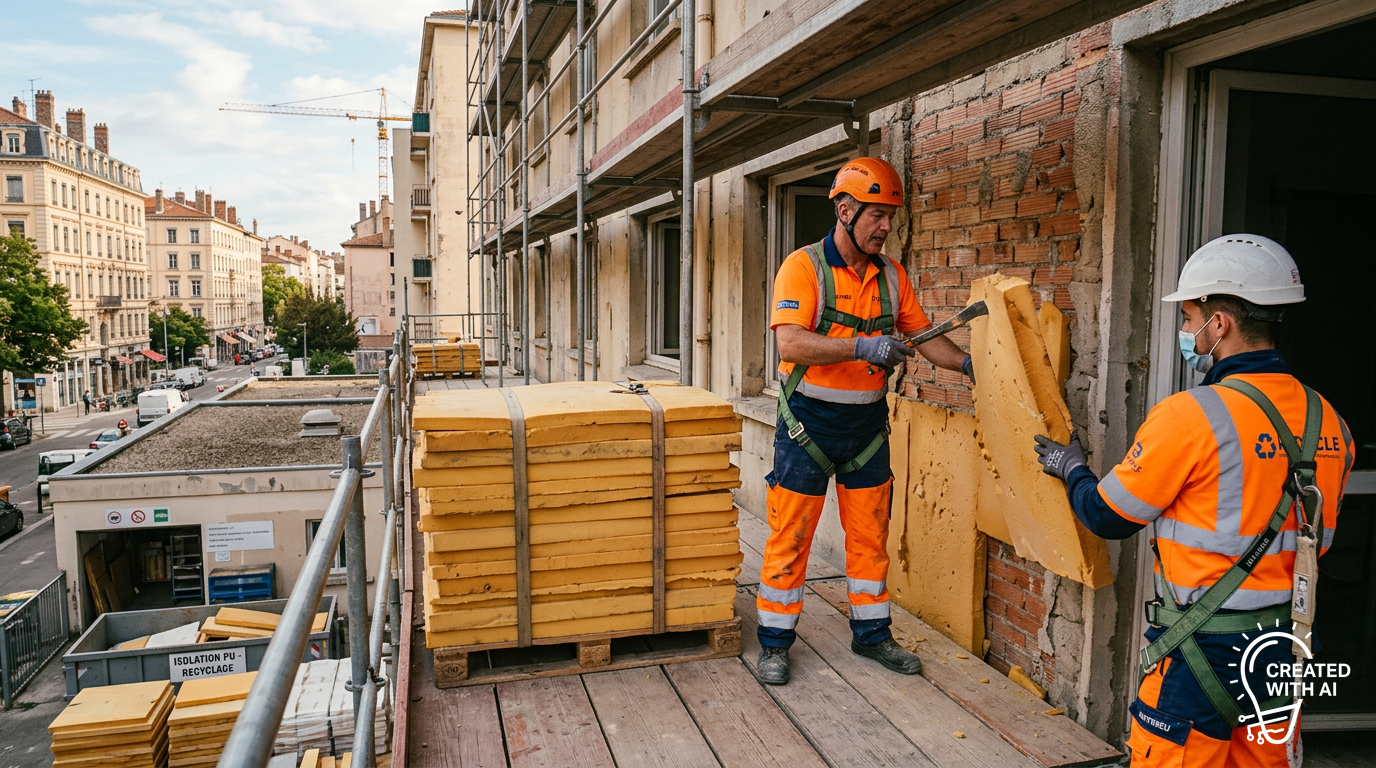
Together with the Fraunhofer Institute for Environmental, Safety and Energy Technology UMSICHT, Covestro is working on smart pyrolysis technology, a chemical recycling process that breaks down polyurethane rigid foam waste from buildings and household appliances at the molecular level and recovers high-purity aniline from it. This recycled aniline can be used directly to produce new MDI that meets the same quality standards as MDI from conventional production. The CO₂ footprint is up to 40 percent lower compared to conventional fossil-based production routes.
A pilot plant with an annual capacity of 2,000 tons is scheduled to start operations in 2028. This is no longer a laboratory project; it is a decisive step toward industrial-scale deployment. And it is what “urban mining” means in practice: insulation material from a demolished building in Berlin becomes the raw material for the insulation of a new building in Madrid.
Regeneration needs both
The UN motto is well chosen: we need regeneration and adequate housing for all. Regeneration does not mean new construction at any price. It means closing material cycles and cutting emissions where they arise – including in the production of building materials.
More than one billion people live in informal settlements today. The pressure on the construction sector is enormous. Materials that combine high insulation performance, low-carbon production, and recyclability at the end of their service life are not a luxury. They are a prerequisite for making this transformation possible.
Regenerating cities means recognizing value where others see waste.