



What drives us: Climate neutrality on the path to a circular economy
Our goal of transforming toward net-zero emissions is intended to create the foundation for a sustainable future. By manufacturing our products in a climate-neutral manner in the future, we can make an active contribution to climate protection and support our customers in achieving their own sustainability goals. In addition, we are pursuing the goal of sustainably strengthening our own competitiveness.
For Covestro, this transformation means systematically driving energy efficiency, establishing more sustainable production processes, using climate-neutral sources of energy, and gradually moving away from fossil-based raw materials. In doing so, we are embracing a holistic approach toward more sustainable production and business models.
This is how we aim to bring innovative, climate-friendly products to market and create added value for society, customers, and future generations.
Our Climate Targets
The year 2035 marks an important initial milestone on our journey. By then, we aim to be operationally climate-neutral with regard to emissions from our own production (Scope 1) and emissions from the use of energy produced outside the company (Scope 2). By introducing absolute reduction targets for emissions from our upstream and downstream value chains (Scope 3), we have significantly advanced our comprehensive climate strategy to achieve climate neutrality: we aim to reduce 10 million tons of CO₂ equivalents (equivalent to 30%) along the value chain by 2035 compared with the baseline year of 2021**. By 2050, we aim to reduce our Scope 3 emissions to net-zero.
Our targets for achieving operational climate neutrality were an ambitious step in our climate strategy. With the equally ambitious and realistic targets for reducing Scope 3 emissions, our strategy for climate neutrality is complete.
Our Journey to Achieving Scope 1 and Scope 2 Targets
Scope 1 and Scope 2 emissions refer to emissions that arise directly from a company's activities. Scope 1 emissions originate from our own production processes, while Scope 2 emissions come from purchased energy.
With regard to Scope 1 and 2, we have already achieved a global reduction in greenhouse gas emissions compared with the baseline year of 2020. This was achieved, among other things, through lower primary energy requirements and through regeneration of catalysts that capture nitrogen oxides. We are continuously expanding our procurement of electricity and steam from renewable sources. To this end, new supply plans are being developed and purchase contracts for renewable energy are being signed, among other measures.
To achieve our Scope 1 and 2 targets, we are increasingly aligning our processes, our production, and our electricity and heat usage toward sustainability, climate neutrality, and energy efficiency.

More Sustainable Production Processes
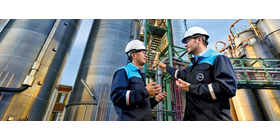
We continuously invest in expanding existing production capacities and building new ones. In doing so, we rely on state-of-the-art, climate-friendly technologies to make our production processes more sustainable and economically efficient.
The focus is on higher energy efficiency and the targeted reduction of process emissions. Our long-term investment projects are part of our climate targets and our CO₂ roadmap from the very beginning.
One example is the completed modernization of our TDI plant in Dormagen: It consumes up to 70 percent less energy than conventional processes.
The successful implementation of the NAUCI projects (Nitric Acid Unit Climate Initiative) at our sites in Baytown (USA) and Shanghai (China) also contributes to the reduction of our Scope 1 emissions.
Electricity from Renewable Sources
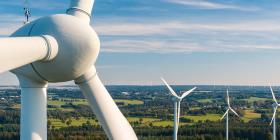
In addition to more efficient energy use in production, the transition to renewable energy is an important lever on the road to net-zero emissions. Our goal is to cover our energy needs entirely from renewable sources in the future.
To achieve this, we are developing new supply plans and entering into long-term supply contracts for renewable energy – particularly for electricity. To further drive the shift toward more sustainable sources of energy (in relation to Scope 2 emissions), we will primarily apply innovative collaborative models and technologies.
In this way, we are reducing the CO₂ footprint of our production and thus of our products, and supporting our customers in making their applications more sustainable.
Climate-Neutral Steam
We are continuously evaluating new solutions for climate-neutral energy supply at our sites. These include the use of biogenic and renewable energy sources such as hydrogen and hydrogen derivatives, direct electrification, and the use of carbon capture technologies. These approaches will make an important contribution to reducing greenhouse gas emissions in the future.
One concrete example is the innovative heat storage solution in which Covestro has invested for the first time: At the Brunsbüttel site, a so-called heat battery is being used that stores renewable energy and continuously delivers high-temperature steam – as a sustainable alternative to fossil fuels.
Our Journey to Achieving Scope 3 Targets
Scope 3 emissions include all greenhouse gases generated in processes along the upstream and downstream value chain. These emissions account for approximately 80 percent of the total greenhouse gas emissions of Covestro. We have expanded our comprehensive climate strategy by introducing absolute reduction targets for Scope 3 emissions, aiming to become climate-neutral holistically.
To achieve our Scope 3 targets, we are scrutinizing the entire value chain. Various interconnected factors play a crucial role in this – including the availability of alternative raw materials, renewable energies, technological advances and new processes, as well as the transformation of markets.
Since the majority of our Scope 3 emissions come from purchased raw materials, our vision of becoming fully circular also supports us on the path to climate neutrality.
Through innovation and collaboration with our partners along the value chain and a concrete action plan for all four levers, we aim to achieve our Scope 3 targets.
To reduce our Scope 3 emissions, we are using levers in four key areas:

Reduction of Suppliers’ Scope 1 and Scope 2 Emissions
Numerous raw material suppliers to Covestro have already set Scope 1 and Scope 2 targets themselves, which in turn can contribute to our Scope 3 targets. To reduce the Scope 1 and Scope 2 emissions of suppliers, Covestro maintains an active dialogue with its suppliers. In 2025, for example, we replaced imported ammonia with ammonia sourced from a local partner with a lower CO2 footprint at our Shanghai site (China).
In addition, Covestro is also developing a procurement strategy that defines when and in what form strategically important raw materials can be sourced from bio-based or waste-based feedstocks. To reduce Scope 3 emissions, important bio-based or waste-based raw materials play a crucial role.
Sale of Products Based on Alternative Raw Materials
In addition to our suppliers, our customers also play an important role in transforming our industry. Sustainable products are increasingly expected. Essential to sustainability is, for example, the offering of mass-balanced products. In this approach, sustainable materials are fed into the production process, and the environmental impacts are assigned to the end products on a bookkeeping basis. This enables customers to reduce their CO₂ footprint and their Scope 3 emissions with mass-balanced drop-in materials made from recycled and bio-based raw materials.
MAKE Projects
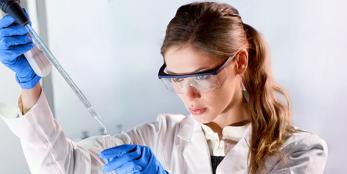
MAKE projects are innovative technology projects. The MAKE projects that reduce our Scope 3 emissions focus on alternative raw materials and recycling. These include, for example, the production of bio-based raw materials and the use of our own recycling technologies. Various MAKE projects reduce Scope 3 emissions, including:
- Bio-based aniline: A newly developed process enables us to produce the important basic chemical aniline from plants instead of crude oil.
- Recycling of PU mattresses: Together with partners, Covestro has succeeded in chemically recycling the main raw materials of polyurethane (PU) flexible foam from mattresses. We call this recycling technology Evocycle® CQ.
Further Actions
The further actions include, for example, increasing recycling rates to reduce emissions from waste incineration, changes in logistics processes such as the use of electric trucks, and changes in primary energy generation. In addition, innovation processes are to be accelerated by means of digital research and development and artificial intelligence.
The Important Role of the Chemical Industry
We see ourselves as innovation leaders within the chemical industry and have aligned our goals with those of the Paris Agreement, aiming to limit global warming to 1.5 degrees Celsius.
Our industry is committed to making a significant contribution to achieving climate neutrality and establishing a sustainable, carbon-neutral economy.
The entire plastics industry is changing, and we began helping to shape this change early on. Nevertheless, a significant portion of existing production methods is based on fossil fuels and the associated greenhouse gases.
Covestro aims to become a leading expert in sustainable materials for a climate-neutral world. Our vision accelerates the transformation – and our positive attitude is our driving force.
*The terms “climate neutrality” and “climate neutral” are used almost exclusively in the context of our Group’s Sustainable Future strategy. In this context, we understand climate neutrality as meeting our climate targets defined in accordance with the definition of net-zero targets under ESRS (Annex II to Commission Delegated Regulation (EU) 2023/2772). This will require the almost complete reduction of GHG emissions along the entire value chain (around 90–95%) along 1.5 °C pathways as well as the permanent neutralization of avoidable residual emissions by CO₂ removal.
**This figure already includes some growth-related emissions projected up to the year 2035.