








Waste Growth – A Nail in the Coffin of Food Security
Humanity must take action against the ever-increasing production of waste. In particular, reducing food waste could also represent an opportunity for food security that is coming under additional pressure from volatile supply chains and increasing extreme weather events. Modern cultivation methods and cold chains based on high-quality plastics help stabilize the situation.
Peels, rinds, leftovers, spoiled food. Every week, two to three kilos of food end up in my compost or trash. Because my eyes were bigger than my stomach. Because a dirty spoon supposedly ruined the jam. Because I once again confused the best-before date with the expiry date.
It’s a waste of value and resources – something that becomes even more apparent to me on the occasion of the International Day of Zero Waste. According to UN estimates, around 19 percent of all food is affected, while another 14 percent is lost after harvest. At the same time, the total amount of waste worldwide is expected to increase by another half by the middle of the century. These are conditions we as a society can afford less and less. Food waste in particular is a nail in the coffin of global food security. And that security becomes increasingly precarious – especially this year.
In 2026, food systems are increasingly suffering from climate chain reactions. A particularly strong El Niño is expected – the global weather phenomenon that warms the Pacific and disrupts the jet stream, the fast-moving air current that circles the Earth. The result: droughts and floods in the world's most important growing regions. Ocean temperatures have also been rising dangerously—twice as fast as 20 years ago—with devastating consequences for fish stocks.
2026 Threatens a Particularly Critical Food Situation
What makes 2026 particularly critical for the global food situation is also the war in the Persian Gulf. If ammonia and urea can no longer pass through the Strait of Hormuz, fertilizer could become scarce – precisely when many farmers need it most. If they miss the narrow spring window, yield losses for this year and the next are inevitable.
Geopolitical shocks and climate turbulence make one thing abundantly clear to me: zero food waste is anything but a niche topic. It is an ambitious goal that must be tackled quickly, seriously, and systematically – day by day. I see three main levers that can help secure food for the world's growing population – by 2050 alone, we are expected to have 1.5 billion more people.
First: Save Calories
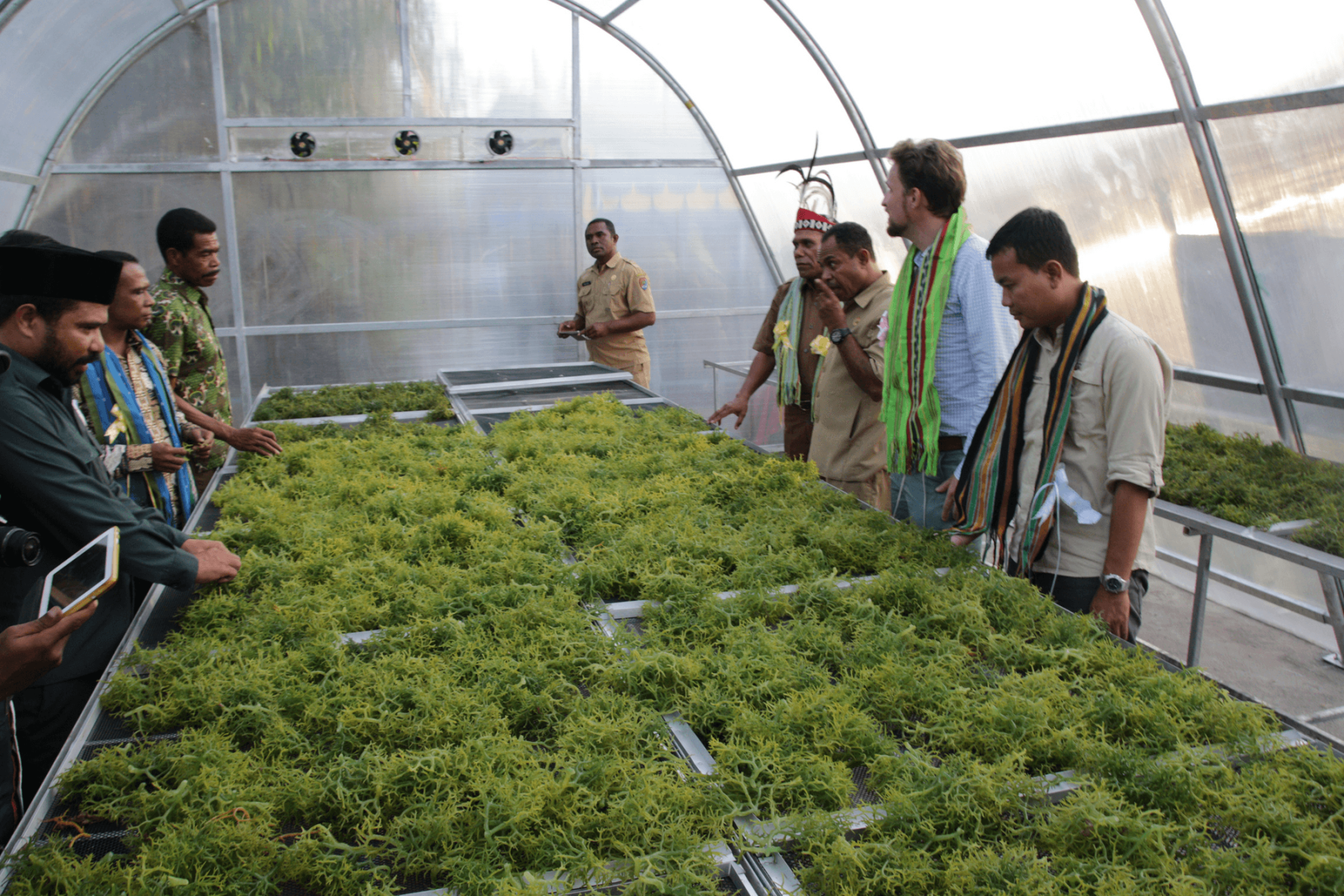
When fertilizer is scarce and timing is critical, efficiency is everything. Micro- and precision irrigation, for example, using dense networks of pipes and valves delivers "more yield per drop" and reduces harvest losses. Simple solar dryers – also made with high-quality plastics – help secure harvests and farmers' incomes in regions with high temperatures and frequent power outages.
Second: Save Kilos
In an El Niño year, shelf life matters. Highly efficient cold chains keep goods fresh – from field to kitchen, even during heat peaks and transport delays. Effective packaging is equally important. State-of-the-art, recyclable plastic films and coatings regulate oxygen supply and moisture, keeping food fresh for longer.
We must remember: producing the food itself usually requires far more resources than producing its packaging. If good, circular packaging helps prevent food from spoiling, the overall ecological balance is ultimately more positive.
On the other hand, when hygiene, demand, and logistics align, the unpackaged concept also works well. And in many households, precisely portioned quantities can reduce waste. What matters most is thinking from the end: generating as little waste as possible.
Circular Economy Contributes to Food Security
Which brings me to my third point: Closing the Loop
Food waste – which ideally should not be generated in the first place – should not end up in landfills. Instead, it should serve as valuable biomass to produce useful products. And packaging must be biocompostable or consistently recycled.
This requires diverse options and technologically new approaches, such as chemical recycling of plastics. We also need incentives, standardization, and transparency. Deposit systems, for example, return large quantities of PET bottles and enable bottle-to-bottle cycles. Digital labeling increases sorting accuracy and makes deposit and take-back systems scalable. And digital product passports make material flows visible and measurable.
We have the concepts, materials, and engineering expertise. But we are not applying them consistently enough – even as the need for action becomes ever more urgent. Packaging without a take-back route is not an embarrassment but negligence. Products without waste utilization in the business model are not an oversight but a risk.
Of course, it will be laborious and more expensive. But inaction costs more – ultimately even human lives. There are many ways to put a stop to food loss and waste. Let's get to it: pragmatically, science-based, collaboratively. From my kitchen to the supply chain.