




Turning Ideas into Impact
The world is being reshaped, and technological strength is becoming a decisive factor for economic prosperity. This makes it even more important to turn research findings into market-ready solutions more quickly.
Combating climate change, feeding a growing global population, securing rising energy demand: the world is full of challenges that companies and economies must address. The key lies in innovation, and the ability to innovate is becoming increasingly important. Those who lead in emerging technologies will secure competitiveness, value creation, technological sovereignty, and resilience in an increasingly uncertain world.
That is why countries around the globe are investing heavily in next-generation technologies. The United States is driving its industrial transformation through multi-billion-dollar programs, while China is strategically expanding its technological leadership. Europe, too, is focusing on research funding, more innovation-friendly framework conditions, and political initiatives such as the planned European Innovation Act, which aims to strengthen the links between fundamental research, industrial application, and investment.
Germany’s new High-Tech Agenda should also be seen in this context. Its objective is to focus more strategically on key future technologies such as artificial intelligence, microelectronics, and biotechnology. All of this is important and necessary. Yet what truly matters is not only generating new knowledge, but also how quickly discoveries can be translated into concrete applications, industrial processes, and market-ready solutions.
Research Must Deliver Impact
This is precisely where one of the greatest challenges for Germany and Europe lies. A persistent gap remains between excellent research and its industrial deployment. Many promising ideas never progress beyond the laboratory stage because reliable transfer structures, investment incentives, or industrial scaling opportunities needed for market maturity are lacking.
Accelerating innovation requires more than technology roadmaps alone. What is needed above all is a seamless innovation pathway, from basic research and pilot plants to large-scale industrial production. Only if science, industry, and policymakers work closely together in this way can innovations unfold their full economic and societal potential.
Taking a Broader View of Innovation
To build a truly future proof and globally competitive innovation ecosystem, a broad foundation and diverse drivers of innovation are essential. Innovation policy programs such as the German High-Tech Agenda therefore need to be conceived more comprehensively. Business should be more deeply involved – especially the chemical industry. Many key and cross-cutting sectors can only succeed with innovative materials and chemical processes. Whether circular economy, climate-neutral production, battery technologies, semiconductors, or renewable energy – chemistry is embedded in nearly every future-oriented industry and must always have a seat at the table.
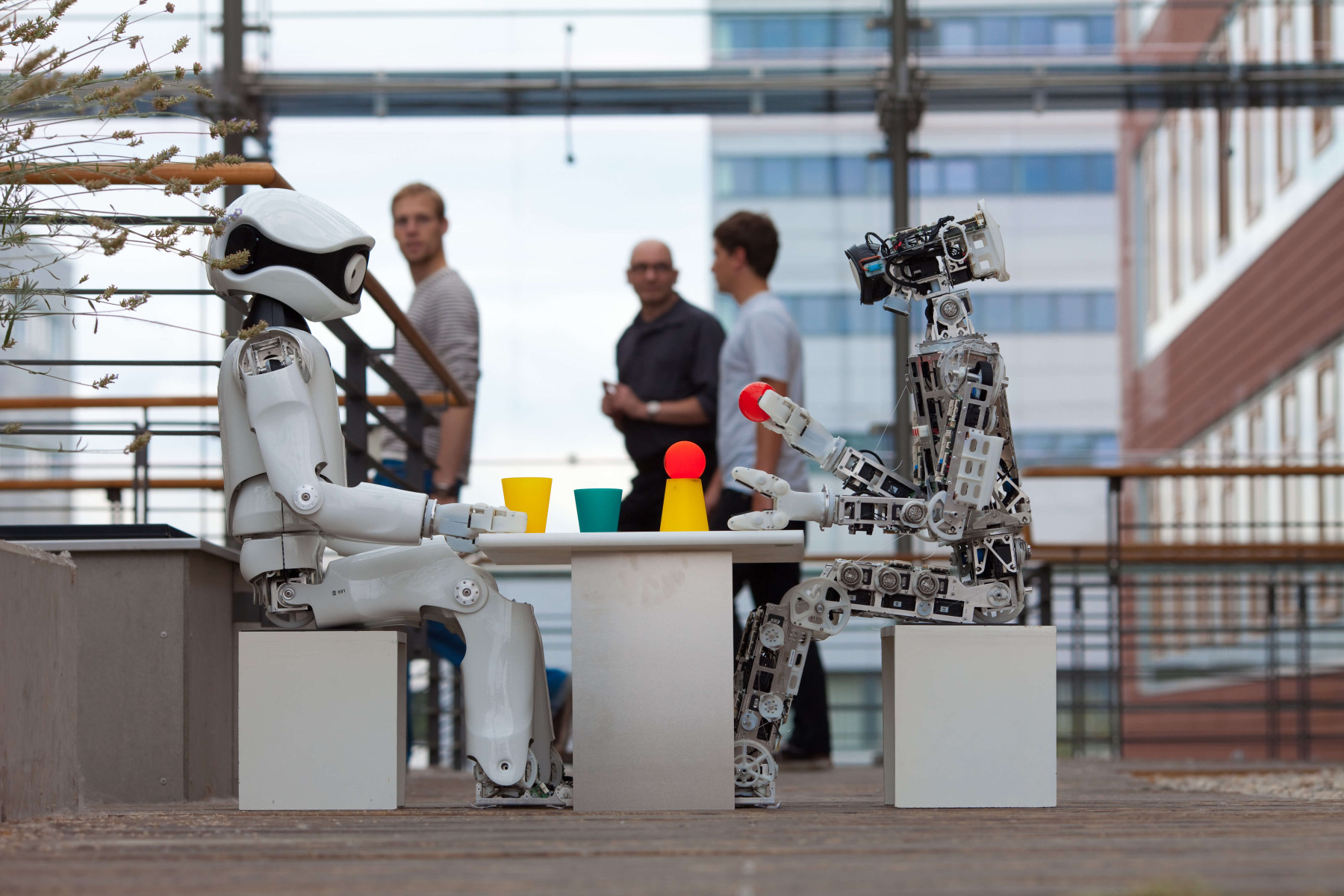
Covestro provides a practical example of what this looks like. In electromobility, for instance, the company’s materials help make vehicles lighter, more efficient, more affordable, and easier to recycle – paving the way for mass-market adoption. Another field of the future is humanoid robotics, where artificial intelligence is enabling ever more capable systems. High-performance plastics, films, and coatings developed by Covestro bridge the gap between digital intelligence and physical action: they give robots structure and fine motor skills, reduce weight, and ensure the durability required for continuous industrial use.
What connects these examples is clear: material innovations are not niche topics but enabling technologies indispensable to nearly every industrial future area. Yet for these levers to achieve their full impact, more than isolated pioneers are needed. What is required is collective action across industries and sectors.
Innovation needs a holistic approach – this is also what Made for Germany stands for, a unique initiative bringing together around 130 companies from virtually every sector: from mechanical engineering and automotive manufacturers to energy providers, financial services companies, software developers, and chemical specialists. Covestro is also part of the initiative and has contributed concrete proposals, among other things, to strengthen technology and education.
Above all, the goal is to overcome silo thinking. Only then will good ideas move beyond theory and make a real world impact.