




The "Material Effect"
Europe's plastics industry is staring into the abyss, primarily due to negative framework conditions. But at its core, it remains vital and highly innovative. This becomes clear at K2025, its largest showcase globally.
The emission-free aircraft made from lightweight plastics, designed to one day circle the globe powered solely by hydrogen. The car headlight that is already being manufactured from old tires. Or simply the toothbrush made from just one type of plastic, making it particularly easy to recycle: Three innovative products and concepts among many others that I encounter these days at K2025, the world's largest showcase of the plastics industry.
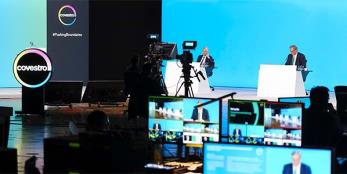
High-quality plastics are the material for the 21st century, as becomes clear to me once again while strolling through the exhibition halls in Düsseldorf, Germany. And certainly to many other visitors as well. Over 3,000 exhibitors from 66 countries, including Covestro, make it tangible here how this material improves our lives at every turn, making it more sustainable and smarter, more comfortable and safer. And how it repeatedly helps bring forth new things. No wonder that global plastic production continues to increase: In 2024, it recorded a plus of four percent, more than the global gross domestic product.
Implementing technologies more consistently
This reinforces my optimism, which prevails even in tense times like these: There's no shortage of good ideas and technological solutions – they simply need more consistent implementation.
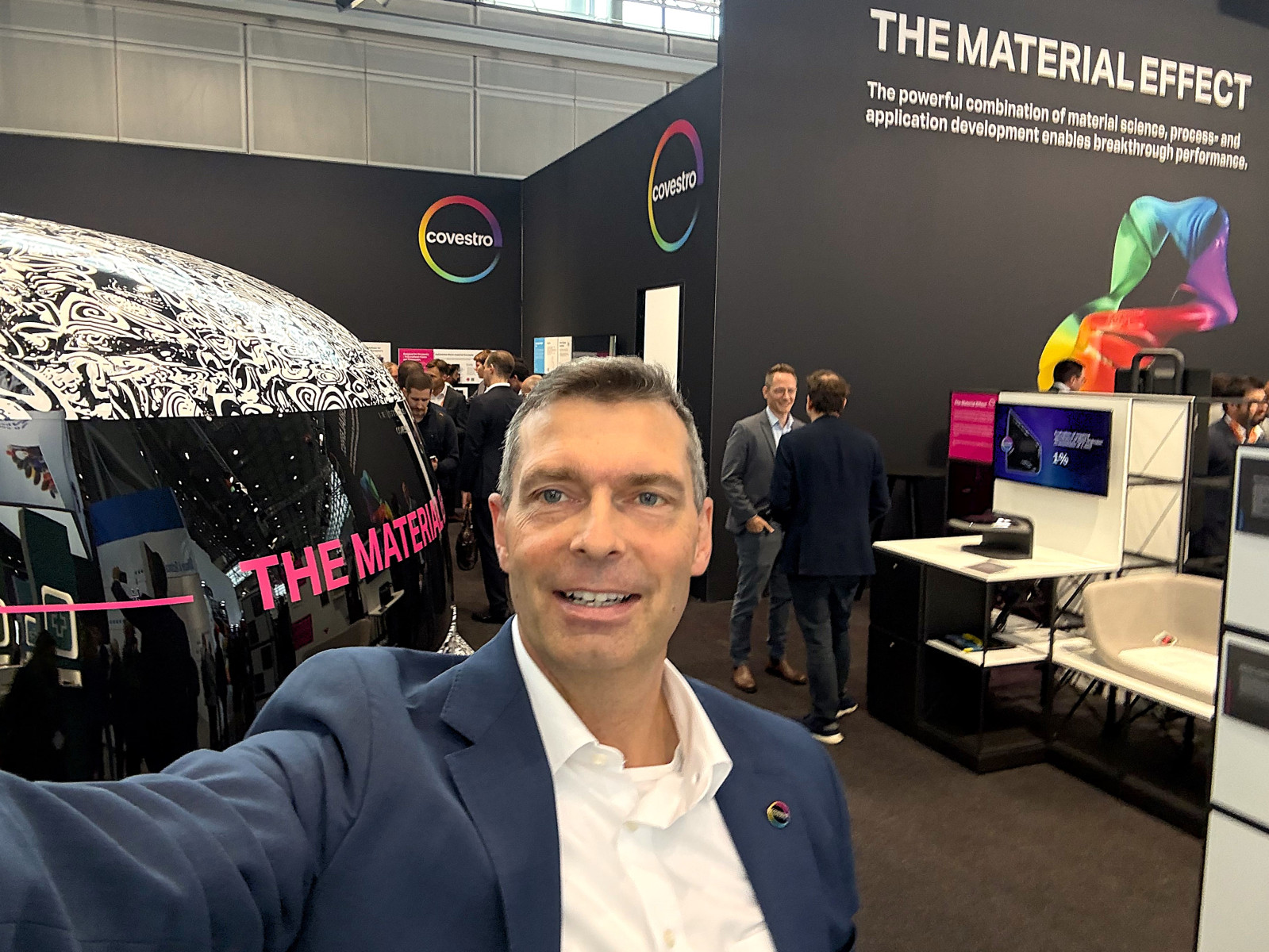
So there is a lot of confidence at the "K". But not only that. As CEO of a global corporation rooted in Germany, I am simultaneously driven by deep concerns, like many other business leaders. Because it is precisely in Germany – the long-standing host of this trade fair for over 70 years – as well as throughout Europe, that the plastics industry is under severe pressure. More than that – the sector, which employs 1.5 million people in 50,000 companies, is now literally standing at the precipice.
Economic situation alarming
Double-digit revenue decline, further shrinking market shares: The situation report that the industry association Plastics Europe presented a few days ago is alarming. Today, only twelve percent of all plastics come from Europe – almost 20 years ago it was still 22 percent. At the same time, China in particular has risen, producing almost three times as much plastic as the entire EU.
This clearly shows that it is primarily the regulatory environment that is slowing the sector in Europe and specifically in Germany – particularly higher energy costs, stricter regulatory requirements, and greater bureaucratic burden.
The good news: The federal government in Berlin has recognized this and wants to establish a "Chemistry Agenda 2045". I hope the year doesn't mark just the start date. Because the time to act is now – the sooner, the better. Which structural reforms specifically need to be tackled has been unambiguously formulated by "my" industry. And we also harbor very clear expectations toward the Commission in Brussels that brook no delay.
Special recipe for success
The EU and Germany as the largest member state need a strong plastics industry. And at its core, it is indeed that – vital and highly innovative. It consistently produces tailor-made solutions for countless other sectors and the challenges of modern life. The recipe for success, which is particularly pronounced at Covestro: a unique combination of materials science, process engineering, and application development.
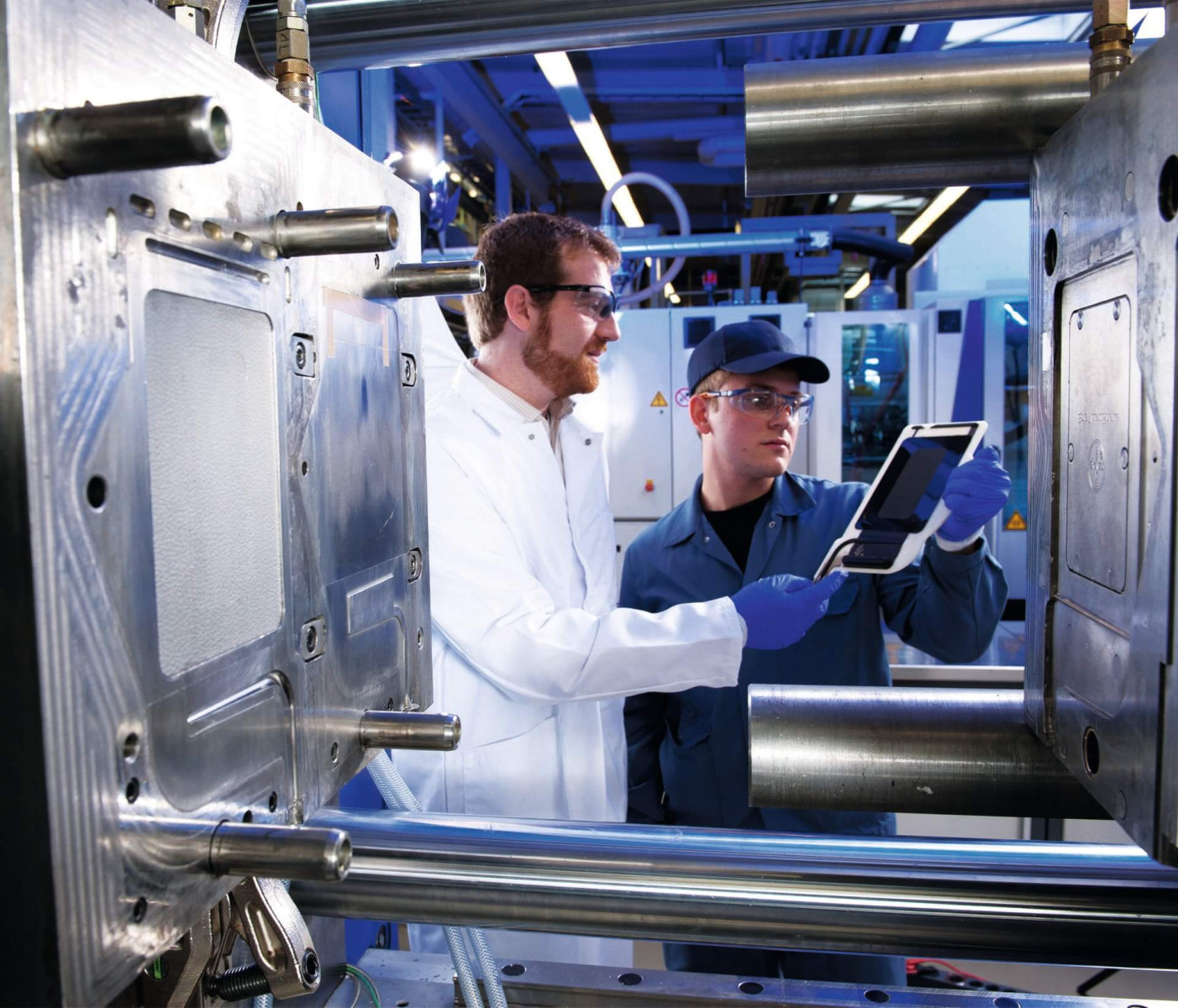
We call this "The Material Effect". This means: knowing exactly how to change the smallest things in chemistry's building blocks to design plastics with specific properties. This means producing them as efficiently and environmentally friendly as possible, with processes that are becoming increasingly sophisticated. And this requires really knowing your way around many industries – to meet today's needs and see tomorrow's trends. Artificial intelligence and quantum computing help us with all three facets.
At K2025, we show the Material Effect in action. How it makes an impact in electronics, health, sports and leisure. Or in mobility, where Covestro materials are now being used in the prototype of a bus for public transportation. The shuttle is not only electric but also travels driverless – thanks in part to the high-performance plastic polycarbonate, which integrates assistance systems and sensors.
Building a circular plastic system
The fact that this material can be excellently recycled is another plus – and brings me to another point: Europe's plastics industry urgently needs to be able to realize its ambitious sustainability goals. We have the chance to build the world's first circular plastic system on the continent. That would be a great signal and could provide strong growth impulses.
But this too requires swift improvements in political and regulatory frameworks – such as the determined promotion of chemical recycling, which is currently stagnating in the European Union. And overall, it's unfortunately the case at the moment that the EU has lost its former leading position in circular plastics to Asia. Here too, China is far ahead, with almost twice the amount produced in 2024 than in Europe.
The next "K" takes place in three years. I very much hope that by then the necessary reforms will have taken effect and the industry in Europe can present better figures. But I'm certain of one thing: that in 2028 I'll once again be able to marvel at innovations from the world of plastics.