


The European Idea Works – Through Joint Innovation
Cooperation, diversity, rule‑based action – the European idea is far from obsolete. But the EU must prove to the world the concrete benefits its model provides. That means: joining forces for shared innovation, powered by the strength of chemistry.
As a lawyer by training, I work frequently in the environment of European institutions. One reason why I chose law in university in the late 1990s is the European idea – a continent united in peace, based on the rule of law and grounded in strong cooperation.
On Europe Day, May 9th, I ask myself: How much is this idea still worth, how enforceable is it still in a world changing so rapidly? Much has happened since my time as a student. The enlargement of the European Union brought more diversity, but its deepening also brought more complexity. And currently we are witnessing the shift from a multilateral to a multipolar order, in which international and supranational institutions and principles seem to be losing significance and influence.
But I remain convinced: cooperation and rules-based thinking and action are – and will ultimately remain – the key to success, to overcoming challenges and advancing humanity, in Europe and everywhere else in the world.
The question of capacity to act remains. In my current job as a "lobbyist" in the chemical industry, I often discuss the question: What can we control, what can we influence – and what do we have to let go? Applied to the EU and the European idea, this means: one must define one's sphere of influence and make decisions about the allocation of resources. In short, the EU should focus even more on its strengths.
Focus on strengths
And for me, that means above all strengthening the capacity for innovation. The EU and its 27 member states are full of ideas – with industries and companies boasting decades or centuries of experience, with start-ups driven by talent from renowned universities and practical expertise.
European countries still contributed to over 40 percent of global patent applications in 2024, with a clear focus on industrial sectors including transport, medical technology, biotechnology, and green technologies. This is clear evidence of the capacity to act. The chemical sector in particular has a high innovation potential.
In my day-to-day working environment, I see progress especially in contributions to creating a sustainable world – a top priority for Europe itself, where climate change is now making itself felt in full force. Companies like Covestro demonstrate how a climate-neutral and circular future can work: by designing products for circularity from the outset, manufacturing them with non-fossil raw materials, and ultimately recycling them using innovative technologies such as chemical recycling.
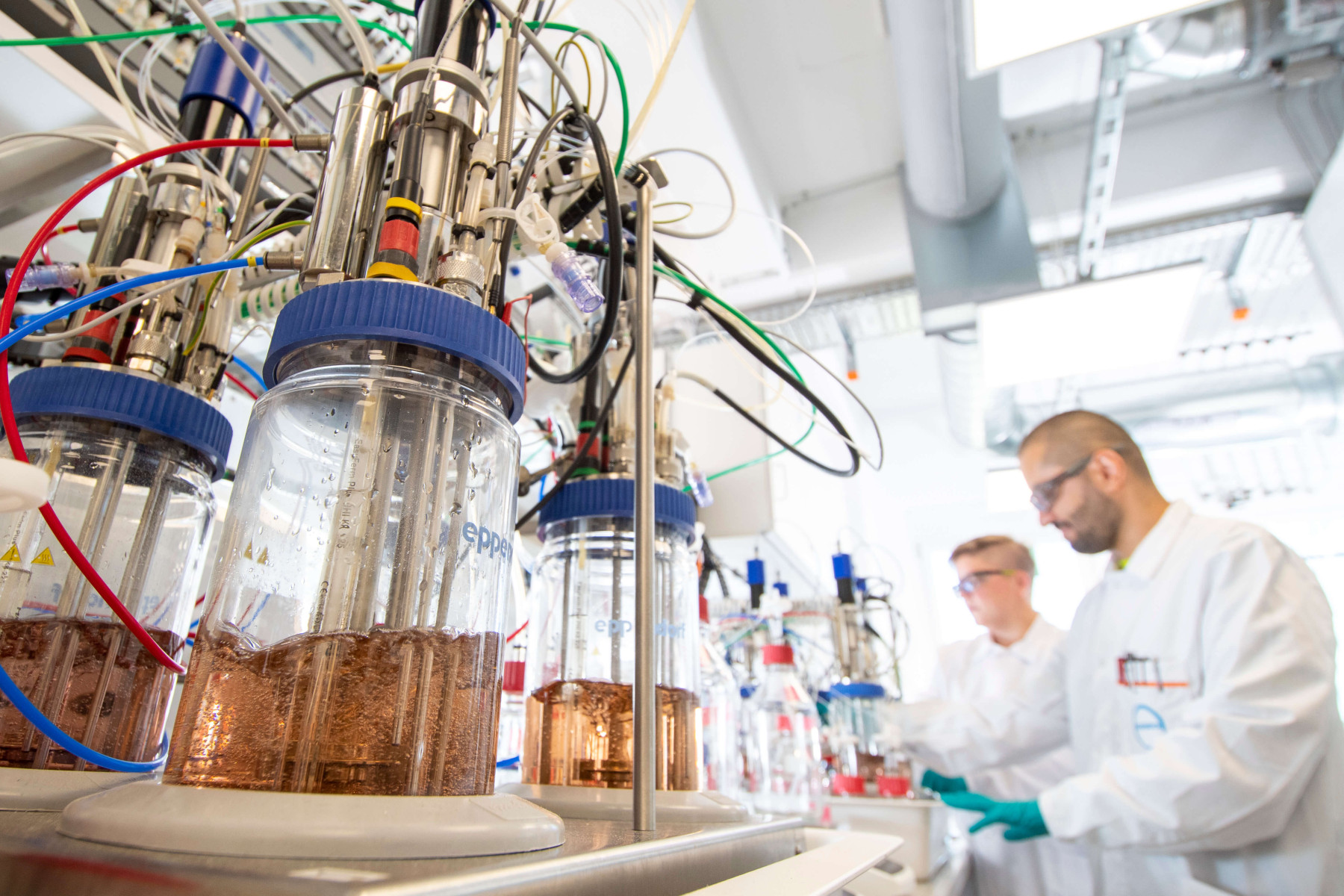
Europe has the ability to drive change, to produce new solutions for the continent and the world. And that is precisely what matters: showing the world that the EU is useful and delivers, that the European idea of diversity and cooperation is the very opposite of an outdated model.
But this also requires a deepening of cooperation. At the political level too, this means the institutional expansion of EU competences – for example in common industrial policy, energy and raw material security, the capital markets union, and a genuine European digital and innovation strategy.
Enhance cooperation
Industries and companies also need more cross-border networks and innovation projects, partly funded by the EU, that bring together companies and universities for a common purpose. In the chemical sector, we see this for example in European consortia for developing new battery materials, in joint pilot plants for hydrogen technologies, or in scaling innovative processes for climate-neutral basic chemicals.
But even beyond individual research projects, companies could cooperate more broadly – to invest, build up reserves, and jointly manage production, transport, and supply networks.
The European Union can help create the framework for this. One example: for the chemicals and plastics industry, there is currently too little certainty and too few incentives to invest in circular solutions. The proposals for how this can be changed are on the table. With the Circular Economy Act, the European Commission can still provide the decisive impetus this year – provided it does not limit the scope to critical (inorganic) raw materials.
Uphold the European project
Yet as important as the right political framework conditions are – what is decisive is that all actors are aware of the value of the European idea and actively contribute to upholding belief and trust in the European project. All member states joined the European Union with the promise of peace and prosperity, through the single market, based on social rights and environmental protection.
To fulfil these promises, it takes an optimistic will to make a difference, to make things work. It is about the ability to act and the awareness of that ability.
Europe does not run on autopilot. It is a choice – made anew every day. A choice for cooperation over isolation, for progress over stagnation, for courage over fatigue. If we make this choice, then the European idea will not merely stay alive. It will become the driving force of our future.