



Research & Development
Covestro views research as a bridge between scientific discovery and industrial application. Innovative ideas from the laboratory are systematically transformed into market-ready technologies and products. The focus is on materials and processes that use resources more efficiently, save energy, and enable sustainable applications.
Germany plays a central role in this: The Leverkusen site is one of Covestro’s three major global research centers. Together with other international sites, the company is working here on innovations – ranging from bio-based basic chemicals and energy-efficient processes to digitally supported research using high-performance computing.

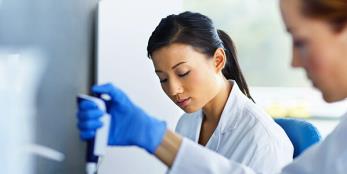
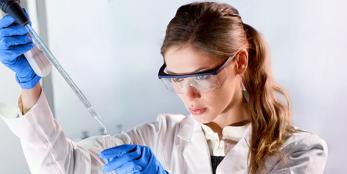
More than 800 employees in Leverkusen are developing the solutions of tomorrow. Tens of thousands of material tests are conducted each year in approximately 24,500 square meters of laboratory space. This leads to the development of technologies and materials that make applications lighter, more durable, and more resource-efficient.
Flagship project: Bio-based aniline
One example of the innovative strength of Covestro’s research is the bio-based aniline project. At its Leverkusen site, the company has opened a pilot plant where a newly developed process for producing this important basic chemical is being tested. Aniline is needed in large quantities worldwide – for example, in plastics, paints, and pharmaceuticals – and has so far been derived primarily from fossil raw materials.

In collaboration with scientific partners, Covestro has developed a process for producing aniline entirely from plant-based biomass. The process is based on a combined approach involving industrial biotechnology and chemical catalysis: a specially developed microorganism converts plant-based sugars through fermentation into an intermediate product, which is then further processed into aniline.
The result is a product made entirely from plant-based carbon with a significantly improved carbon footprint. The technology is now being further developed and tested for industrial-scale production at the pilot plant in Leverkusen.
In the long term, this approach aims to provide more sustainable raw materials for key applications – such as polyurethanes, which are used worldwide for insulation in buildings and refrigeration equipment. Bio-based aniline thus represents an important step toward climate-neutral and circular chemical production.
Digital research and development
In addition, digital technologies are playing an increasingly important role in Covestro’s research and development. They complement traditional laboratory and pilot plant work and make it possible to analyze, simulate, and optimize chemical processes and material properties more quickly.

At the Leverkusen site, a powerful digital research infrastructure supports the development of new materials and technologies. Digital models help to understand complex relationships at an early stage, validate development decisions, and significantly shorten innovation cycles.
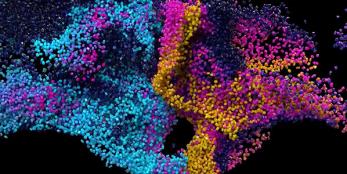
High-Performance Computing (HPC) plays a central role in this. The supercomputer in Leverkusen enables the virtual modeling of complex reactions and material structures and the parallel processing of hundreds of research processes. With approximately 500 processors and some 13,000 computing cores, the system significantly accelerates scientific analyses and enables large-scale virtual experimentation.

At the same time, “digital chemistry” also supports Covestro’s sustainability goals: Many experiments can be moved to a virtual environment, thereby reducing energy consumption and material usage. The system’s predominantly passive cooling also contributes to energy efficiency.
That is why Covestro is continuously expanding its digital research capabilities. A cloud-based data hub built on a data mesh makes research data more structured and easily accessible worldwide. At the same time, Covestro is collaborating with Google on cutting-edge technologies such as quantum computing, which could open up new possibilities for the development of materials and chemical processes in the long term.
Research projects for Sustainable Chemistry
In addition to digital technologies and bio-based raw materials, Covestro is also advancing numerous other research and development projects at its German sites. Together with partners from academia and industry, the company is working on concrete solutions for the circular economy and more climate-friendly chemical production.
A key component of a functioning circular economy is the chemical recycling of plastics that have traditionally been difficult to recycle. Together with the Fraunhofer UMSICHT Institute, Covestro is developing smart pyrolysis technology that can break down rigid polyurethane foam from construction and household applications back into its chemical building blocks.
In pyrolysis, materials are heated in an oxygen-free environment, causing the molecular structures of the plastics to break down. This process allows valuable raw materials to be recovered – such as re-aniline, which can then be reused in the production of new materials.
The goal of the project is to further scale up the technology and, in the long term, enable the sustainable recycling of insulation materials and other PU materials. Studies also show that this process can significantly reduce CO₂ emissions compared to conventional manufacturing.

To develop innovative production processes in a practical setting, Covestro relies on a state-of-the-art pilot plant facility. A key component of this is the High-Viscosity Pilot Plant in Leverkusen, which is specifically designed for research into particularly viscous polymer systems.
Spanning approximately 1,400 square meters, the technical center offers state-of-the-art research infrastructure – including a seven-meter-high laboratory area, several large fume hoods, a sophisticated technical gas system, and a fully darkened laser room for flow experiments.
Here, researchers are developing new processes and materials that make more efficient use of resources and support the circular economy – such as technologies for the chemical recycling of polycarbonate or more energy-efficient manufacturing processes.

For more than 50 years, research has been conducted at the brine pilot plant in Leverkusen on innovative processes for chlorine production. As an integral part of the chlorine plant, the pilot plant serves to test new technologies first on a laboratory and semi-industrial scale and then to further develop them for industrial application.
Over the years, researchers here have developed various processes for chlorine production and for recovering sodium chloride from process water streams. A significant milestone is oxygen-consumption cathode (SVK) technology, which was developed at the brine pilot plant and is now used in chlorine production at the Krefeld-Uerdingen site. A few years ago, the project team was awarded the Covestro Science Medal for this particularly energy-efficient production technology.
The Soletechnikum is thus a key component of Covestro’s global technology network. It is here that new approaches are developed for more sustainable and efficient production processes, helping to ensure that the company’s facilities operate safely, resource-efficiently, and at peak performance – both today and in the future.

At the PU Technology Center in Leverkusen, Covestro develops new applications and production processes for polyurethane foams. The pilot plant enables the company to test manufacturing processes under conditions similar to those found in industrial settings and to further develop them in collaboration with customers.
The Technology center is equipped with, among other things, continuous production lines for manufacturing insulation boards and sandwich panel elements. Rigid polyurethane foam is a highly effective insulation material that helps significantly reduce energy consumption and CO₂ emissions in buildings.
The team at the PU Technical Center is working to optimize existing products and develop new solutions for energy-efficient applications. Digital methods help optimize production processes and accelerate the transition of innovations to industrial applications. In this way, the Technology Center makes an important contribution to the development of sustainable materials and technologies.


To support cutting-edge research into sustainable and recyclable materials, Covestro is providing long-term support to the CAT Catalytic Center at RWTH Aachen University as a strategic partner. The research center is one of the world’s leading institutions for catalysis research. Scientists from various disciplines work together here to develop new catalysts and reaction pathways for more sustainable chemical production.
Close collaboration between industry and academia helps to translate new findings into practical applications more quickly and to develop innovative technologies for a more climate-friendly chemical industry.

Collaborations drive innovation
Strategic partnerships and collaborations play a central role in Covestro’s innovative strength. Close cooperation with universities, research institutes, industry partners, and companies across the entire value chain generates new momentum for sustainable materials and technologies.

In particular, collaborations in large, publicly funded research projects and consortia make it possible to pool knowledge and jointly advance solutions to key challenges – such as climate neutrality and the circular economy – more quickly. At the same time, it is Covestro’s innovative strength and the commitment of its employees that continuously drive research and development forward. Through the interplay of internal expertise and strong partnerships, Covestro will continue to generate innovations for a sustainable industry in the future.