





Shaping the Future of the Plastics Industry Together
We need a strong industry – and we need a strong Europe. The EU elections are a critical moment that sets the course for Europe's future and allows citizens to decide how the EU should face upcoming challenges. It is an opportunity to shape a sustainable, resilient, and competitive community that meets the demands of a rapidly changing world. In this spirit, Covestro's engagement in associations is not only a contribution to its own corporate development but also a crucial step towards a more resilient and competitive European economy.
 By actively participating in circular economy initiatives, Covestro helps ensure that Europe remains at the forefront of sustainable innovation. Collaborating with other industry leaders in associations enables us to pursue common goals and build robust infrastructure for the future. This not only protects the environment but also opens up new business opportunities that contribute to Europe's economic strength. Covestro's involvement in associations is thus a clear commitment to a Europe defined by sustainability, innovation, and resilience.
Plastics Europe, as a leading association in the plastics industry, is a key partner for Covestro on the path to a circular economy. Through membership, Covestro can influence the shaping of industry standards and advance its vision of a fully circular economy. It is clear: Circular economy can only succeed in close cooperation with all partners along the value chain. This also means that we need clear standards that promote rather than hinder the development of new technologies. Many of these standards are set in Brussels. In this regard, cooperation with Plastics Europe is a vital component in jointly establishing the right framework conditions for the future of the circular economy.
A central topic in the discussion on the circular economy at the EU level is mass balances. They are an accounting approach to transparently track the use of recycled materials. Standardization is necessary to support chemical recycling and advance the circular economy. Companies like Covestro are ready to invest in this technology but require clear legal frameworks. However, we have been waiting for over 2.5 years for a simple implementing act to clarify legal provisions for the calculation method. This delay leads to frustration and hampers innovation. It is urgently needed that the EU speeds up and provides the necessary clarity to promote technological openness.
This is where associations like PlasticsEurope come into play. The association helps promote scientifically-based discussions and provides factual information. Especially in our times, when misinformation can spread quickly, fact-based approaches are indispensable. By providing solid scientific data, we support effective and science-based solutions.
Of course, we could also do this as Covestro alone. But as is often the case in life: The whole is greater than the sum of its parts. Industry associations like PlasticsEurope enable us to speak with one voice and thus gain more weight in the public eye and with political decision-makers. Through our participation, we can bring practical experience, educate about the positive properties of plastics, and help shape the regulatory framework to secure the future of our industry. Our goal is to show how diverse and important plastics are for the transition to a sustainable economy. Without plastics, no wind turbine turns, no electric car runs. We want to demonstrate this together within the association.
Three areas of action are essential for us as the board of PlasticEurope (Germany):
- We must understand the circular economy across industries. It is a key issue for the entire industry. I pursue this with full conviction because Covestro's vision is to become fully circular. Germany and Europe should become leading regions for the circular economy.
- Promoting technologies such as chemical recycling and CO2 utilization is essential. We need a supportive political framework that gives innovations the space to reach market maturity. Also, to remain competitive.
- We must advance the regulatory framework to enable a functioning circular economy and incentivize the transition to it. Companies need planning security.
Together with PlasticsEurope (Germany), we are working to make the plastics industry fit for the future. It is all the more important to meet regularly, exchange ideas, and discuss new ideas, such as at the member meeting in Leverkusen last week.
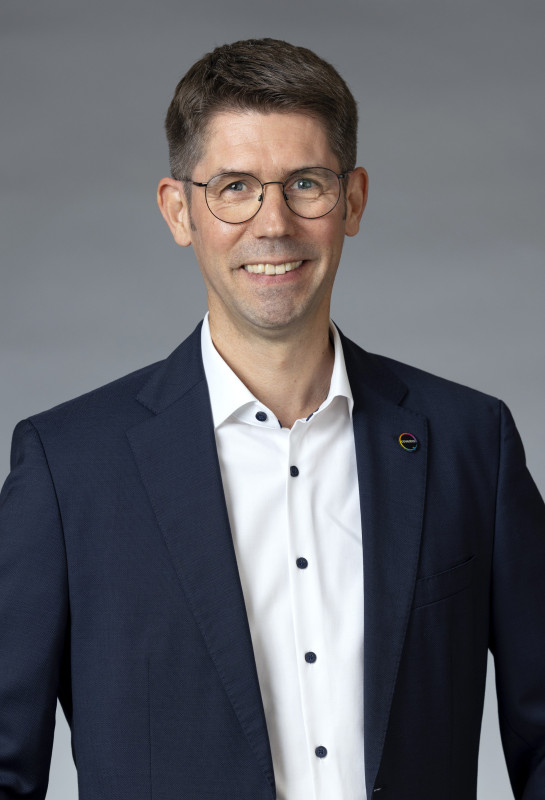
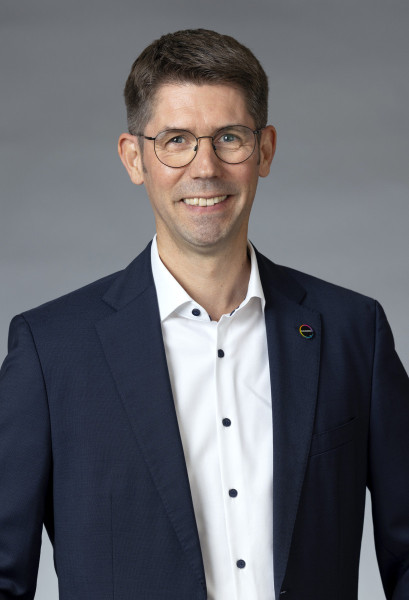
As the global head of the automotive business in the Engineering Plastics division with almost 25 years of experience, I strive to develop and provide sustainable and forward-looking solutions for the chemical industry. My role on the board of PlasticsEurope (Germany) reflects this goal. Since May 2021, I have been actively involved in representing our industry's interests and promoting the transformation towards a circular economy.
