




From Wanting to Doing
Large-scale projects like the energy transition are indispensable for making our world more sustainable and resilient. Yet promising ideas and technologies – especially in the field of energy efficiency – often remain unimplemented. Because taking action requires impulses, such as the global Sustainable Energy Days, but also the right political framework conditions.
"Doing is like wanting, only more intense" – this pop aphorism gains ever greater weight as problems continue to pile up. The common denominator is clear: The world must be placed on a more sustainable and crisis-resistant foundation. The fundamental feasibility is not even up for debate. Many challenges are indeed solvable: New ideas – large and small – are constantly emerging, effective technologies have long been available, and in principle, the willingness to implement them is usually not lacking either.
Yet with every additional challenge, many people feel an increasing sense of powerlessness, growing doubt in their own effectiveness, and a self-perception as a mere cog in the machine. People are aware of the problems, feel the concerns – and yet fail to rouse themselves into action. All the more important, therefore, are impulses that pull us out of the role of spectator: community planting initiatives, clean-up days, open workshops, and initiatives such as the recently held worldwide Sustainable Energy Days, launched by the European Union.
Here, citizens, communities, organisations and companies have been encouraged to advance the energy transition locally – the overarching global mega-project to curb climate change and secure an increasingly volatile energy supply. From March to June, the aim was not only to explore clean energy solutions through grassroots actions – workshops, panel discussions, exhibitions, interactive experiences – but above all to put them into practice.
Energy Efficiency First
The spotlight usually falls on renewable energies, and there is indeed significant progress here – in 2025, global expansion reached an all-time high. Nevertheless, we should always keep in mind: The best energy is the energy we do not consume in the first place. The EU has accordingly enshrined "Energy Efficiency First" as a political principle. By 2030, the Union is to consume 11.7 percent less energy than projected in a 2020 baseline scenario without additional climate policy.
A key lever for greater efficiency is industry, which accounts for around one quarter of energy consumption in the EU. And it is precisely in this sector that the greatest efficiency gains can be realized in the short term. Studies by the EU Commission and the IEA show that those who utilize waste heat can achieve energy savings of up to 20 percent. And through new production processes, the energy requirements of individual operations can even be reduced by up to 60 percent.
But these are not mere theoretical models, this is lived reality. The step from wanting to doing – industry is taking it, and above all the particularly energy-intensive chemical sector. Covestro has now launched its largest energy efficiency project to date: At its Dormagen site in Germany, a compressor is being installed that heats waste steam and increases its pressure, allowing it to be optimally utilized in other production processes.
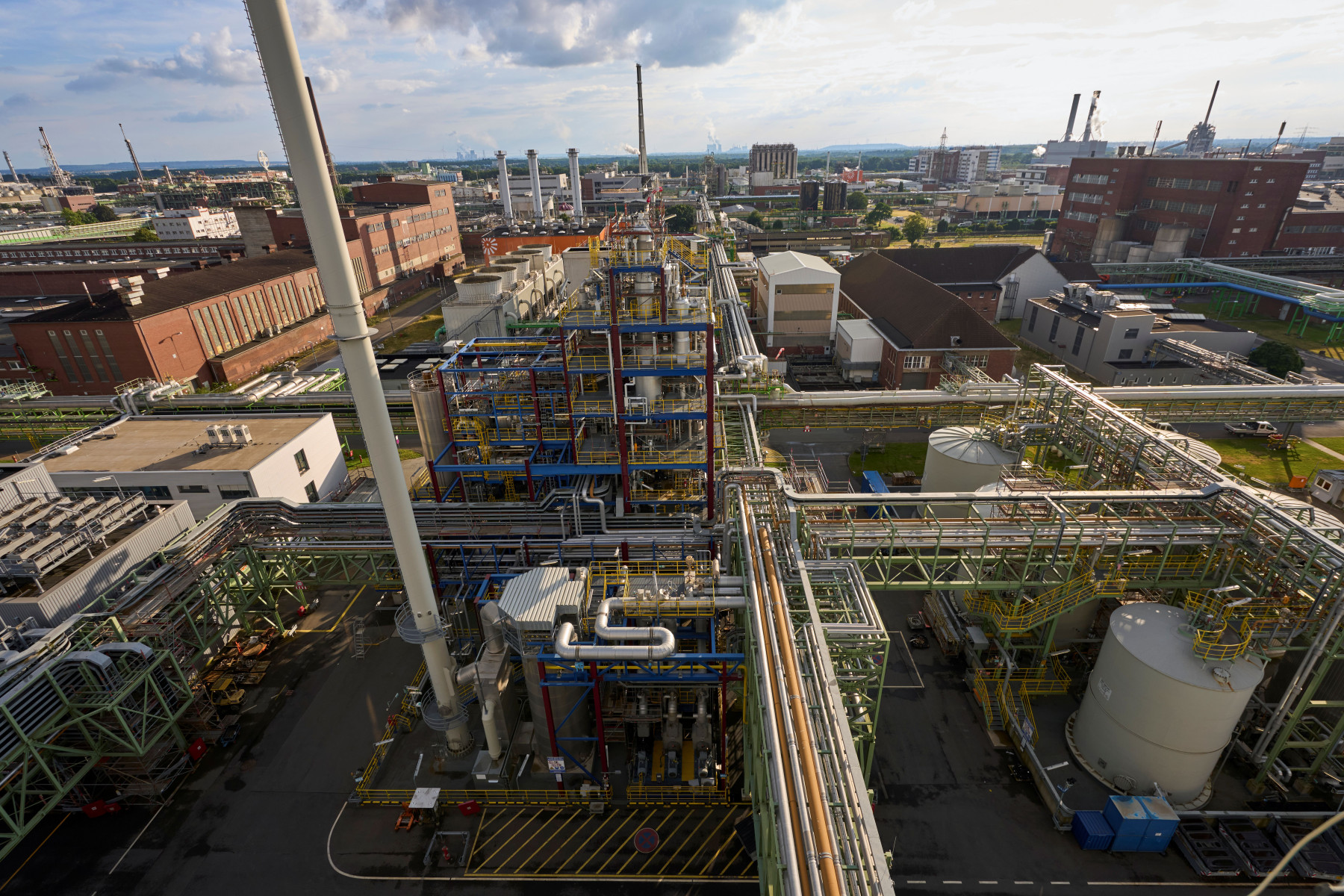
Thanks to this single process innovation alone, the company will be able to reduce its total energy consumption in Germany by two percent per year going forward. In total, Covestro has already initiated more than one thousand such projects, all aligned with its strategic goal: to consume 20 percent less energy per tonne of product produced by 2030 compared to the beginning of this decade.
Hand in hand with this, the company is increasingly relying on renewable energies, which already supply several sites around the globe. Combined with savings, they are intended to help make ongoing operations climate-neutral by 2035. To this end, investments in the in the triple-digit million-euro range are planned by 2030.
Framework Conditions Hamper Implementation
But willing companies like Covestro must also be enabled to act. For them, efficiency and the transformation towards climate neutrality and a circular economy require a business case – in other words, economic attractiveness.
At present, however, many of the framework conditions, particularly in the EU, are structured in such a way that industry can barely advance its transformation. Among other things, there is insufficient renewable energy available at internationally competitive prices, and the EU is considering steps that would once again massively increase the CO₂ costs for companies.
Conclusion: We need inspiration through actions like the Sustainable Energy Days and awards like the European Sustainable Energy Awards, which were just presented in Brussels to companies, municipalities and individuals for outstanding projects. But we also need the right framework in which such projects can flourish. Then we can truly go from wanting to doing.