





Innovative polyurethane synthetics thanks to INSQIN® technology
High quality, low environmental impact and customized design

Only a few years ago, reference to a “full leather interior” was an indication of a high quality vehicle, and genuine leather was an expression of quality and extravagance. However, this picture has now changed: when making purchasing decisions, today’s customers are focusing more attention on sustainable products with the smallest possible CO2 footprint. Other important product features are quality and durability. These features play a significant role in heavily used vehicles of established car sharing services. Providers of these services are interested in a long service life of their fleet and also place great value on low maintenance costs for their vehicles.
Covestro developed its water-based INSQIN® technology in order to create a sustainable, efficient and permanent polyurethane coating for textiles and to produce high-quality synthetic materials, especially for car interiors.
Environmentally compliant and durable
Conventional synthetics are often produced using organic solvents. For years, such volatile organic compounds (VOCs) have been subject to emission reduction measures. This is why Covestro is relying on a water-based coating technology that does not require solvents. Compared with the previous solvent-based coagulation process, this efficient technology not only saves up to 95 percent water and up to 50 percent energy, but the vehicle interior is also significantly less polluted by VOC emissions.
As an alternative to animal leather, INSQIN® products offer several advantages: due to their lower weight, they increase the efficiency of a vehicle and thus reduce its fuel or electricity consumption. Thanks to modern production methods, they are durable, sustainable and recyclable.
Innovative materials for premium requirements
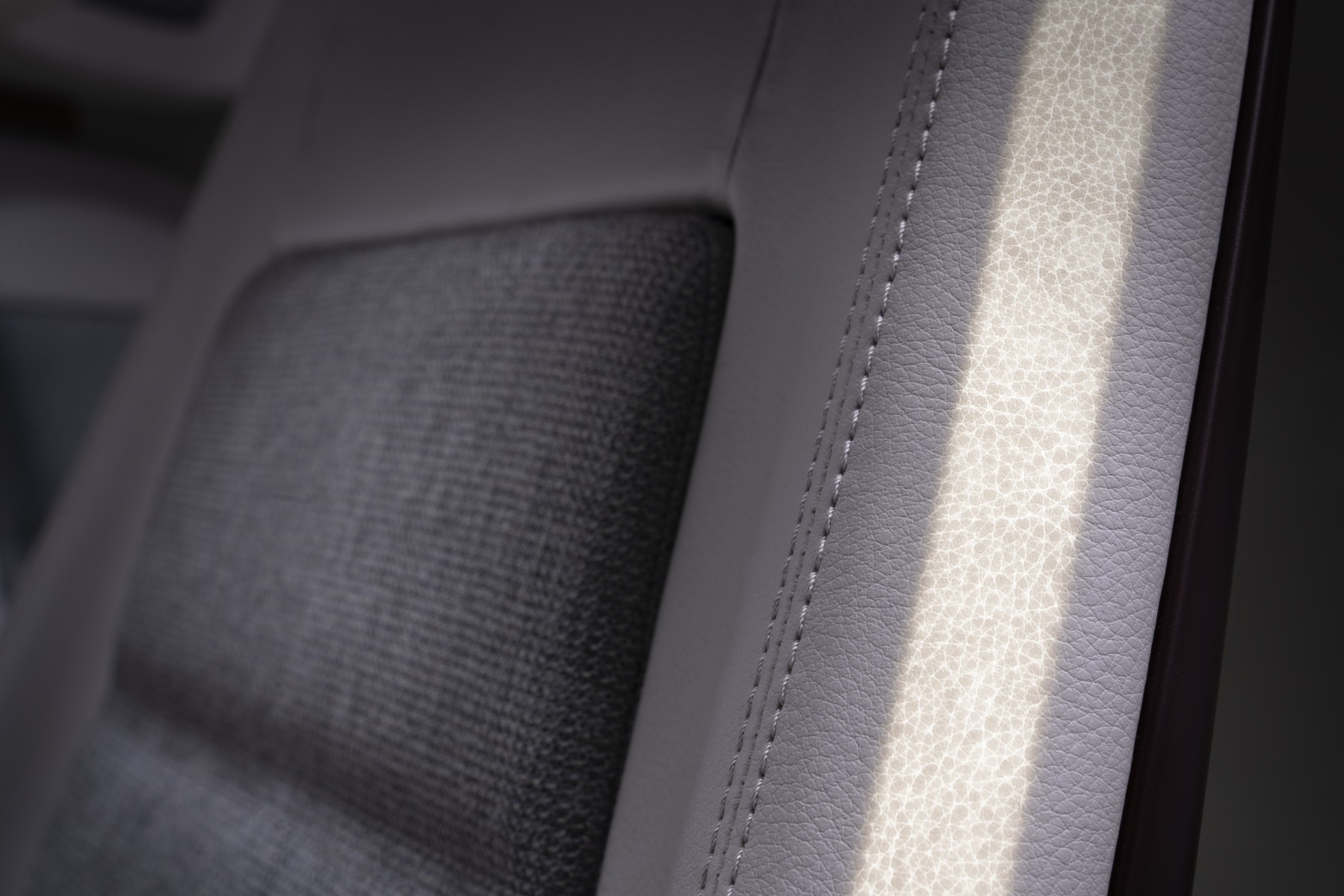
INSQIN® products are already well established in the textile coating industry and have impressed in many application areas. In vehicle interiors, they now provide an opportunity to completely redesign and reuse surfaces. Designers and drivers both benefit from this, as the color, feel and light permeability of surfaces can be customized. Because translucent effects can be achieved even with dark colors, indicator lights or buttons can be easily installed under the surface – a glance or the push of a button becomes an experience.
About Covestro:
Covestro is one of the world’s leading manufacturers of high-quality polymer materials and their components. With its innovative products, processes and methods, the company helps enhance sustainability and the quality of life in many areas. Covestro supplies customers around the world in key industries such as mobility, building and living, as well as the electrical and electronics sector. In addition, polymers from Covestro are also used in sectors such as sports and leisure, telecommunications and health, as well as in the chemical industry itself.
The company is geared completely to the circular economy. In addition, Covestro aims to achieve climate neutrality for its Scope 1 and Scope 2 emissions by 2035, and the Group’s Scope 3 emissions are also set to be climate neutral by 2050. Covestro generated sales of EUR 14.2 billion in fiscal year 2024. At the end of 2024, the company had 46 production sites worldwide and employed approximately 17,500 people (calculated as full-time equivalents).
Forward-Looking Statements
This news release may contain forward-looking statements based on current assumptions and forecasts made by Covestro AG. Various known and unknown risks, uncertainties and other factors could lead to material differences between the actual future results, financial situation, development or performance of the company and the estimates given here. These factors include those discussed in Covestro’s public reports which are available at www.covestro.com. The company assumes no liability whatsoever to update these forward-looking statements or to conform them to future events or developments.