




Covestro, FILK Freiberg, and OUT e.V. develop flexible, conductive polymer smart textile system
- Smart textile platform opens possibilities for multiple applications, including sensor-controlled newborn bodysuit for jaundice phototherapy.
- Impranil® PUDs from Covestro deliver the required combination of conductivity, elongation, and flexibility.
As the smart textiles market continues to grow across healthcare, personal protection, sportswear, and automotive applications, developers are seeking new ways to integrate electronic functionality directly into textiles, without the rigidity and complexity of conventional wiring.
To address this challenge, FILK Freiberg Institute, an independent research institution with expertise in polymer coatings for textile applications, collaborated with Optotransmitter-Umweltschutz-Technologie (OUT) e.V. The joint project, funded under the German Industrielle Gemeinschaftsforschung (IGF) program of the Bundesministerium für Wirtschaft und Energie (BMWE), focused on developing flexible, conductive polymer surfaces for next-generation smart textiles.
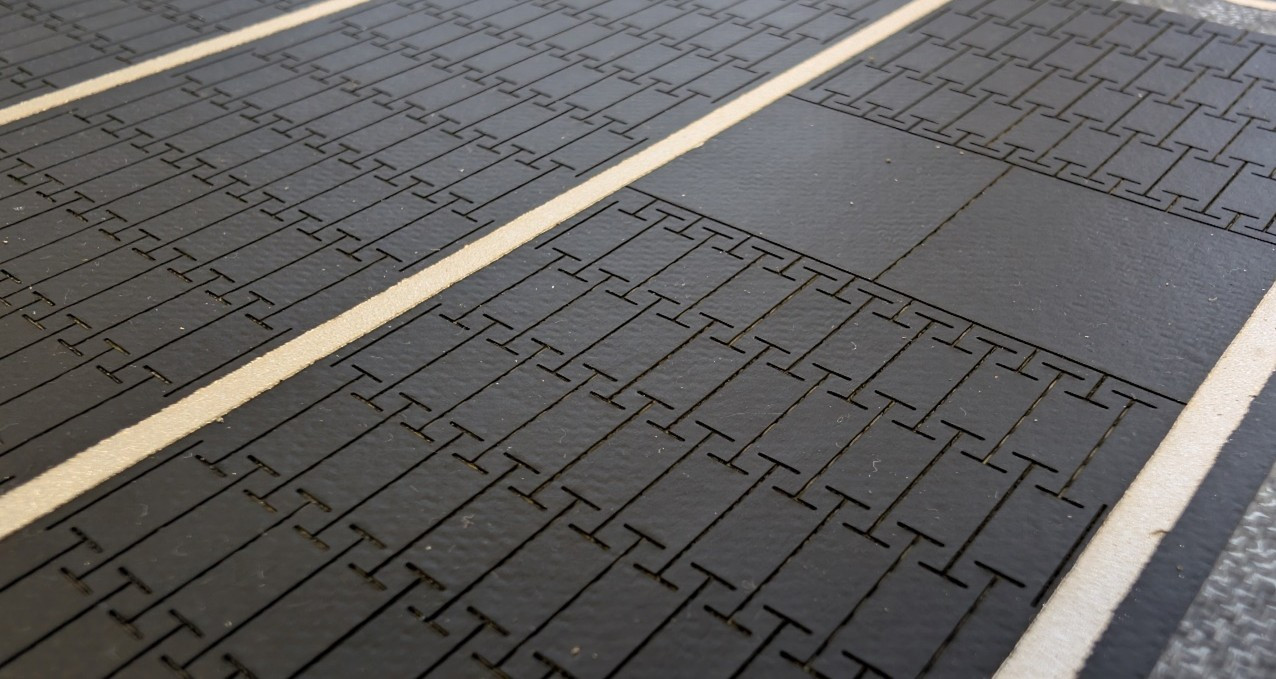
The goal was to enable the free distribution of multiple LEDs and sensors across a textile surface by creating a uniform conductive “potential field” within the material. This technology enables greater flexibility compared to conventional conductor tracks.
Creating a flexible conductive PU film using Impranil®
To achieve the required combination of conductivity, elongation, and flexibility, FILK and OUT e.V. used water-based Impranil® polyurethane dispersions from Covestro, creating a flexible conductive PU film into which carbon nanotubes were incorporated as electrically conductive additives.
Laser structuring of the conductive polymer surface allowed precise tuning of the electrical properties of the potential field, enabling LEDs and sensors to be distributed freely across the textile surface without traditional wiring. The active control of embedded LEDs through the integrated sensors supports real-time monitoring and bidirectional communication via modulated voltage or Bluetooth, depending on the application.
Dr. Martin Heise, Deputy Head of Department Functional Layer Systems at FILK Freiberg Institute, said: “Our goal was to rethink how electronics are integrated into textiles. By creating a conductive surface instead of fixed wiring using Impranil® polyurethane dispersions from Covestro, we can distribute sensors and light sources far more freely, enabling new smart textile designs and applications.”
Dr. Iris Vela-Wallenschus, Project Manager at OUT e.V. noted: “Distributed electronics, real-time sensing, and bidirectional communication within a flexible textile substrate represent a meaningful step forward for wearable technology. Working with FILK and Covestro, we've shown that this kind of adaptive functionality is achievable at a level of sophistication that is difficult to achieve with conventional wiring approaches.”
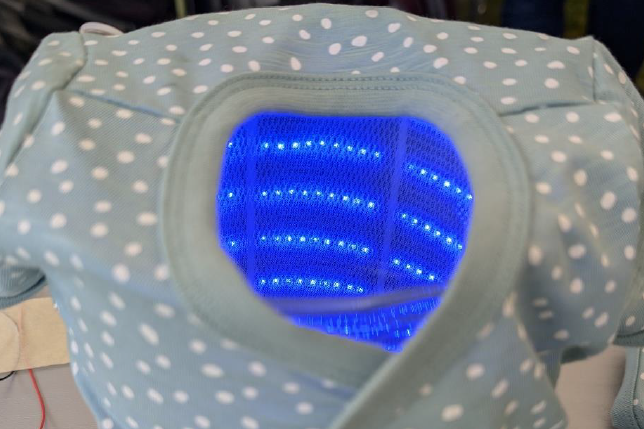
Enabling a new generation of smart textiles
The result is a technology platform that combines conductive polymer materials, sensor integration, and intelligent control. This platform unlocks possibilities for new applications such as sensor-controlled newborn bodysuits for jaundice phototherapy. Current standard treatments for neonatal jaundice rely on blue light at approximately 455 nm in hospital incubators. A flexible bodysuit integrating blue LEDs and sensors directly into the garment could continuously monitor therapy progress and adjust light intensity and distribution in real time. This approach may contribute to the development of more flexible treatment options with the support of midwives.
Beyond this application, Impranil® PUD-based formulations can be used in applications including heated textiles, pressure sensors, and flexible conductor tracks for wearable electronics. This system can also be adapted for scalable manufacturing processes such as digital printing, supporting broader adoption in industries including sportswear, automotive interiors, protective equipment, and connected IoT devices.
Dr. Torsten Pohl, Global Head of Textile Coatings at Covestro added: “This project highlights how material innovation can unlock new functionality in textiles. Our Impranil® water-based polyurethane dispersions provided the flexibility, durability, and processability needed to turn a complex concept into a scalable smart textile platform. We're proud to have supported FILK and OUT e.V. in developing a system with real-world impact, from neonatal care through to the broader wearables market.”
To see what this flexible, conductive smart textile system looks like, visit Techtextil 2026 in Frankfurt between April 21 and 24. A demonstrator of the sensor-controlled newborn bodysuit for jaundice phototherapy will be on display at the Covestro booth (C79) in hall 11.0.
About Covestro:
Covestro is one of the world’s leading manufacturers of high-quality polymer materials and their components. With its innovative products, processes and methods, the company helps enhance sustainability and the quality of life in many areas. Covestro supplies customers around the world in key industries such as mobility, building and living, as well as the electrical and electronics sector. In addition, polymers from Covestro are also used in sectors such as sports and leisure, telecommunications and health, as well as in the chemical industry itself.
The company is geared completely to the circular economy. In addition, Covestro aims to achieve climate neutrality for its Scope 1 and Scope 2 emissions by 2035, and the Group’s Scope 3 emissions are also set to be climate neutral by 2050. Covestro generated sales of EUR 12.9 billion in fiscal year 2025. At the end of 2025, the company had 46 production sites worldwide and employed approximately 17,600 people (calculated as full-time equivalents).
About FILK Freiberg Institute
We are a global leader in the development, functionalization and testing of flexible multilayer polymer materials. Our thematic spectrum ranges from synthetic membranes for batteries, fuel cells and firefighting clothing to artificial leather and leather for vehicle interiors, furniture and shoes. Biomaterials based on collagen for medical implants and as carriers in cell culture are also part of our topic portfolio.
We study polymer materials with large external and internal surfaces, their production and processing, physical, chemical and biological properties and interaction with the animate and inanimate environment. We can determine and modify physical and chemical stability, cytotoxicity, antimicrobial properties, biodegradability, and also sensory properties such as odor and feel of the materials. We conduct materials science and technology development. Our self-image includes aspects of sustainability as part of the bioeconomy, we map material properties in the digital twin and use the automation of processes to capture data as the raw material of the future.
Seeing ideas grow and implementing them in industry is our motivation. At the highest level, we conduct research, development, technological services and material testing with our employees in our pilot plants and laboratories for the coating industry, the leather industry, the automotive industry and for food and biomaterial manufacturers. We offer more than routine.
About OUT e.V.
The Optotransmitter Environmental Protection Technology e.V. (OUT e.V.) is a research institution specializing in the advancement of science and technology, particularly in the fields of optoelectronics, environmental technologies, and micro- and optoelectronics. OUT e.V. was founded in 1991 as an external industrial research institution.
OUT e.V.'s research activities encompass a wide range of technologies, including optical technologies, thin-film technology, and sensor technology. The institute pays particular attention to the development of environmentally friendly and sustainable technologies, such as the thermal management of high-power LEDs, daylight simulation, UV lamps, and the development of TOF sensors for 3D measurements.
The specialized facilities include an optics laboratory, vacuum coating systems, a scanning electron microscope, and a large-scale testing environment, enabling the characterization of optical, mechanical, and electrical properties of various materials and components. In addition, OUT e.V. offers services such as contract research, rapid prototyping (3D printing), and R&D consulting.
The organization works closely with a wide range of scientific cooperation partners and is networked both nationally and internationally to advance research and development and promote innovative solutions.
Forward-Looking Statements
This news release may contain forward-looking statements based on current assumptions and forecasts made by Covestro AG. Various known and unknown risks, uncertainties and other factors could lead to material differences between the actual future results, financial situation, development or performance of the company and the estimates given here. These factors include those discussed in Covestro’s public reports which are available at www.covestro.com. The company assumes no liability whatsoever to update these forward-looking statements or to conform them to future events or developments.