






Convenient production of insoles using 3D printing
Completely digitalized process almost without waste
• Made-to-measure products from Covestro´s TPU
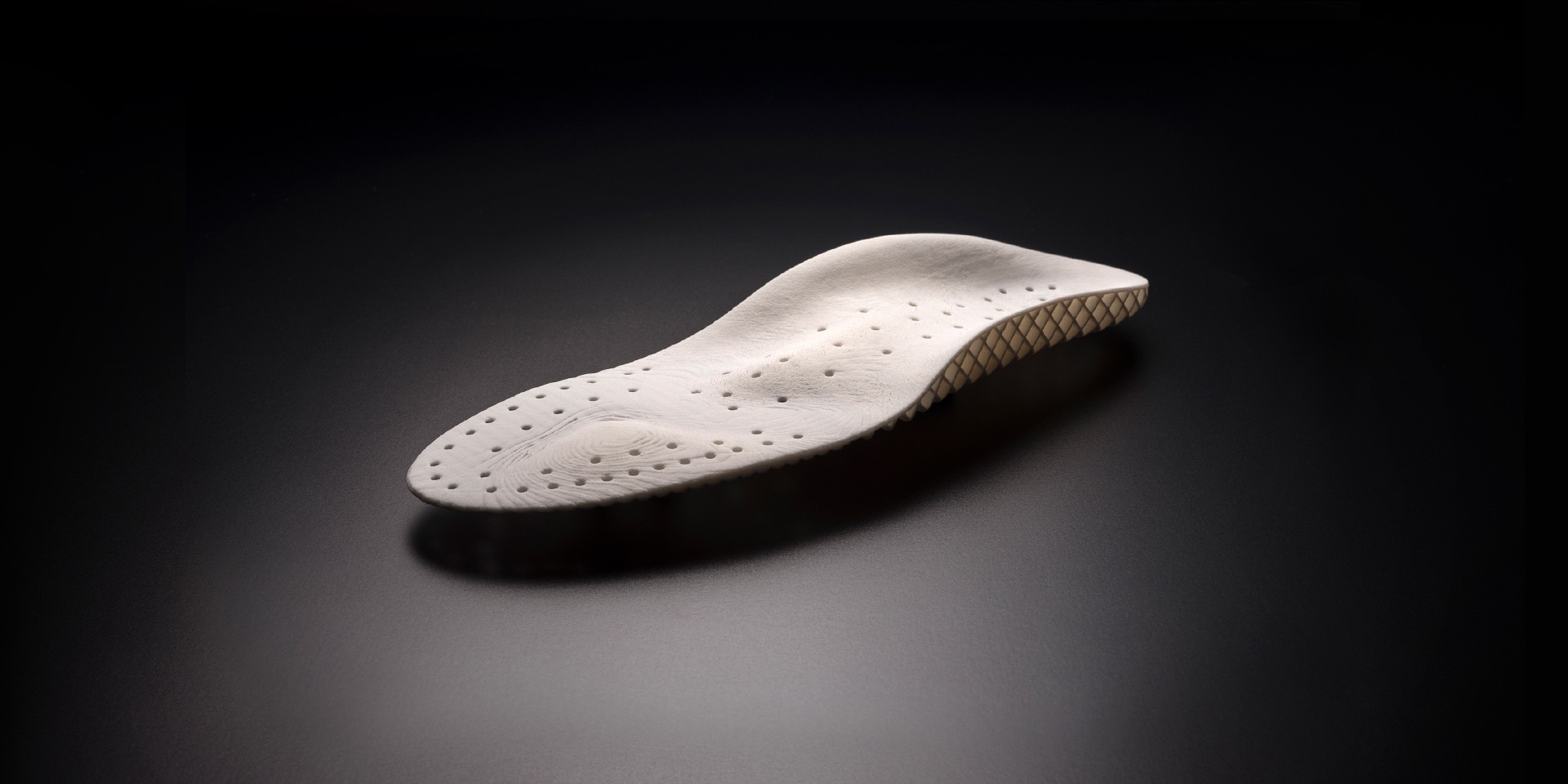
At the K 2019 plastics trade fair in Düsseldorf from 16 to 23 October, Covestro will be presenting the prototype for a new application of Covestro materials for additive manufacturing at its Booth A75 in Hall 6: 3D-printed orthopedic insoles for shoes. They are efficiently produced using an automated and completely digitalized process that generates almost no waste. The part in question is in the form of a 3D file that can be sent anywhere in the world. On site, a printer uses this data to produce the physical product – regardless of whether only a single individualized sole or millions of soles have to be produced.
“Thermoplastic polyurethane is the material of choice for this application thanks to its favorable range of properties,” says Patrick Rosso, Head of Additive Manufacturing at Covestro. “In particular, our TPU products cover a wide range of hardness. The hardness can also be adjusted by changing the printing structure. This allows manufacturers to print shoe insoles that are completely custom-made – with hard or soft contact areas.”
High functionality and durability
Together with a partner, Covestro is currently testing different sole designs to determine which are the easiest to print along with the most durable. Initial tests have been promising, both in terms of functionality and longevity. Orthopedic insoles are often produced by hand and take a lot of time.
Besides that, conventional insoles are e.g. made by forming or machining rigid foam blocks and are also less breathable. Using additive manufacturing offers a more sustainable approach to producers. It could help significantly more people to get access to orthopedic insoles.
Successful last production using 3D printing
Already back in May 2018, Covestro presented the design of an efficient complete solution for the manufacture of orthopedic shoe lasts at the OT World orthopedics trade fair in Leipzig. Thanks to 3D printing technology, the time required for production has been reduced from several weeks to just a few days. At the same time, patient visits to the shoe manufacturer can be reduced to a minimum. After the trade fair, customers expressed the idea of also printing the insoles instead of manufacturing them by hand as before. The idea and the favorable material properties of TPU were the reason for the current project.
About Covestro:
Covestro is one of the world’s leading manufacturers of high-quality polymer materials and their components. With its innovative products, processes and methods, the company helps enhance sustainability and the quality of life in many areas. Covestro supplies customers around the world in key industries such as mobility, building and living, as well as the electrical and electronics sector. In addition, polymers from Covestro are also used in sectors such as sports and leisure, telecommunications and health, as well as in the chemical industry itself.
The company is geared completely to the circular economy. In addition, Covestro aims to achieve climate neutrality for its Scope 1 and Scope 2 emissions by 2035, and the Group’s Scope 3 emissions are also set to be climate neutral by 2050. Covestro generated sales of EUR 14.2 billion in fiscal year 2024. At the end of 2024, the company had 46 production sites worldwide and employed approximately 17,500 people (calculated as full-time equivalents).
Forward-Looking Statements
This news release may contain forward-looking statements based on current assumptions and forecasts made by Covestro AG. Various known and unknown risks, uncertainties and other factors could lead to material differences between the actual future results, financial situation, development or performance of the company and the estimates given here. These factors include those discussed in Covestro’s public reports which are available at www.covestro.com. The company assumes no liability whatsoever to update these forward-looking statements or to conform them to future events or developments.