
Story
Advanced TPU material for SCF foaming technology
Rising consumer expectations drive the footwear industry's search for advanced materials balancing performance and sustainability. Desmopan® FLY, engineered for SCF foam injection moulding, enables lightweight, responsive midsoles with enhanced cushioning and durability. Its process eliminates chemical agents and is simplifying production, supporting circular economy goals and cost-effective manufacturing.
Story · September 5, 2025

The Material Effect
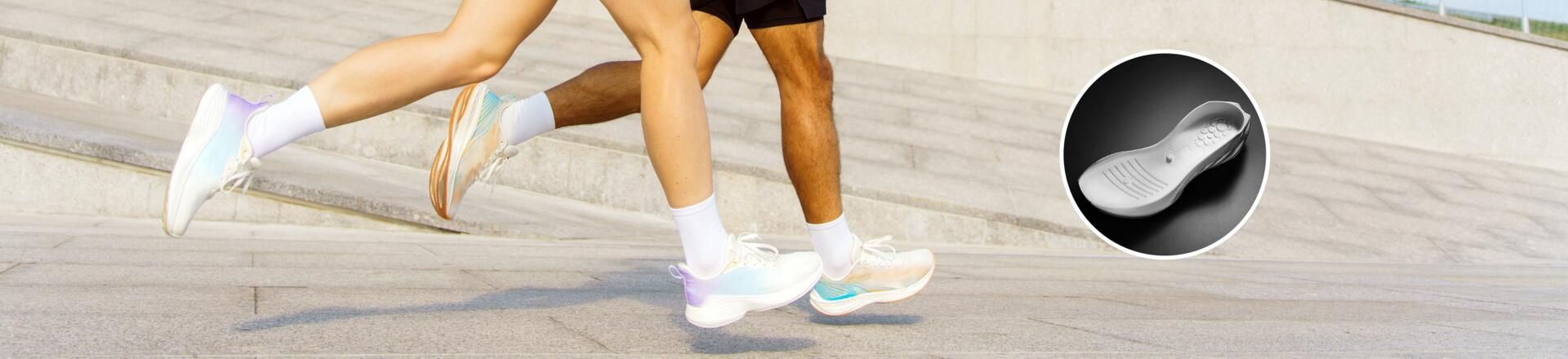
With Desmopan® FLY – our TPU series specially developed for supercritical fluid (SCF) injection foaming – we take application development and quality control to the next level. The effect? Midsoles for footwear applications with superior cushioning and energy return properties, and long-lasting comfort performance.
We're seeing growing demand for materials that deliver both elite performance and sustainability. Desmopan® FLY unlocks new possibilities with optimized processing, offering lightweight resilience, long-term durability, and efficient recyclability to help shape the future of high-performance footwear.
Wilson Chan
Head of Business Development TPU Asia Pacific, Covestro
High-Performance TPU for Exceptional Cushioning and Energy Return
While sustainability matters, product performance remains consumers’ top priority in footwear. Midsole made from Desmopan® FLY TPU delivers superior cushioning, energy return, and lasting comfort for both everyday consumers and performance athletes. The material's unique microcellular structure ensures dimensional stability and durability throughout the product lifecycle, maintaining excellent energy return and structural integrity during strenuous use, while resisting compression over time.
Local Investment Enables Efficient Production and Stable Supply
Unlike chemical foaming, SCF technology requires advanced equipment and tighter process control. Covestro has installed the advanced foam injection molding system at its TPU Asia-Pacific R&D Center in Taiwan – a strategic hub in the global footwear supply chain. This state-of-the-art facility enables comprehensive R&D support and rapid application services for customers’ specific requirements, while enabling local-to-local supply capabilities that reduce logistics costs, accelerate commercialization and enhance competitiveness for footwear brands in a fast-paced market.
Key benefits
In-house SCF technology:
Enables real-time simulation and seamless collaboration with brands
Efficient production:
Highly automated with less production steps
More sustainable:
Zero chemical blowing agents and recyclable components
High-performance:
Delivers superior cushioning, energy return, and lasting comfort
Driving Midsole Innovation: Advanced TPU Solutions for SCF foam injection moulding
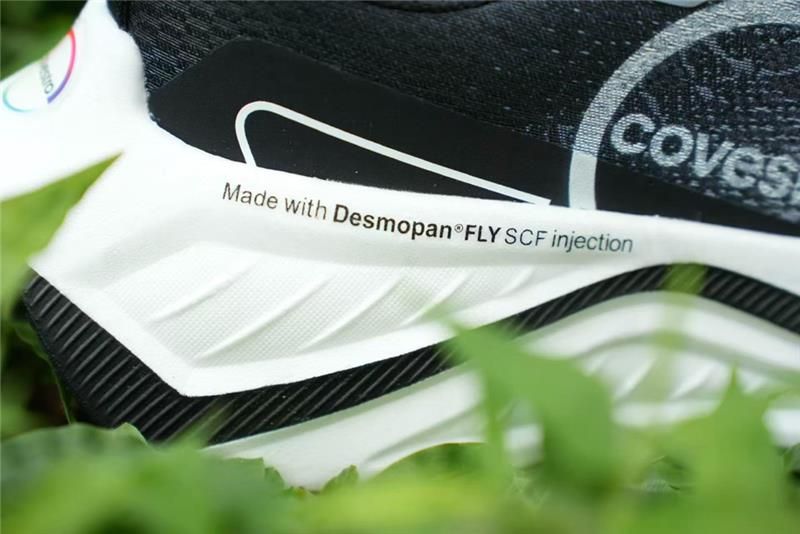
Supercritical fluid (SCF) technology is transforming midsole production with enhanced performance and eco-friendly benefits. Applicable in both autoclave and direct injection processes, direct injection stands out for production efficiency through reduced cycle times and fewer processing steps while delivering consistent quality outcomes. Covestro’s Desmopan® FLY TPU is specifically engineered for SCF foam injection molding, with a polymer structure that enables exceptional supercritical fluid dispersion and uniform fine-cell foams. This creates midsoles with outstanding mechanical properties that meet leading footwear brands’ high-performance specifications while requiring fewer manufacturing steps, reducing lead times and ensuring consistent quality.
Sustainable Manufacturing with Better Recyclability and Lower Energy Use
Desmopan® FLY TPU eliminates the need for chemical blowing agents in injection moulding technology, potentially reducing chemical additives while enabling recyclability of the midsole. When combined with a TPU outsole, this creates a closed-loop material pathway supporting circular economy initiatives. SCF foaminjection moulding is a highly automated physical foaming process that integrates multiple footwear components in a single molding step, eliminating cementing and assembly while reducing energy use and carbon footprint, this eco-friendly manufacturing approach creates uniform fine-cell structured foams with superior cushioning and energy-return, enabling brands to accelerate production of lightweight, high-performance, sustainable footwear.