
Story
Smart Pyrolysis: Chemical Recycling for PU Rigid Foam on laboratory scale
The construction and appliance industries face a growing challenge: what happens to rigid foam insulation at end of life? As demand for energy efficiency rises, so does Polyurethane (PU) foam waste. Together with Fraunhofer UMSICHT, smart pyrolysis enables chemical recycling into high-purity raw materials and circular MDI.
Story · February 25, 2026
Key benefits
Scalable:
Pilot plant development paves the way for commercial implementation.
Circular:
Transforms waste from buildings and appliances into virgin-quality raw materials.
High-purity:
Produces ~99% pure re-aniline suitable for premium applications.
Low-carbon:
Achieves up to 80% lower CO₂ emissions compared to fossil alternatives.
Cross-industry:
Proven solution for rigid foam waste from construction and appliances.
The impact: Up to 80% lower CO₂ emissions
Life cycle assessment results demonstrate the transformative potential: re-aniline production via smart pyrolysis achieves up to 80% lower CO₂ emissions compared to fossil-based aniline production. This translates into around 40% lower emissions for pMDI and a 25–30% reduction in PIR foam – substantial contributions to reducing the carbon footprint of materials in the construction and appliance industries.
Chemical recycling vs. mechanical recycling of PU rigid foam
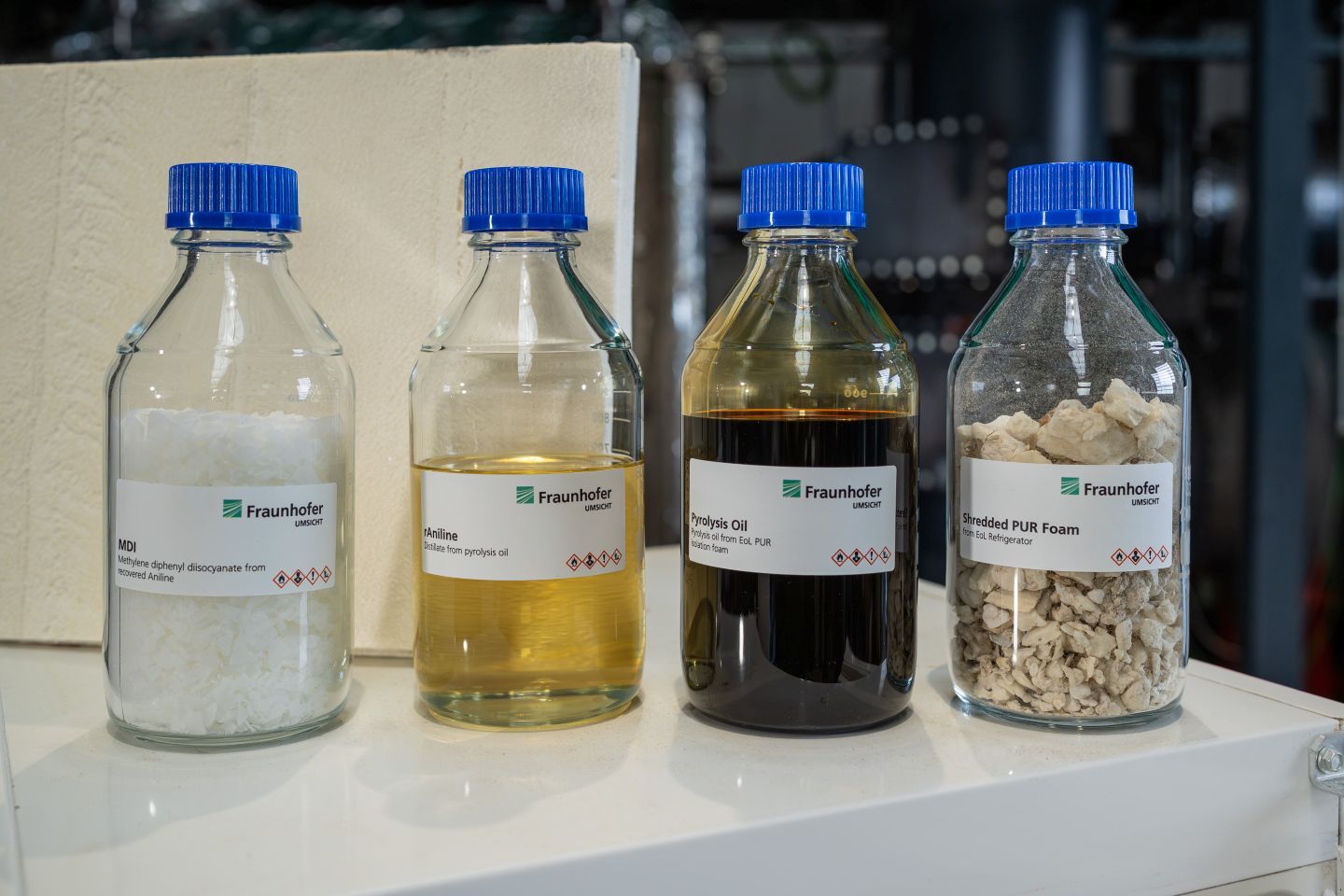
To fully enable circular material flows in construction and appliances, it is essential to understand how chemical recycling differs from mechanical approaches. While mechanical recycling can process clean and homogeneous waste streams, it may result in downcycled materials with reduced performance and limited application potential—especially when dealing with mixed construction and demolition waste. Chemical recycling offers a complementary approach. By breaking molecular bonds, smart pyrolysis enables true foam waste recycling at the chemical level. This allows valuable raw materials such as re-aniline to be recovered in high purity, independent of the original product form or application. As a result, chemical recycling of rigid foam helps enable a circular economy and long-term material circularity.
From lab to reality: Pilot plant development
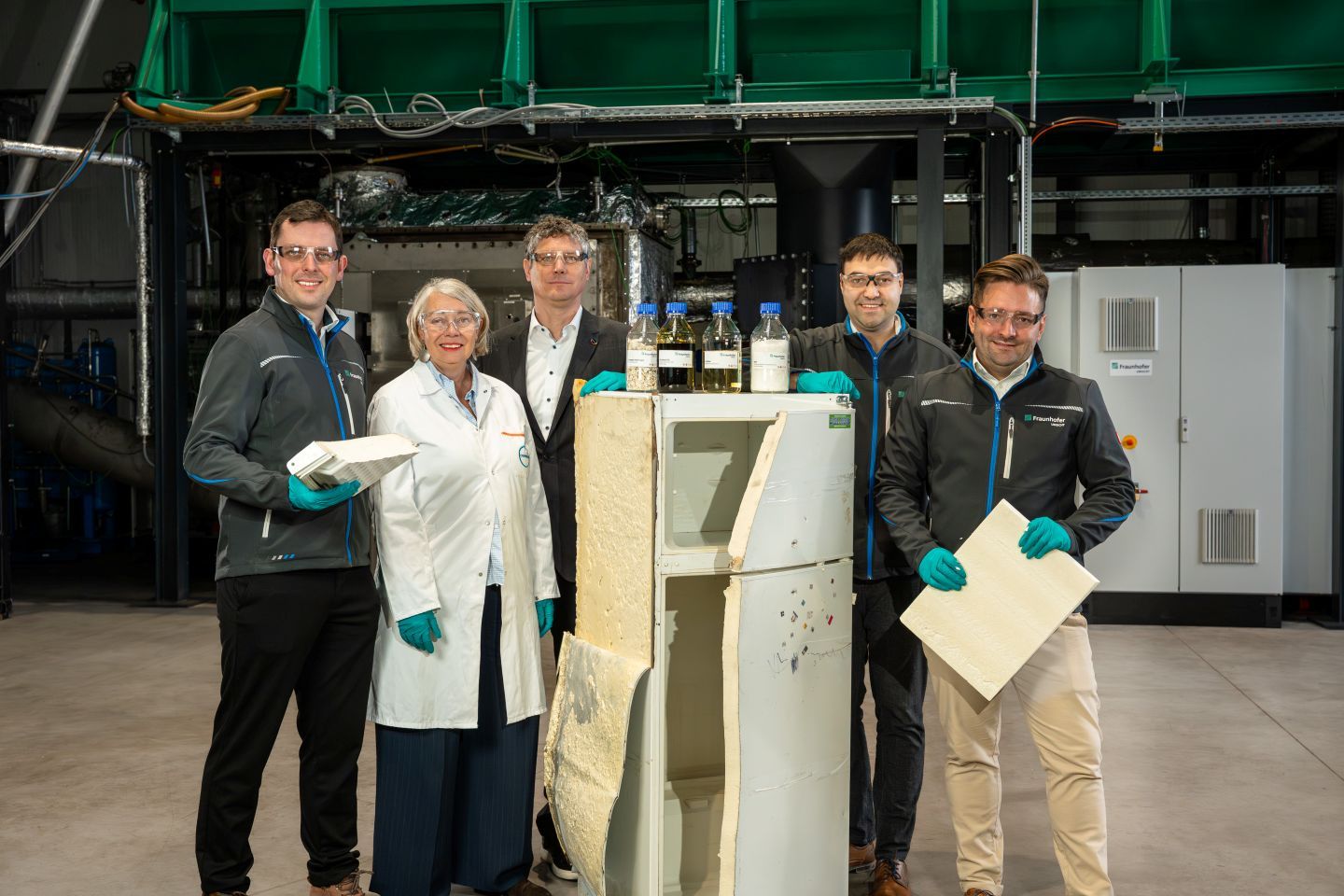
Smart pyrolysis has proven its effectiveness from laboratory bench to mini-plant scale across both construction and appliance waste streams. The next milestone: a pilot plant at Fraunhofer UMSICHT with 2,000 tons annual capacity, operational by 2028. This facility will demonstrate industrial-scale viability using optimized catalysts and process conditions.
Smart pyrolysis represents a paradigm shift for our industry. We're not just recycling foam waste, we're fundamentally reimagining how construction and appliance materials can become truly circular.
Bernd Hennig
Head of Trading Cluster MDI EMEA, Covestro
Smart pyrolysis is the result of years of joint research. With the pilot plant, we are moving from technical feasibility to industrial implementation, optimizing the process at scale and preparing recycled raw materials for market use.
Dr. Alexander Hofmann
Head of Thermochemical Conversion Technologies, Fraunhofer UMSICHT
The breakthrough: Smart pyrolysis delivers virgin-quality materials
Working alongside Fraunhofer UMSICHT, we've developed smart pyrolysis – an innovative chemical recycling technology that transforms what both industries considered impossible into reality. This advanced thermal process converts rigid PU foam waste from buildings and appliances into high-purity re-aniline at approximately 99% purity. This breakthrough enables the production of recycled MDI with virgin-like quality and a significantly lower carbon footprint. We at Covestro source the chemically recycled feedstock generated through this technology and incorporated it into our production processes. replacing fossil-based raw materials and advancing circular MDI solutions All while maintaining the performance standards the industries demand.