
Story
Polyurethane Monomaterial Concepts: Perspectives on Extended Producer Responsibility
The demand for recyclable plastic components presents major challenges for the automotive industry. Covestro polyurethane monomaterial concepts offer the solution: They combine familiar premium quality with recyclability and already meet tomorrow's requirements today.
Story · August 28, 2025
Chemical Recycling: A Key to Successful Vehicle Recycling in Line with ELV and EPR?
The emerging legal requirements (e.g., EU End of Life Vehicle Directive (ELV) or Extended Producer Responsibility (EPR) in China and the EU) are intensifying pressure on automotive OEMs and TIERs to increasingly rely on the use of recyclates for plastics and to recycle individual end-of-life vehicle components in the future. In addition to mechanical recycling, chemical recycling can play a key role in ensuring high-quality plastic recyclates in sufficient quantities for future vehicles. Read how Covestro is driving the circular economy through chemical recycling of polyurethane foams using chemolysis, smart pyrolysis, and enzymatic recycling, and can reuse high-quality polyurethane building blocks for new products.
The innovative PU monomaterial load floor concept transforms traditional designs through consistent material substitution. Instead of the usual paper honeycomb, a specially developed Baynat® foam core is used, offering good mechanical properties with improved recyclability.
The surface design sets new standards: Instead of conventional carpet, a PU-based solution is employed. This can be implemented either through high-quality PU-RIM overmolding or laminatable Platilon® TPU films, which provide a robust, slip-resistant, and seamless alternative tailored to modern interior requirements. Additionally, this material offers the possibility of mono-material recycling, making it more environmentally friendly and resource-efficient. The environmental advantages are significant as the material can be completely recycled at end of service life with no separation of different materials required, leading to reduced waste generation and conservation of valuable resources. This approach brings multiple benefits:
- Improved cleaning properties for longer service life
- Enhanced design possibilities through flexible surface structures
- Improved recyclability through consistent monomaterial design
A monomaterial concept requires the substitution of glass fibers, which currently seems unfeasible at high mechanical requirements. Chemical recycling tests at Covestro have shown that glass fiber can be separated from the recyclable PU building blocks and further processed.
Thus, this innovative component structure creates a recyclable system while maintaining the expected high functionality.
Why Polyurethane is Essential for Automotive Monomaterial Concepts?
Polyurethane offers unique possibilities for monomaterial designs. Whether soft or hard, with high resilience or thermoformable, acoustically effective or thermally insulating, lightweight or compact with paintable Class-A surfaces: The versatile property spectrum of this material enables processors and OEMs to meet sometimes divergent component requirements by combining different PU formulations in the final product. Since all components rely on the same chemical base, the final product design is ideally suited for efficient, single-type recycling. The decisive advantage: Most Covestro PU solutions are already available today and have proven themselves in automotive applications for years.
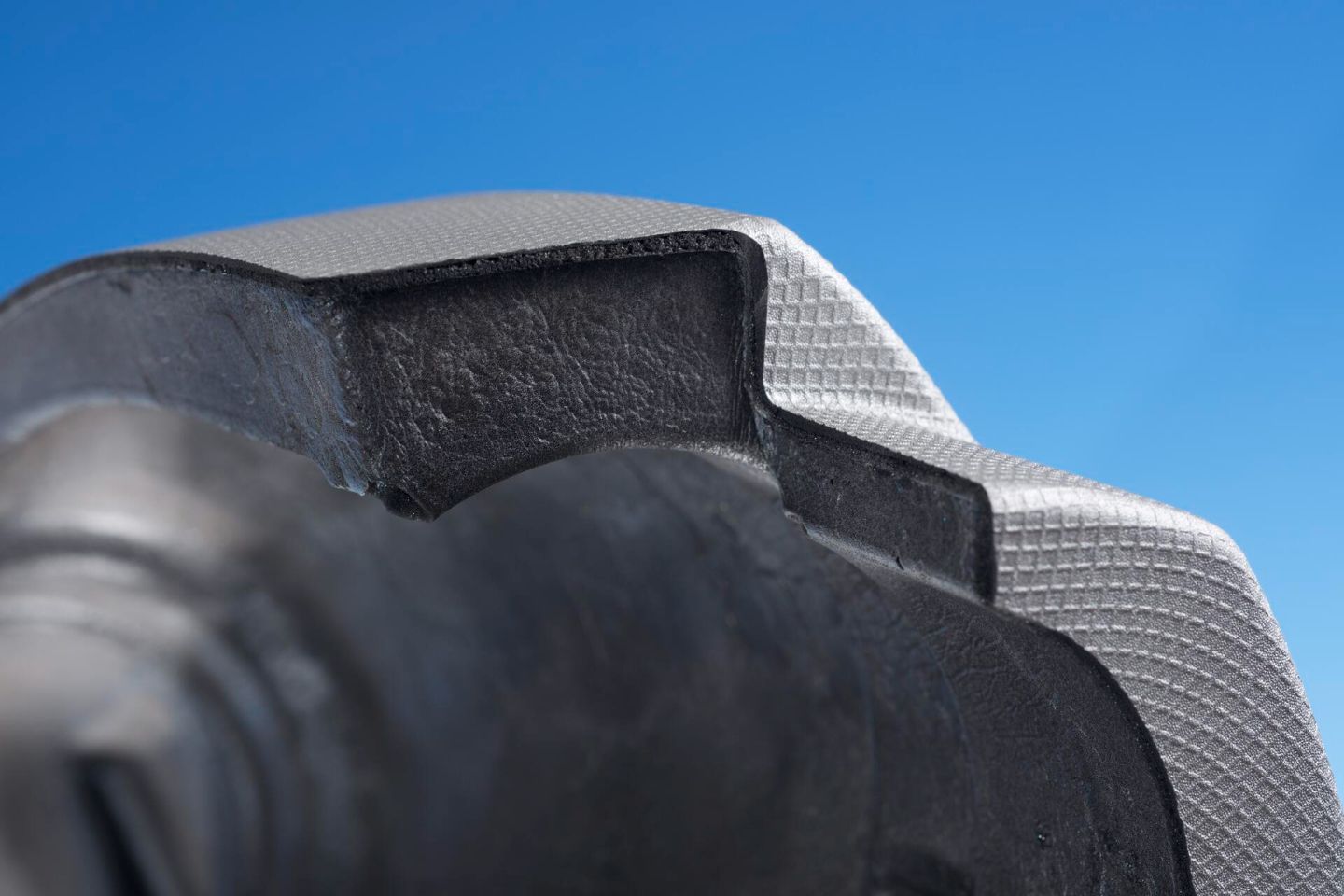
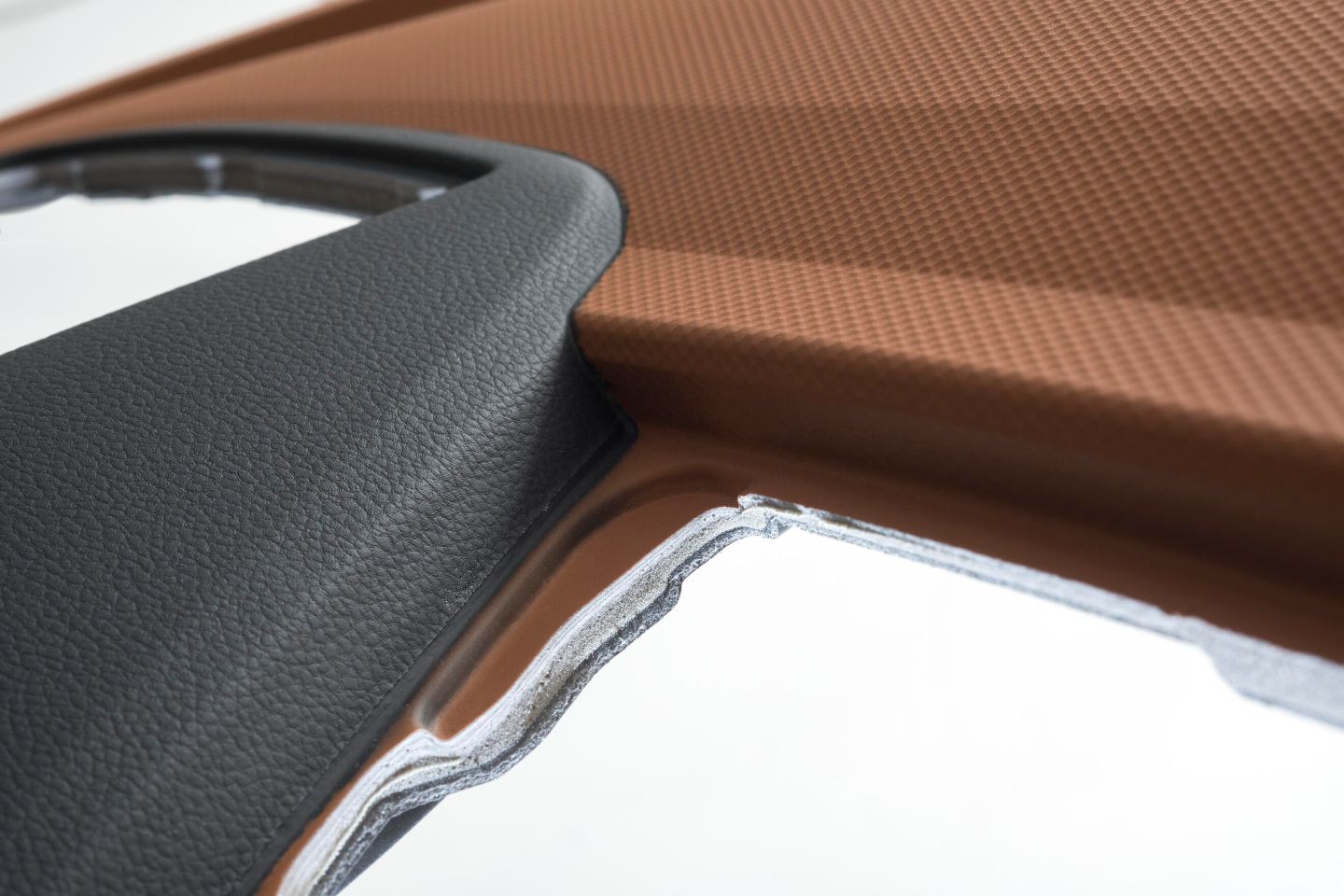
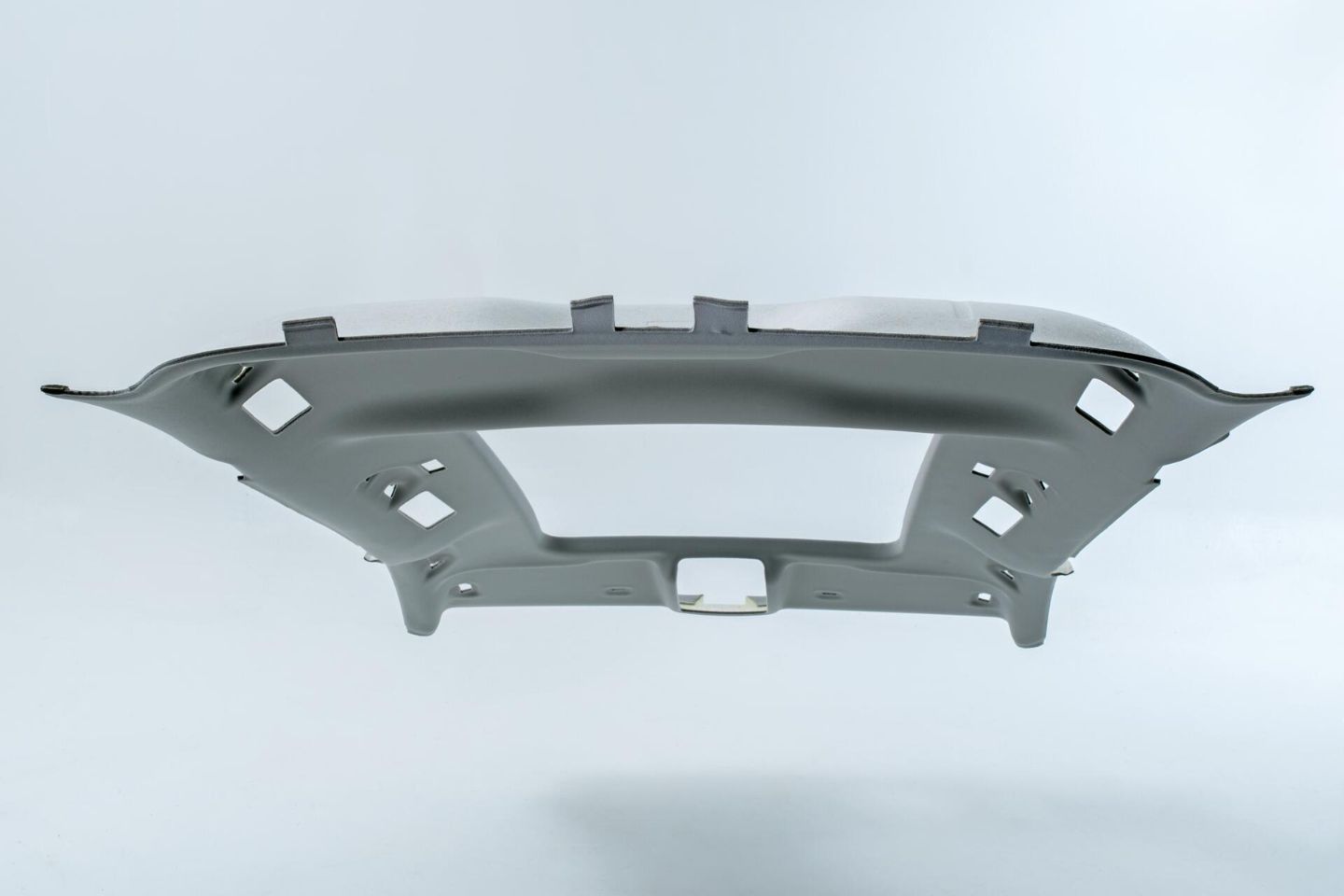
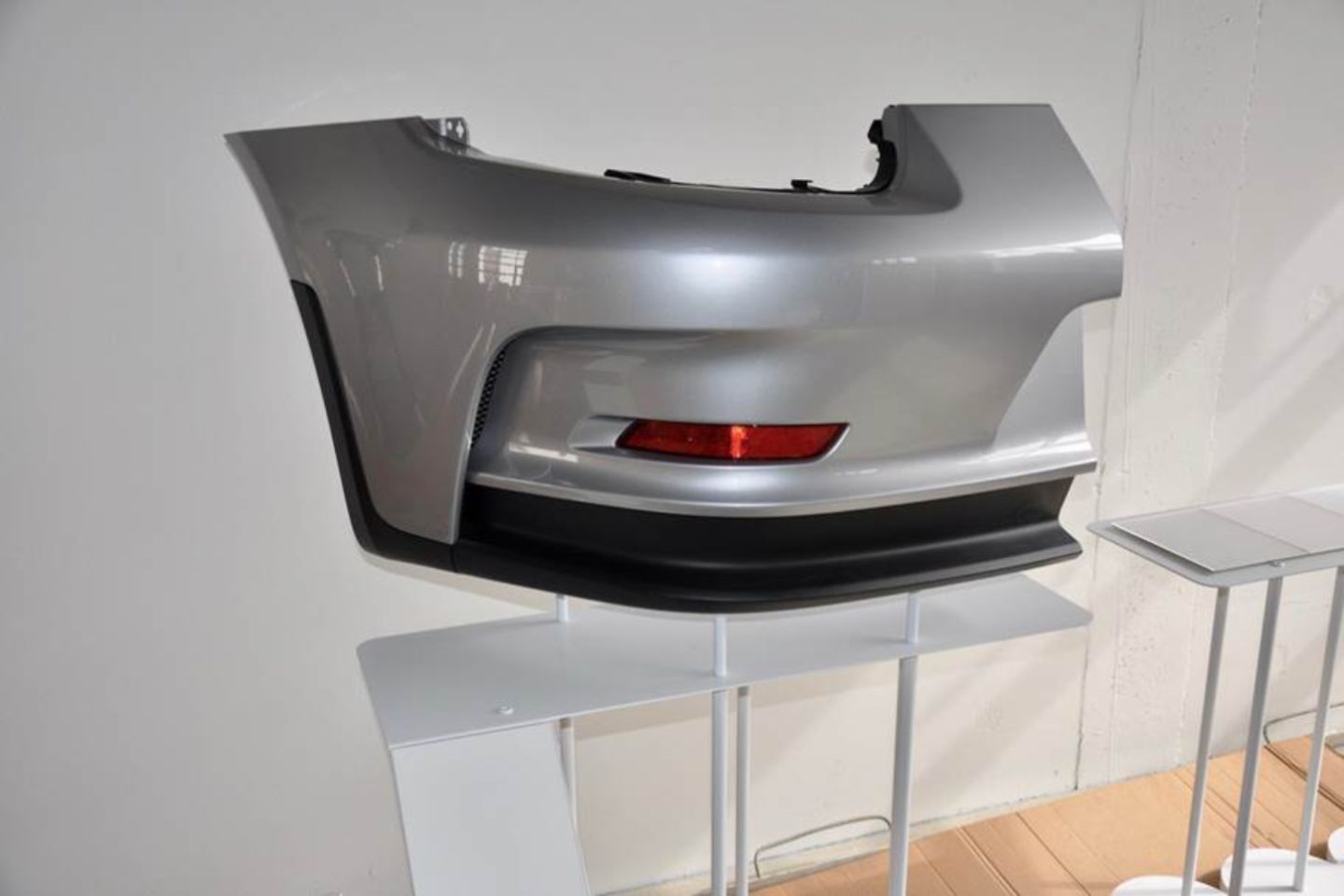
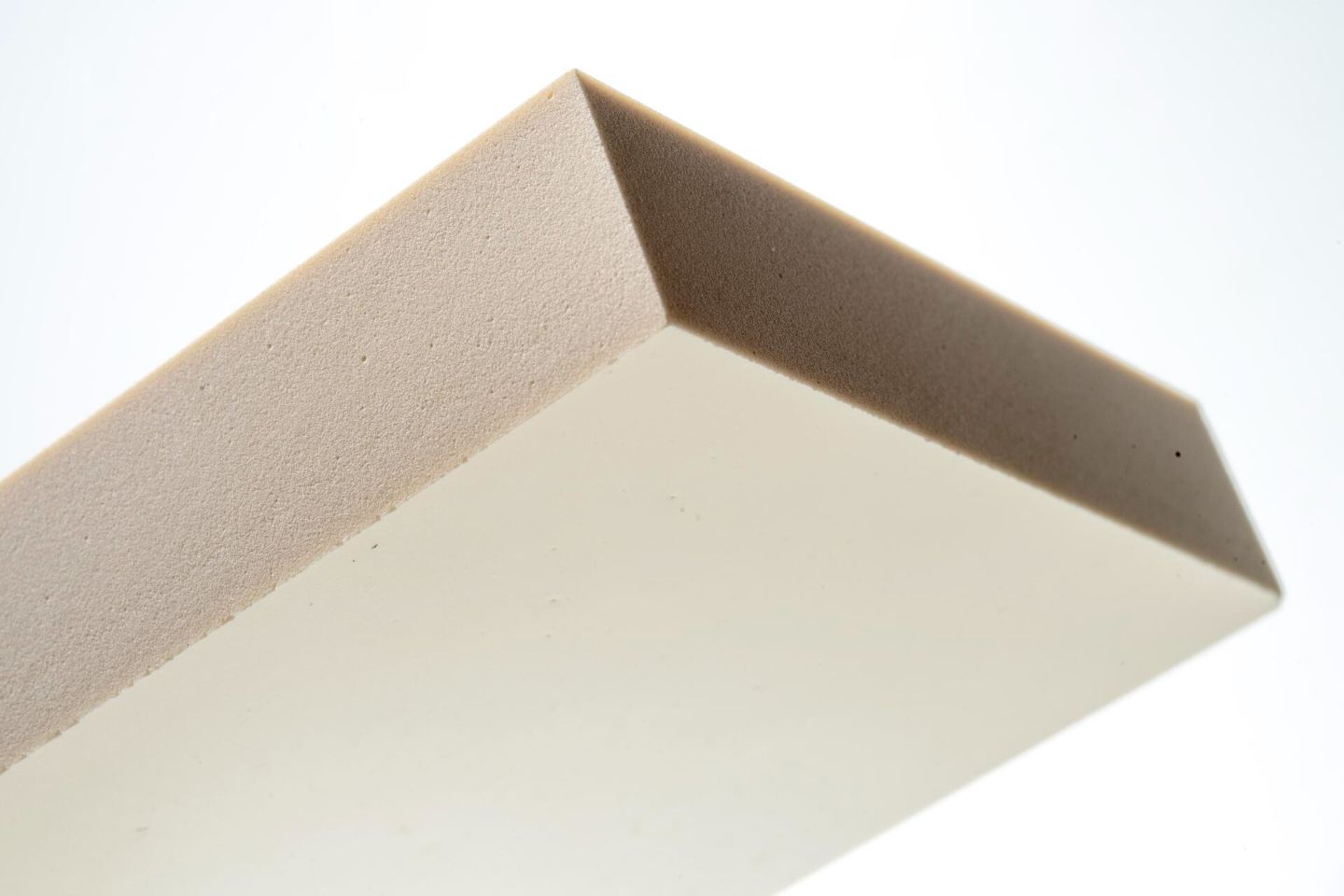
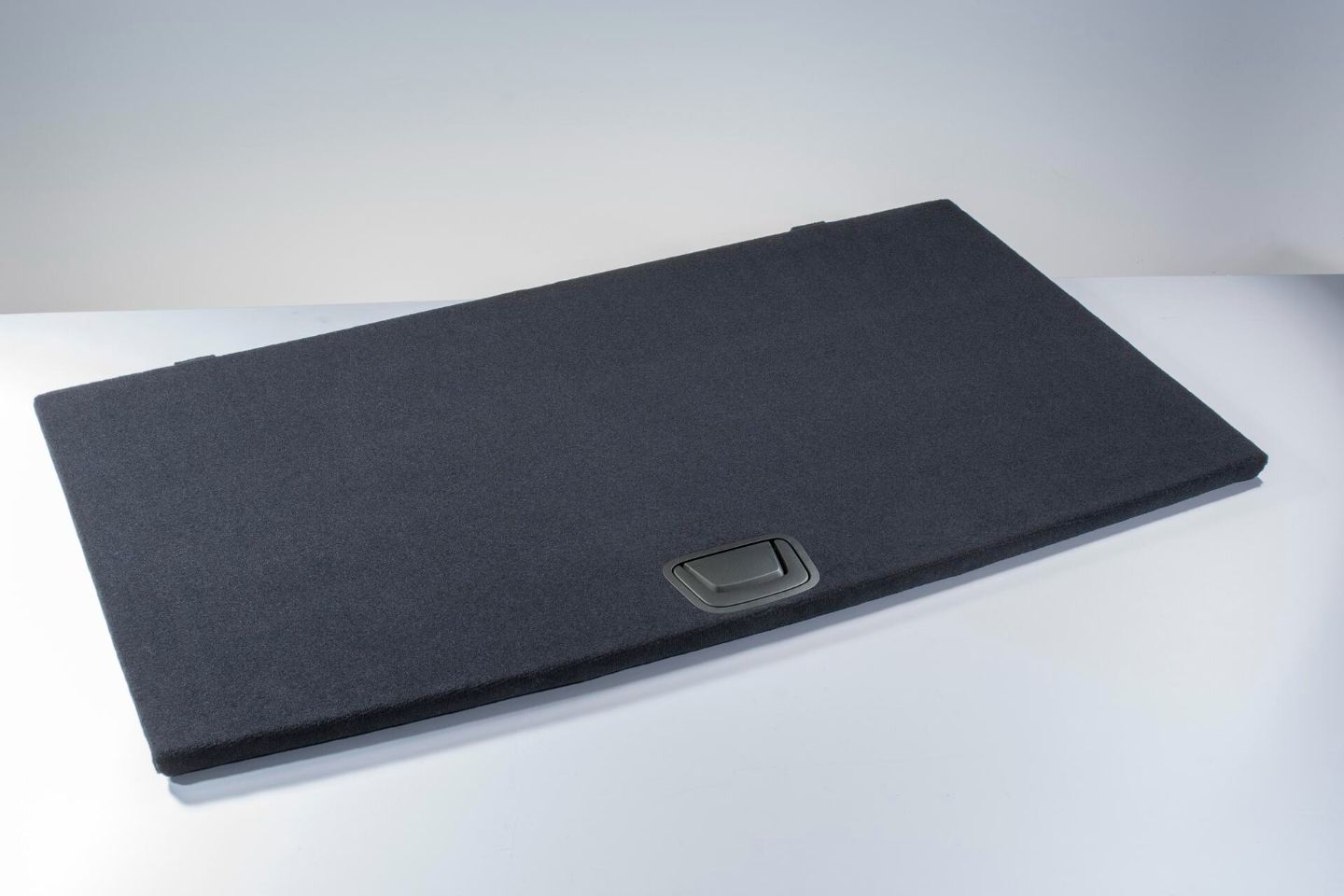

Polyurethane Design-for-Circularity concepts are a crucial element for efficient chemical recycling and the circularity of plastics in the automotive industry. Therefore, Covestro has developed corresponding component concepts for load floors, acoustic parts, and interior trim.
Polyurethane monomaterial concepts are a key to efficient chemical recycling in the automotive industry. They enable to close the material loop and achieve the ambitious goals of the EU End-of-Life Vehicle Directive.
Dr.-Ing. Jens van Haag
Market Development Manager Specialties, Covestro Deutschland AG
Key benefits
Proven in Practice:
Immediately applicable, automotive-proven material solutions.
Recyclable:
Single-type PU systems as a prerequisite for more efficient chemical recycling.
Premium Quality:
Known high-quality properties with improved recyclability.
Future-Proof:
In line with upcoming regulations and supports OEM sustainability goals.
Versatile:
Diverse properties in one material: soft to hard, light to compact.
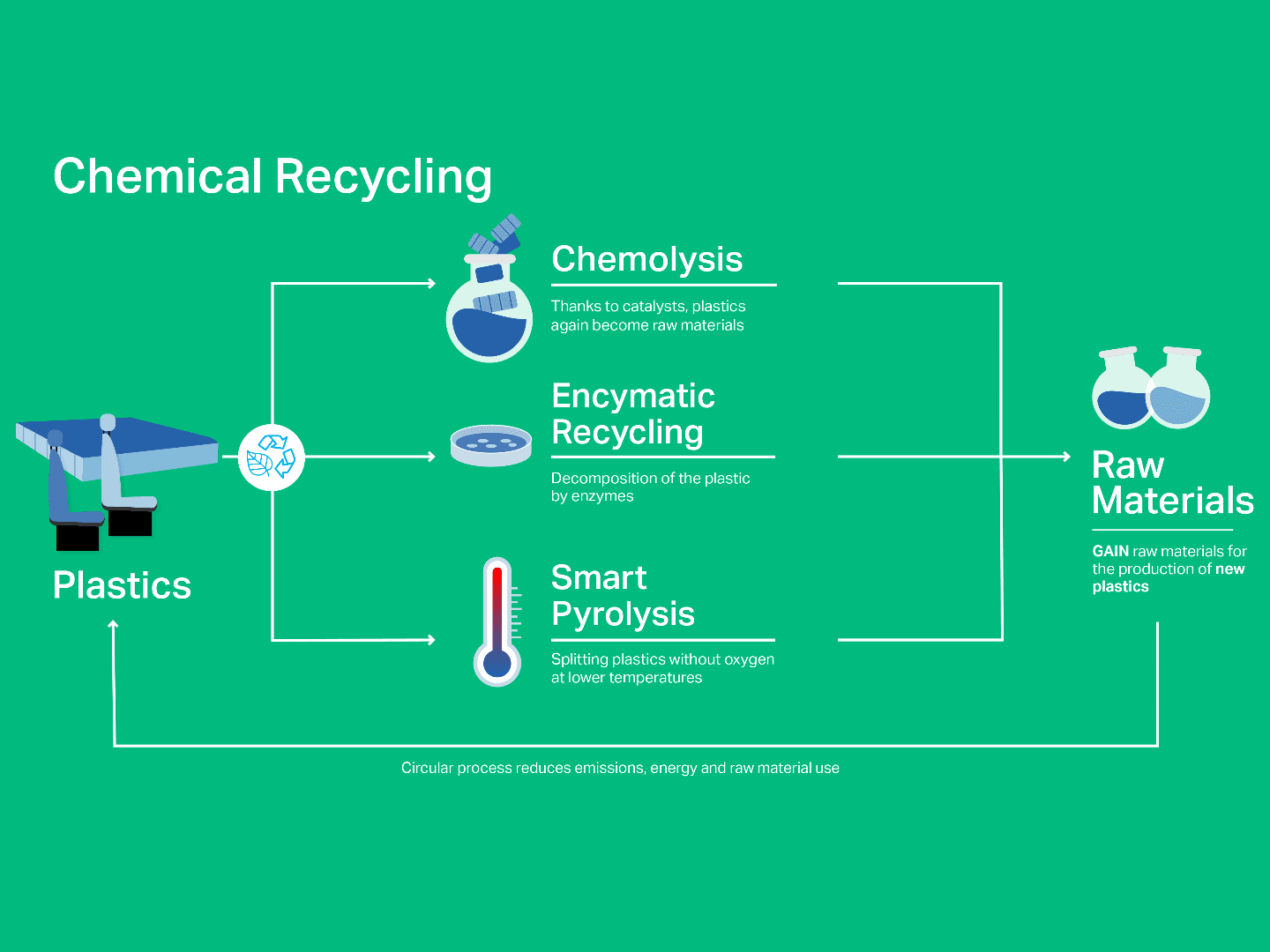
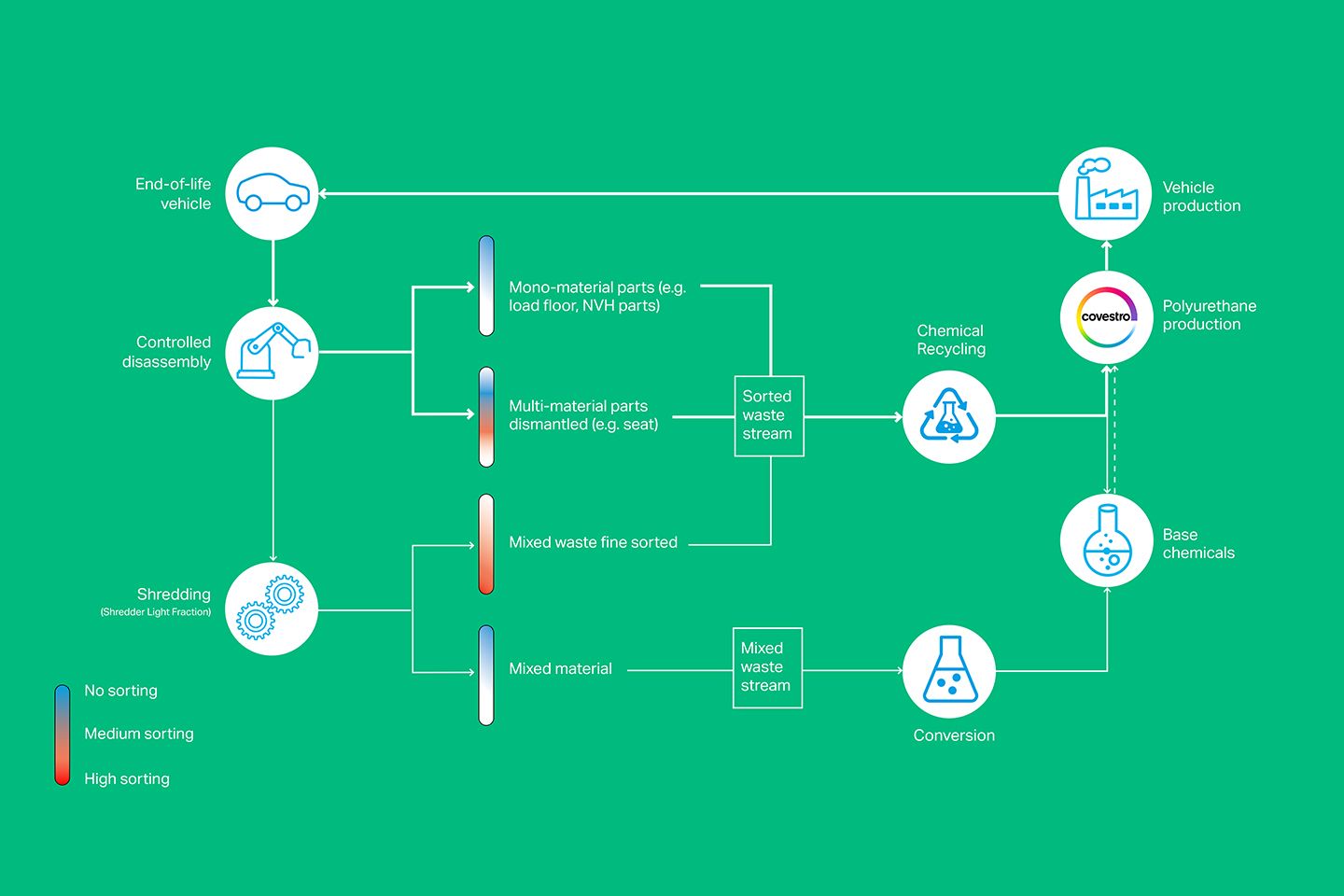
The efficiency of chemical recycling processes is positively influenced by single-type waste streams. However, for most automotive waste streams, this requires increased sorting efforts. These efforts can be reduced through targeted dismantling and recycling of individual components from end-of-life vehicles throughout their lifecycle. The approach is particularly relevant for monomaterial automotive components that have been developed according to "Design-for-Circularity" principles. This allows car manufacturers to fulfill their extended producer responsibility and make an important contribution to vehicle recycling.