
Story
Simulation of Bayfill® foaming enables a more robust mold and process design
The automotive design phase is increasingly digital. Our new simulation method predicts the foaming process and material processing behavior of Bayfill® polyurethane foam in a soft touch instrument panel. With this digital twin, risks and processing issues can be identified before product changes become costly.
Story · August 11, 2022
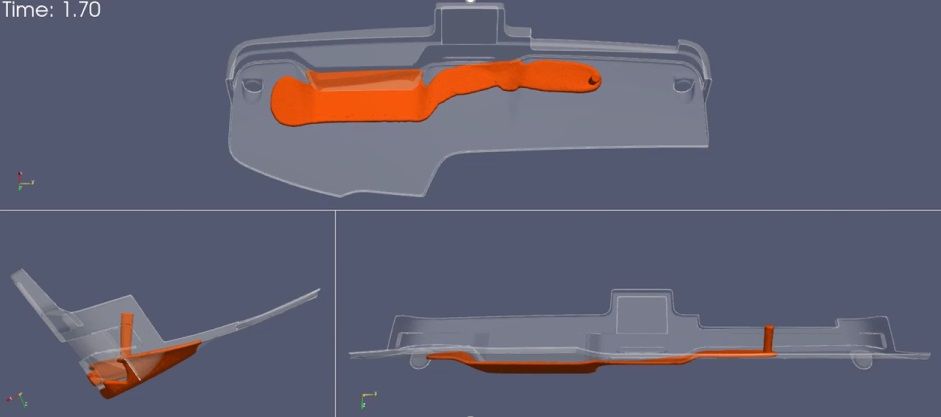
Bayfill® foaming simulation helps identify the best tool design and process settings early on
We took our own in-house material models and coupled them with powerful computing capacity to create a digital twin of the future foaming process. This twin mirrors the foaming process, giving the Tier suppliers detailed information on material processing behavior before any real experiments or trial and error samples become necessary. Production uncertainties can be spotted at the design stage, when changes to the product and the tool are still manageable at a comparatively low cost. We have successfully conducted first testing and validation trials of the simulation software for a serial instrument panel. Covestro is now able to use its new and innovative simulation method to support customers for the first time in the digital verification of their instrument panel foaming process. This requires a finalized and high quality CAD model of the foam from the customer. Also a close collaboration between Covestro and its customer is needed to ensure realistic assumptions for a more precise and meaningful simulation result conducted by Covestro.
Polyurethane foam can help achieve the instrument panel’s required properties, but the foam must be processed within a specific process window, with the correct settings in place. The simulated Bayfill® foaming helps to calibrate this optimum processing window based on our internally-developed material models, which precisely simulate the material’s behavior in a virtual process environment.
Our state-of-the-art foaming simulation method brings customers a range of tangible benefits. Early verification of the material processing behavior and the instrument panel design means potential issues can be identified and addressed up front during the design phase, long before processing set-up, when changes carry higher monetary and timing risks. After that, reducing the number of set-up trials saves further energy and resources. Cutting the number of potential rework loops for the foaming tool itself reduces transport costs back and forth from the tool maker, while also minimizing energy use and material loss. In some cases, the simulation software can even help to avoid additional foaming prototype tools which are still standard for some instrument panels.
When we create our digital twin of the Bayfill® foaming process, Tier suppliers and car makers get detailed information on the material processing behavior without having to conduct experiments. Both the foaming tool itself and the product design can be optimized in the early design phase when product and tool changes can still be managed at a reasonable cost. Achieving a robust tool and process setup earlier helps to win valuable time and save costs during the critical launch phase.
This content is provided by MovingImage. When you load it, MovingImage receives data such as your IP address and may set cookies.

Simulate foaming in the design phase
Find out how our Bayfill® foaming simulation method can support your enhanced instrument panel projects.
Contact us