Lower Emission Construction Materials
Digital event space
By replacing part of the fossil feedstocks with alternative raw materials allocated via the mass balance approach, we significantly reduce the CO₂ footprint of our production. This, in turn, enables our customers to lower the CO₂ footprint of their own products — supporting a more sustainable construction industry along the value chain.
No, the mass balance approach allows to add renewable raw materials to the PU foams, without changing the overall performance from them. It offers the same usual superior performance from the PU foams, with much less CO2 emissions1.
Yes, transparent sheets made out of Makrolon® RE can be combined with other materials in roofings and facades, light panels and many other applications where lightweight, transparency and toughness are requested.
No, Makrolon® RE resins deliver exactly the same technical performance as fossil-based polycarbonates, but with a significant lower CO₂ -footprint1.
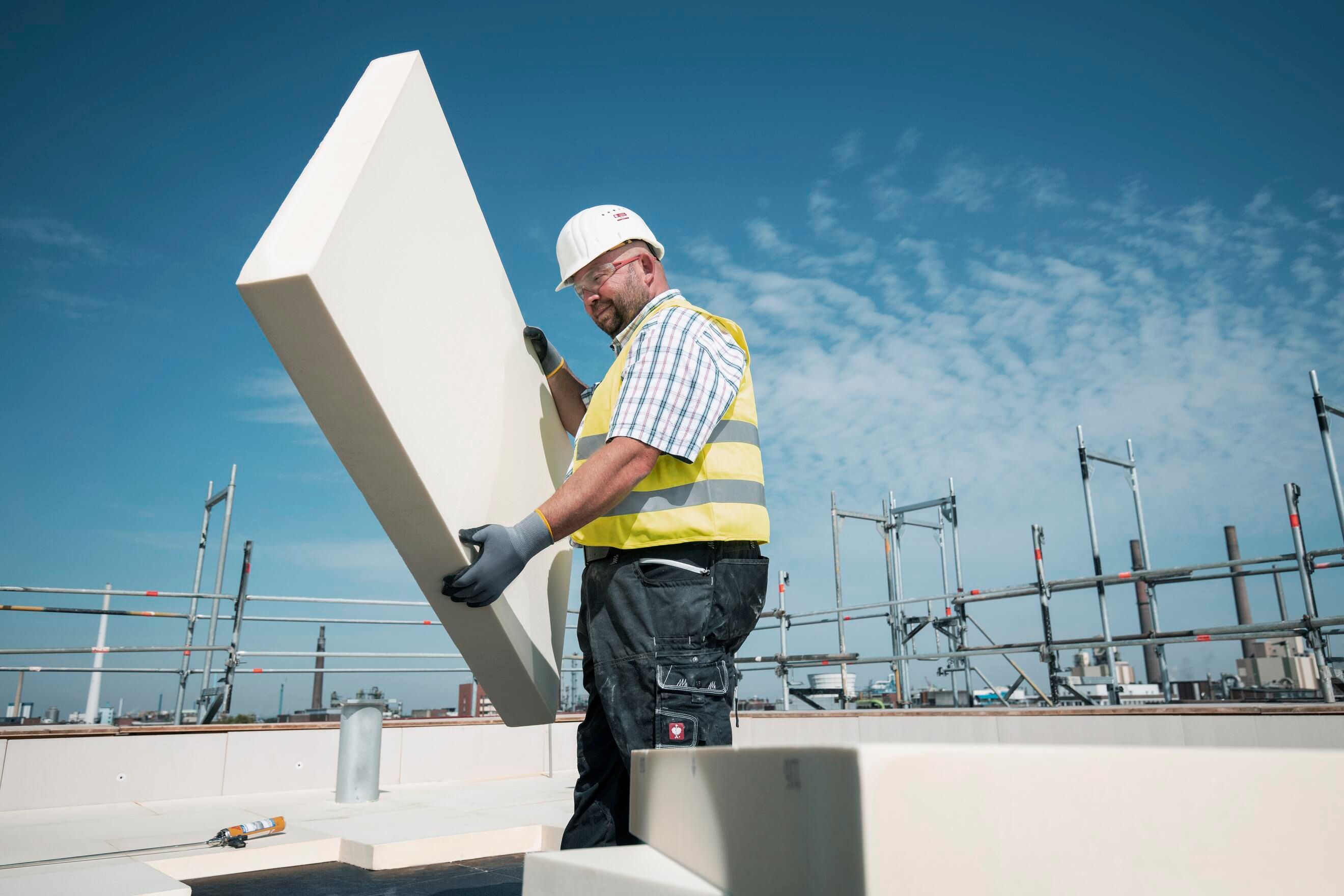
PU foams have an outstanding lambda value, meaning we can insulate with much less material, saving resources and space. Additionally to that, they are very durable and offer an excellent compressive strength.
By replacing fossil raw materials with the renewable feedstock, our Makrolon® RE resin can reach a sustainable share of up to 89%, certified by ISCC+.
These feedstocks substitute the use of fossil-based resources, reducing significantly the embodied carbon from the PUR/PIR foams.
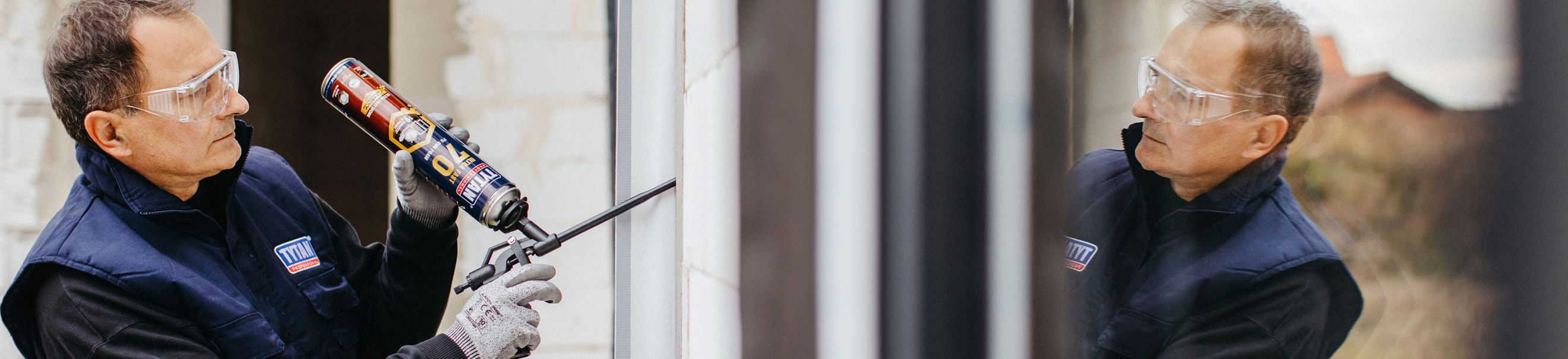
Today, it is already possible to produce PUR/PIR foams using bio or bio-waste resources allocated via mass balance.
Contact us

More sustainable products and performance across the entire lifecycle
Our climate-neutral¹bio circular MDI Desmodur® reduces the embodied carbon emissions during production by up to 50 %. We utilize bio-based resources as raw material and attribute it via the mass balance approach. This can support your sustainable building certifications from production to application.
For ourMakrolon® RE polycarbonate resins, we use certified renewable raw materials and renewable energy during production. These resins combine durability and design flexibility with a lower environmental impact, thanks to ISCC Plus-certified mass balance integration. From PC sheets to innovative components, our partners and customers then turn our Makrolon® RE into real-world solutions.
This content is provided by MovingImage. When you load it, MovingImage receives data such as your IP address and may set cookies.
Want to know more about our lower emission materials? Flip the cards!
Why lower-emission materials matter
Reducing embodied emissions in building materials is essential to meet climate targets. Our lower-emission materials are one of our solutions designed to lower impact without sacrificing performance – a big step toward full circularity in construction.
Transforming construction is possible
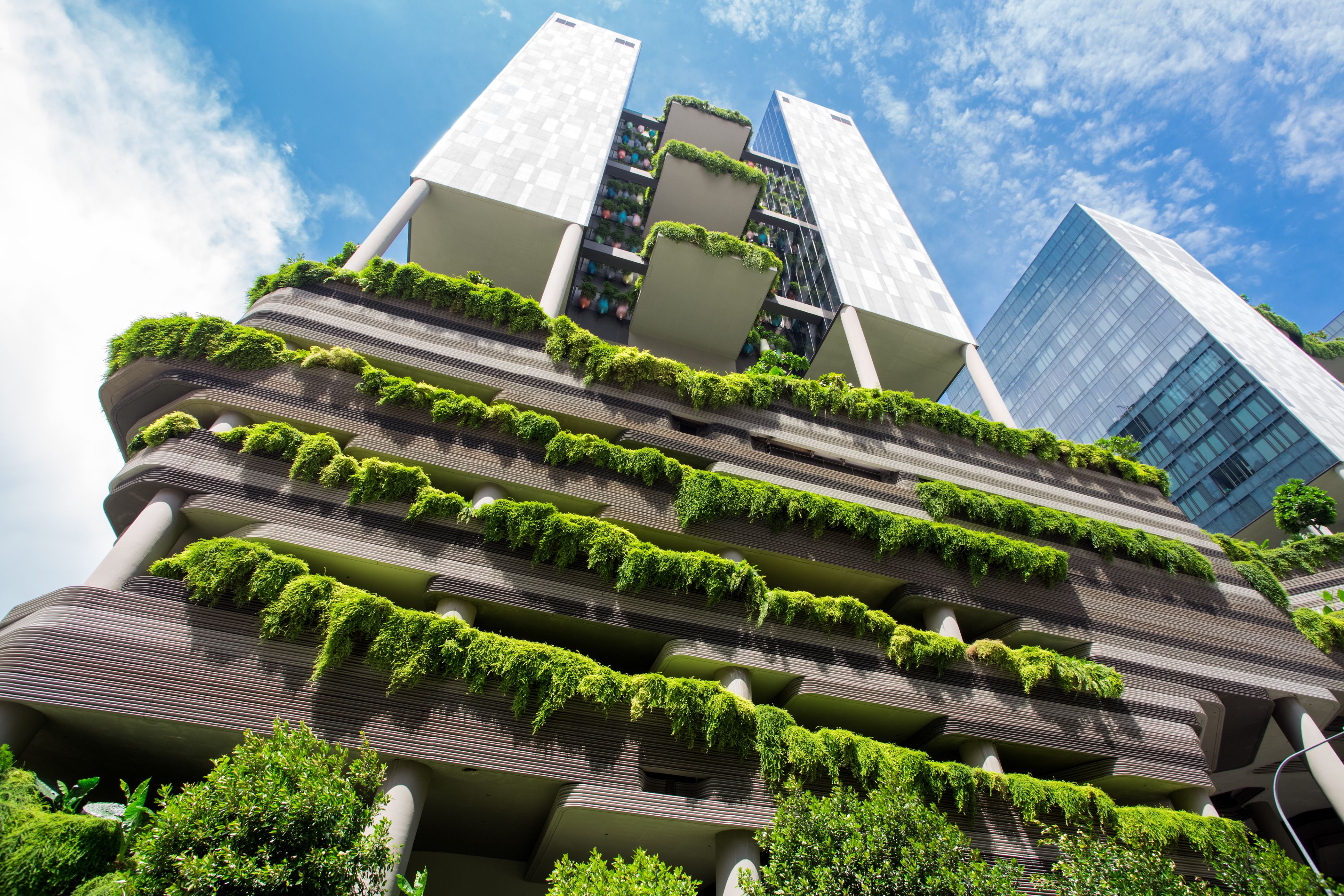
Lower-emission material solutions are already helping to reduce CO₂ footprint² in construction. By substituting fossil resources with alternative feedstocks, we enable climate-neutral¹ materials that contribute to a more sustainable future.
First step into a circular construction
We are steadily reducing our dependence on fossil fuels by cutting emissions and expanding renewable energy use across our operations. This helps shrink our CO₂ footprint while moving us closer to fully circular construction material supply chains.
1 Climate neutrality is the result of an internal assessment of a partial product life cycle from raw material extraction (cradle) to the factory gate (of Covestro), also known as cradle-to-gate assessment. The methodology of our LCA with external audit and certification is based on the ISO 14040 and 14044 standards. The calculation takes into account biogenic carbon sequestration based on preliminary data from the supply chain. No compensation measures were applied.
2 Emissions reduction based on internal LCA calculations stages A1-A3 (cradle-to-gate) according to the EN15804+A2 standard using a mass balance approach.