

Case study
Innovating Solar Cars: Thermal Conductive Polycarbonates
Our thermally conductive Makrolon® TC enables performance through weight savings in headlamp heat sinks. Covestro sponsors and supports students of “Team Sonnenwagen”, RWTH / FH Aachen racing their own solar car "Covestro Adelie”. Learn more!
Case study · January 19, 2024
Transforming headlight heat sinks through lightweight materials
A weight-efficient design is of fundamental importance for solar-cells powered cars in order to enable high speeds and ranges. Every component counts. In the automotive industry the heat sinks for headlights are usually made of aluminum, as it has a very high thermal conductivity. An innovative lightweight material solution is sought.
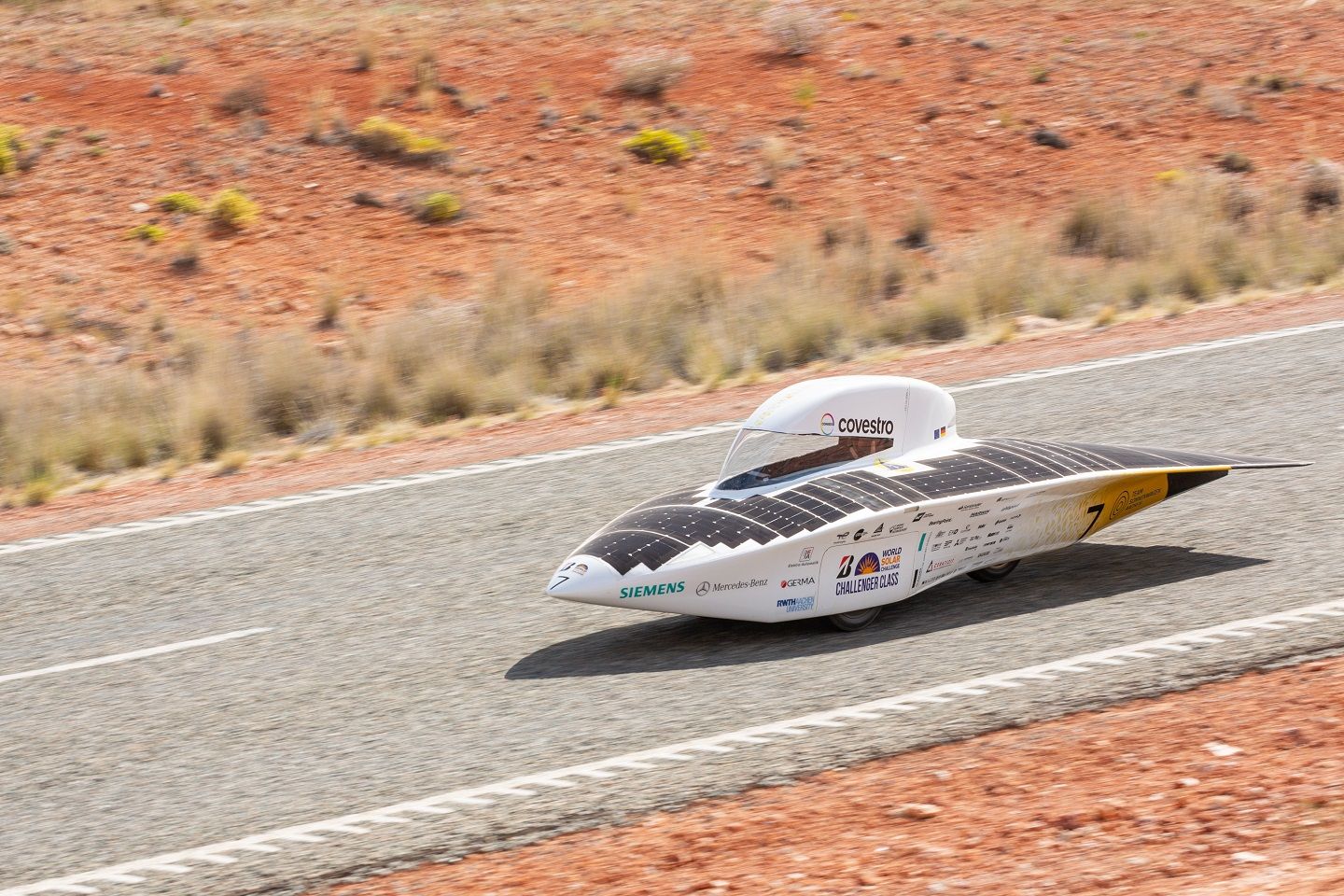
Weight vs. Thermal Conductivity: Is a new Comprise possible?
Even though the high thermal conductivity of aluminum enables a very good cooling system performance, it also has numerous disadvantages, such as severe limitations in terms of design and processing, a high CO2 footprint and a high weight. Although plastics promise benefits, standard plastics have a thermally insulating effect. Can a new type of thermally conductive advanced materials lead to new solutions?
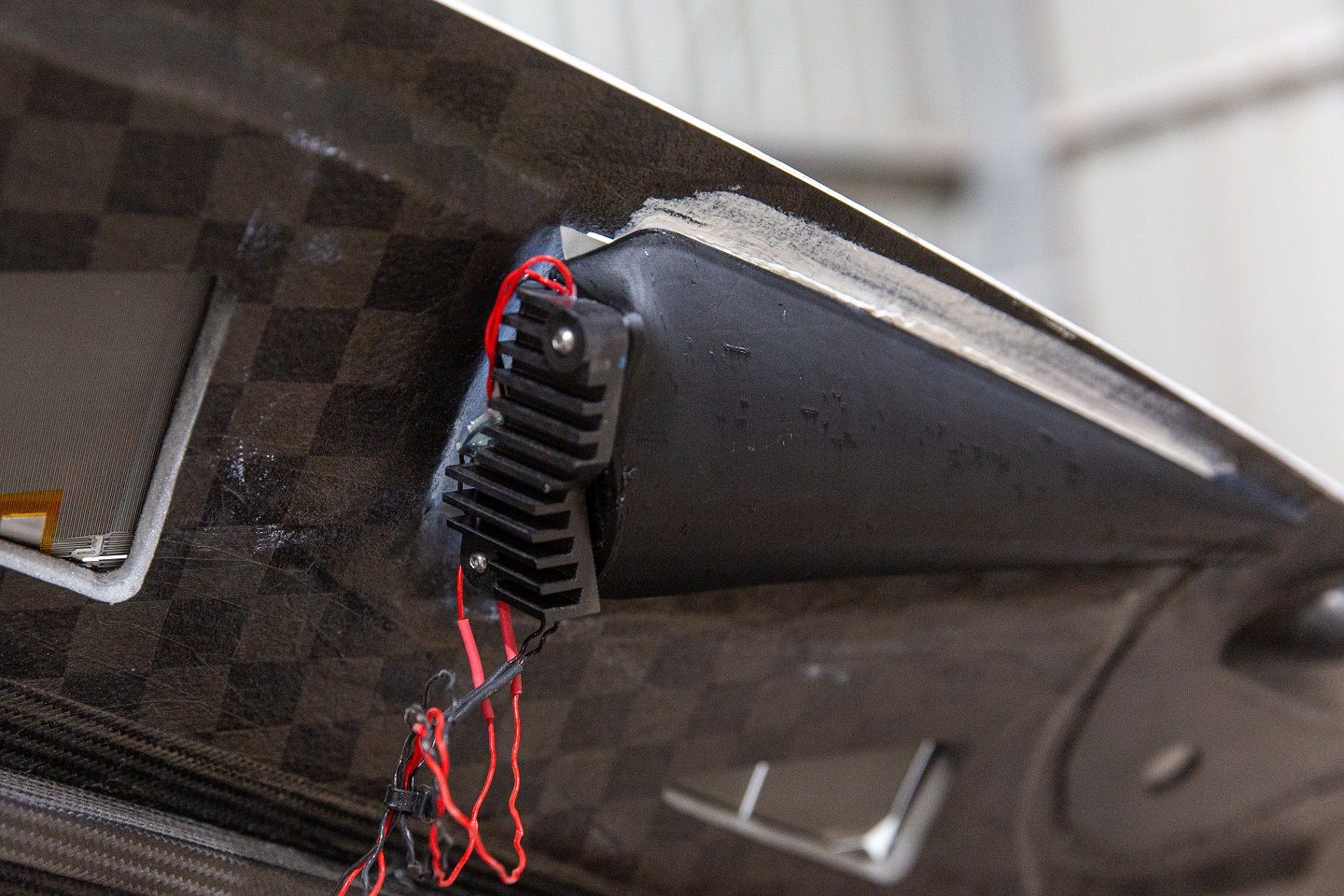
Mastering Thermal Management Systems: New Perspectives with Covestro's Innovative Makrolon® TC Grades
Although aluminum is an excellent heat conductor, with around 100 W/(m∙K) it is clearly overengineered for the majority of heat sink applications in the lighting sector. The 10-20 W/(m∙K) usually required can now be achieved by plastics in combination with high levels of conductive additives. Compared to other plastics, polycarbonates offer the advantage of high dimensional and temperature stability. Due to the sometimes very high thermal requirements - for example at the World Solar Challenge 2023 in Australia - Covestro recommended the new Makrolon® TC629 RE. This advanced material is a highly conductive polycarbonate and as a mass-balanced RE product , it has a very low CO2 footprint too. Covestro provided Team Sonnenwagen with several blocks of the material, from which the students were able to mill their individual heat sink solution. Very short production times and even more complex designs would be possible in an industrial injection molding process.
"It's fantastic to see how the students in Team Sonnenwagen combine their commitment to sustainable future technologies with enthusiasm for technology and racing. I am very happy that we are able to support them with our innovative advanced materials in addition to our sponsorship."
Simon Bölle
Technical Product Manager, Engineering Plastics, Covestro Deutschland AG
Key benefits
Sustainable
Makrolon® TC is available as a mass-balanced RE product with a heavily reduced CO₂ footprint.
Weight saving
Compared to conventional aluminum solutions, up to 50% of the weight can be saved.
Heat transferring
Makrolon® TC offers an extensive portfolio with various grades of thermal conductivity for different applications.
Flexible
Processing in (2K) injection molding enables completely new designs.
Dimensionally and temperature stable
As an amorphous polymer, polycarbonate has a low tendency to shrink and it is very temperature-stable.
Related articles


Contact us