Case study
Light as a Design Element: Dynamic Lighting in Automotive Interiors
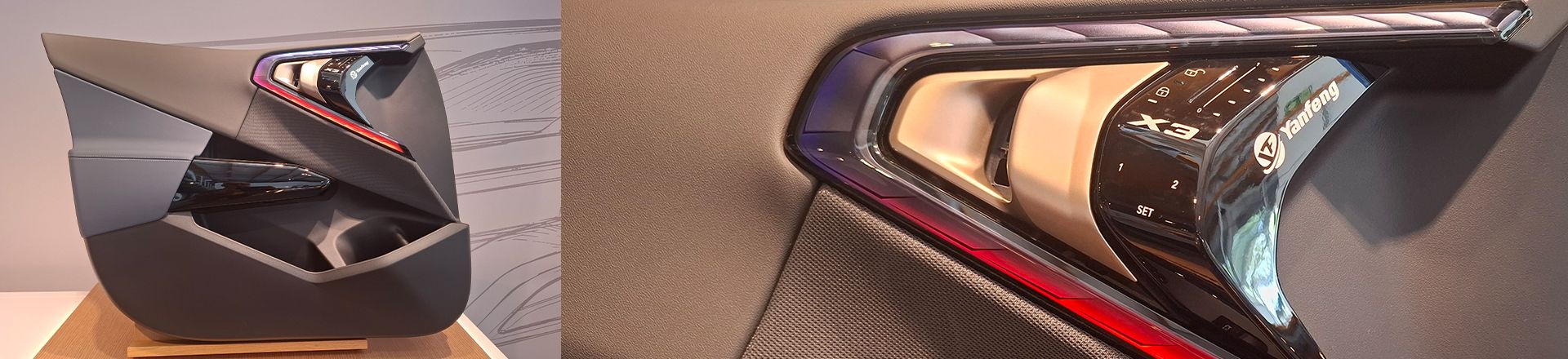
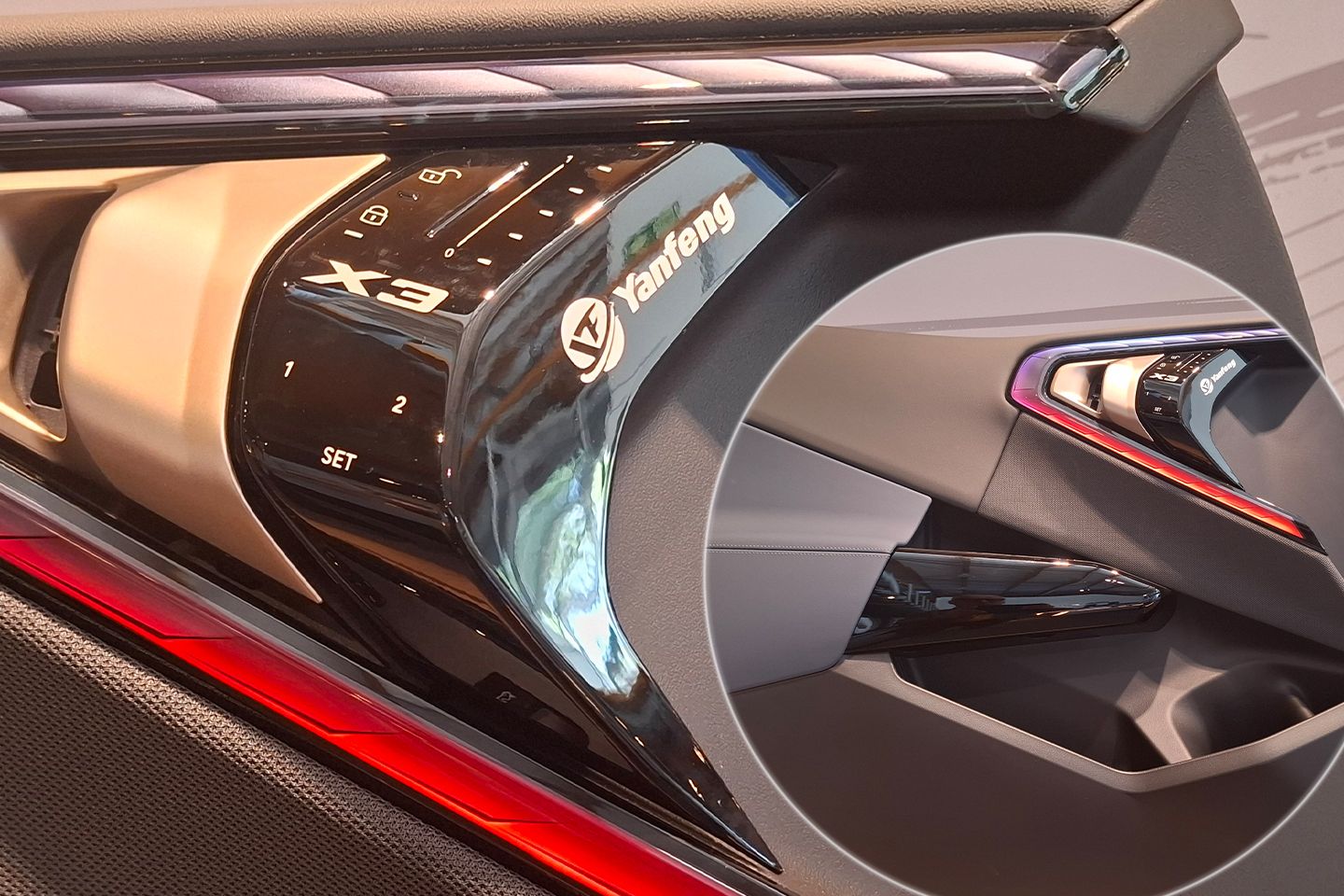
Yanfeng is a global leader in automotive interior systems. The company integrated dynamic LED lighting into a series-production door panel via Direct Coating – an In-Mold Coating technology – using transparent polycarbonate Makrolon® and Bayblend® from Covestro. The component won First Prize at the SPE Automotive Award 2025 in the Electrical/Optical Parts category.
Case study · August 26, 2026
Contact us

Integrating Dynamic LED Lighting into Automotive Interiors
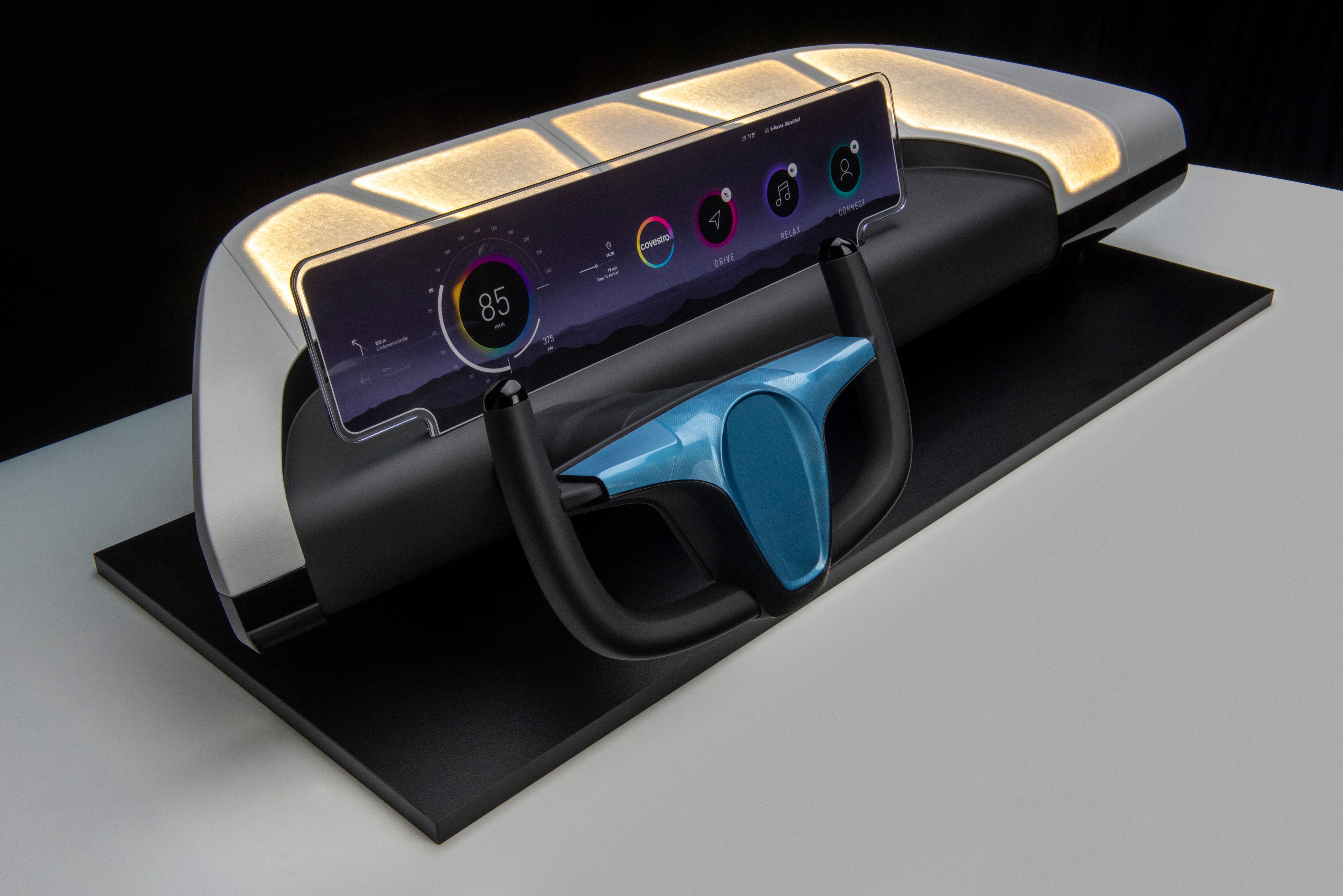
Yanfeng set out to prove that smart LED integration and Direct Coating can be combined in a production-ready automotive interior surface. The dynamic lighting element, integrated into a series door panel, demonstrates how multiple lighting scenarios - ambient illumination, sunrise and sunset effects, and personalized light choreographies - can be realized in a seamless multi-material system, while fully meeting all automotive crash performance requirements without any compromise on optical quality or aesthetics.
Light Transmission, Crash Safety and Long-Term Durability
The core challenge: transmitting maximum LED light to the observer's eye - without hotspots, double reflections, or surface disruptions. The multi-material system had to maintain dimensional stability and meet tight tolerances. Beyond optical performance, the finished surface required long-term scratch and UV resistance. And like any automotive interior part, crash performance demands made high impact resistance an equally critical material criterion - all without compromising optical quality or visual aesthetics.
I was surprised by how well it worked – and how good it looks. This was my first project in the field of light-integrated interior components, and I would never have expected it to function and look this way. The result proves that In-Mold Coating is ready for the automotive interior. We made it.
3K Injection Molding: Seamless Surface and Space Efficiency
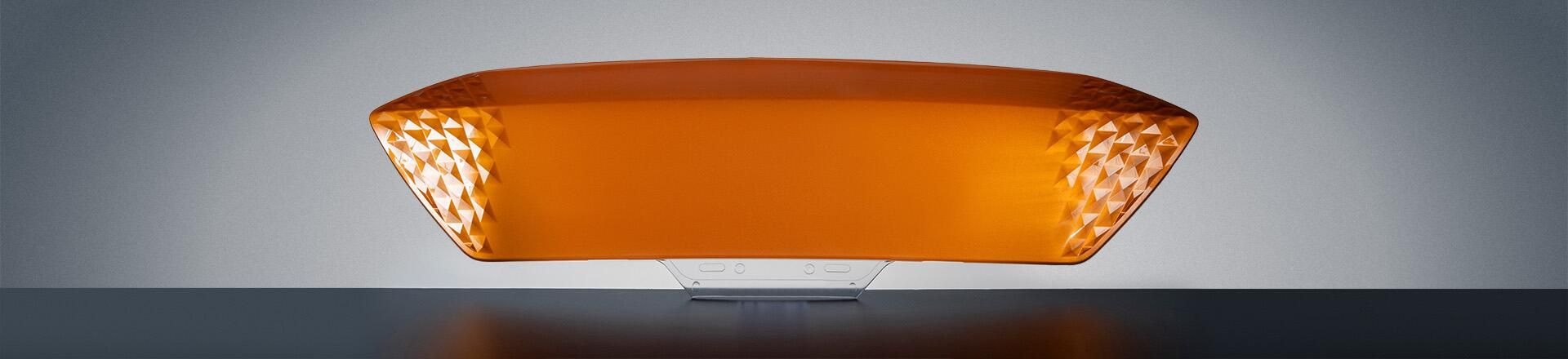
Yanfeng selected transparent polycarbonate Makrolon® Ai2417 of Covestro for the optical component, leveraging its exceptional light transmission, proven processing behavior, and high impact resistance – ensuring both optical performance and crash safety. The PC/ABS blend Bayblend® T85X serves as the structural material, providing the connection layer and closed housing components. A translucent film insert contributes to the optical appearance. To eliminate mechanical fasteners, save installation space and reduce the tolerance chain, the transparent polycarbonate component and the PC/ABS structural parts were combined in a single 3K injection molding tool. The Direct Coating step then applies the seamless self-healing PU surface (puroclear® by Rühl Puromer) directly in the mold – with no separate lacquering station and no visible layer boundary. The finished molded part exits the mold complete – ready to be integrated into the overall assembly.
This concept opens the door for a new generation of light-integrated interior surfaces. Optical clarity, impact strength and process efficiency demonstrate that In-Mold Coating of clear polycarbonate extends this established technology well beyond exterior applications – making it applicable to any automotive interior part with dynamic lighting.
Key benefits
Crystal-clear:
Makrolon® Ai2417: outstanding light transmission, depth effect, no hotspots.
Self-healing surface:
Seamless PU coating ensures long-term durability and scratch resistance in-mold.
Space optimization:
3K injection molding eliminates fasteners and welds – saving space and tolerances.
Series-ready concept:
Multi-material system applies to any automotive interior with dynamic lighting.
High impact resistance:
Makrolon´s exceptional mechanical properties meet automotive crash & optical requirements.

The Material Effect
Where light becomes a surface – a unique combination of material science, process expertise and application development transforms a complex multi-material concept into a series-production reality. Thus, let's rethink automotive interior lighting. Go beyond conventional multi-material systems. From lab-scale to awarded series production.