
Case study
Digital Material Twins for Automotive Design
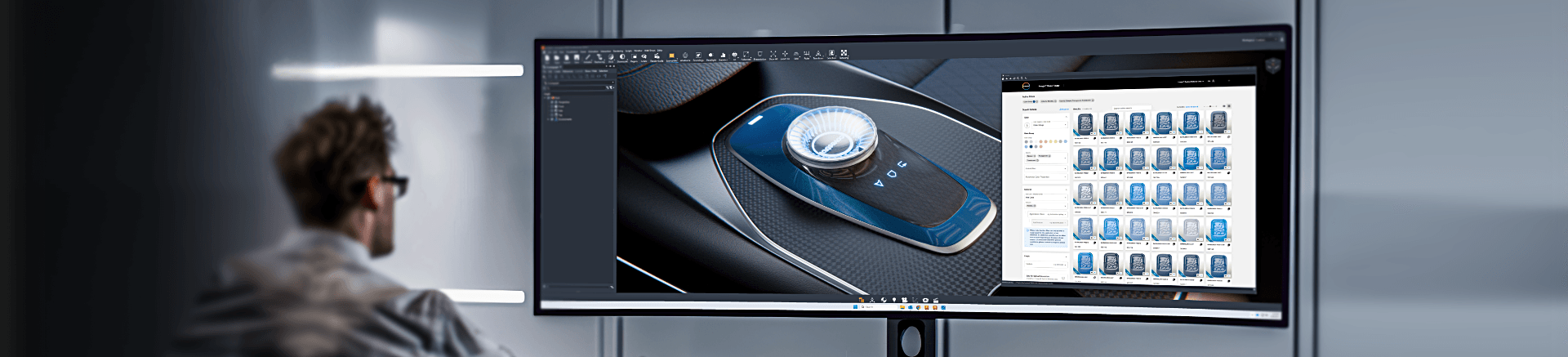
Autodesk has integrated the Imagio® digital material library from Covestro into VRED 2026.1, allowing automotive designers to work with photorealistic polycarbonate materials virtually. This collaboration streamlines design processes, saves resources, and strengthens the position of Covestro as a materials partner in the automotive industry.
Case study · September 19, 2025
Virtual material access for designers
Automotive manufacturers increasingly rely on digital design workflows to accelerate development cycles. In this context, designers need access to “ground-truth” digital material data to visualize how the final product will look like without the delays, costs and emissions tied to physical prototypes. Covestro aimed to provide direct digital access to its polycarbonate materials library to support this need.
The integration of our digital sample library into Autodesk VRED is a milestone for both partners. Designers can now easily find our polycarbonate materials and try them out realistically with just a few clicks. This saves iterations, costs, and emissions.
Dr. Tobias Rausch
Business Development Manager Digital Sampling, Covestro
Bridging physical and digital prototyping
Traditionally, automotive designers depended on physical samples to evaluate material qualities such as gloss, transparency, and surface structure. This process caused delays, additional costs, and environmental impact from the production and shipping samples. Furthermore, transferring material properties from small samples to the final product often led to misinterpretations. The challenge was to make polycarbonate materials immediately available in digital workflows while maintaining photorealistic accuracy.
Integration of Imagio® into Autodesk VRED
Covestro integrated its Imagio® (opens in a new tab) digital material library into Autodesk VRED 2026.1 (opens in a new tab), a leading visualization platform for automotive and transportation design. Designers can now instantly access and apply photorealistic digital twins of polycarbonate materials, visualizing color, gloss, translucency, and surface textures directly in their 3D models. This eliminates multiple prototyping iterations, reduces development costs, and cuts emissions. The integration also paves the way for future extensions into simulation tools, enabling mechanical, rheological, or weathering performance testing in virtual environments.
In a time when speed and precision in the design process are crucial, photorealistic digital material twins offer our users a decisive advantage. Designers can now immediately and accurately see how polycarbonate materials will look in their designs.
Marek Trawny
Director of Product Management – Automotive & Conceptual Design, Autodesk
Key benefits
Precise:
Photorealistic visualization ensures consistent and unambiguous material evaluation
Sustainable:
Lower emissions from reduced sample shipping and production
Scalable:
Foundation for future simulation of material behavior
Efficient:
Faster design cycles with fewer physical iterations
Innovative:
Direct access to advanced polycarbonate materials in digital workflows
Contact us