
Case study
Circular House – A model for circular design
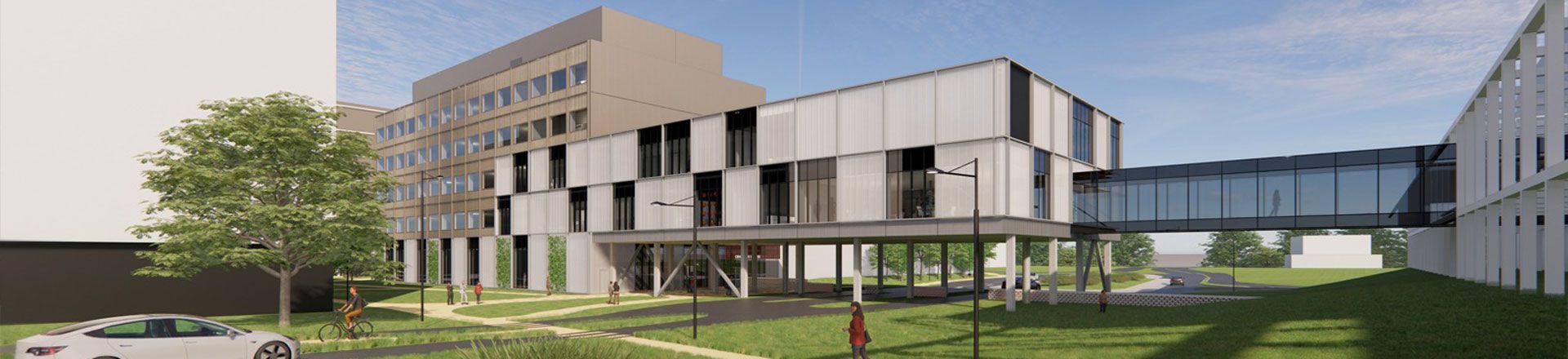
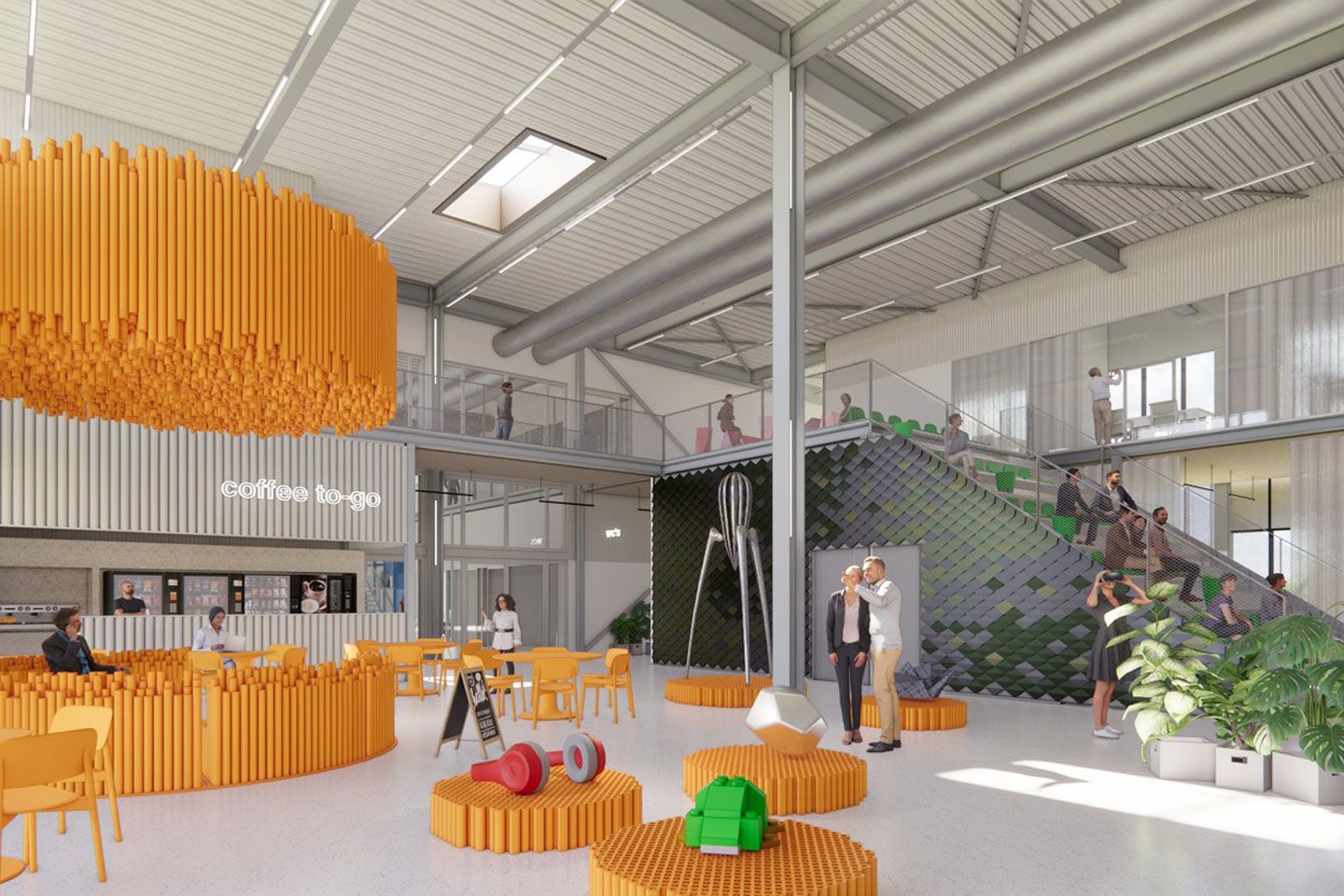
At the 7,500 m² Circular House at Brightlands Circular Space — meeting the BREEAM Excellent sustainability standard¹ — we united with Recticel and Brightlands to build with purpose. This living-lab shows the development of circular plastics and how more sustainable building materials and insulation with lower carbon emissions² can shape tomorrow’s buildings.
Case study · November 27, 2025
Showcasing more sustainable material solution at Brightlands Circular Space
From the outset, our task was clear: supply the Circular House with more sustainable material solutions that meet the highest performance standards – yet use much less fossil based raw material and embody the circular economy.
Together with Recticel and Brightlands, we set out to help transform a highly visible demonstration building into a model for circular construction, proving that more sustainable PU foam is ready for real-world projects, not just theory.
Buildings are responsible for 37 % of global CO₂ emissions 2 . Through our collaboration with Recticel and Brightlands, we’re reducing fossil feedstocks and enabling circular, lower-emission insulation that supports more sustainable construction.
Fernando Resende
Marketing Manager Building & Construction EMLA, Covestro
Reducing fossil feedstocks in high-performance insulation
Buildings account for roughly 37 % of global greenhouse-gas emissions³, with a quarter of those tied to the materials used before occupancy. Traditional PU insulation plays a key role during use-phase but still relies on fossil fuels as a primary source for raw materials. The team had to tackle two sides of the equation: maintain top-tier thermal and mechanical performance while achieving reduction in embodied carbon emissions — and do this in a building meant to stand for future-proof long-term sustainability.
PU insulation already saves energy consumption during a building’s life cycle, but now it also reduces embodied CO₂ emissions thanks to bio-circular attributed raw materials. The result is insulation with much lower product carbon footprinting and proven performance.
Benedikt van Roosmalen
Commercial Manager, Recticel
More sustainable materials delivering real-world impact
We supplied our climate-neutral⁴ raw material Desmodur® CQ MS – with 25 % bio-circular attributed certified feedstocks via the mass balance approach – for use in Recticel’s Eurothane® Silver Impact insulation boards, enabling a CO₂ reduction of around 43%⁵ compared with conventional boards – all while preserving the high insulation performance builders’ demand.The Eurothane® Silver Impact insulation boards were installed by roofing specialist ZND Nedicom, demonstrating how lower-emission insulation solutions can be successfully implemented in real construction projects while maintaining the high performance standards. The result: the contribution to a building that meets the BREEAM Excellent sustainability standard. This project demonstrates how embodied carbon reduction and energy efficiency can work hand in hand to lower environmental impacts. ¹BREEAM stands for Building Research Establishment Environmental Assessment Method. The certification level “Excellent” is awarded to projects that achieve 70 % or more of the available assessment score. ²Low-carbon emissions refers to materials or processes that result in significantly reduced life-cycle greenhouse gas emissions relative to the market average for comparable products, based on verifiable LCA data. For this specific application, Recticel's Impact Insulation boards demonstrate a 43% decrease in life-cycle greenhouse gas emissions when compared to Recticel's standard insulation boards, as validated by their internal Life Cycle Assessment. ³UN Environment Programme, https://www.unep.org/resources/report/building-materials-and-climate-constructing-new-future (opens in a new tab) ⁴Climate neutrality is the result of an internal assessment based on the TÜV reviewed EcoPAss LCA method (ID No. 0000083440), of a partial product life cycle from raw material extraction (cradle) to the factory gate (of Covestro), also known as cradle-to-gate assessment. The calculation takes into account biogenic carbon sequestration based on preliminary data from the supply chain. No compensation measures were applied. ⁵Recticel’s LCA calculation according to EN15804+A2 standard, for modules A1 - A3 (cradle to gate), based on the mass balance method.
At Brightlands Circular Space, we selected insulation boards that combine performance with sustainability. They embody our mission to show how circular materials can be integrated into real-world projects.
Lia Voermans
Chair of the Board of Brightlands Circular Space
Key benefits
High performance:
Same superior insulation and durability as conventional PU boards
Circular synergy:
Covestro, Recticel and Brightlands advance a circular economy
Bio-circular attributed content:
25 % more sustainable feedstock allocated via mass balance
Lower CO₂ emissions:
Less embodied carbon emissions than conventional insulation
Energy savings:
Insulation cuts emissions across the building life cycle
Related articles
Contact us